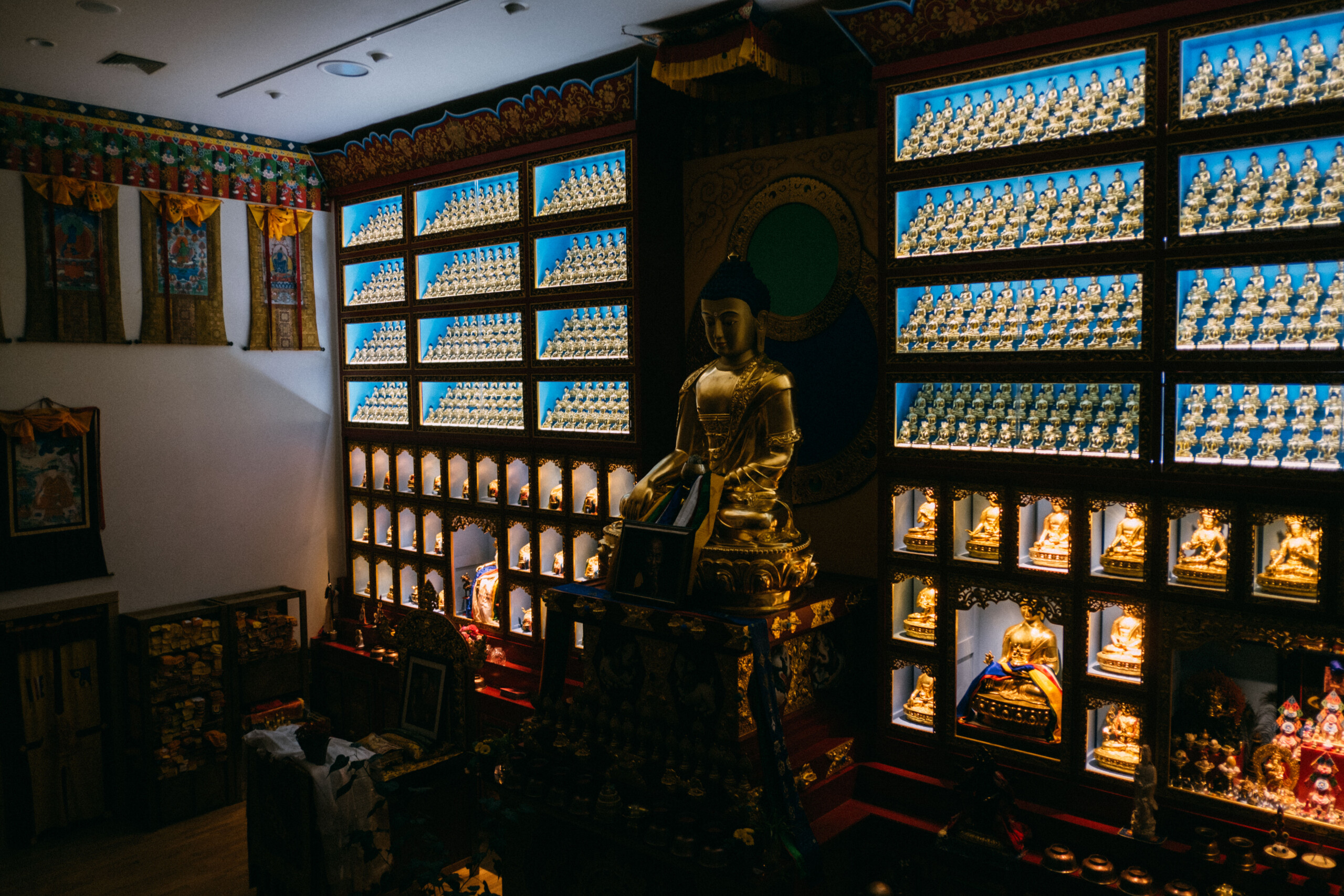


In the information age, access to the Dharma has never been greater. Teachings, texts, commentaries, and practices are available instantly—an extraordinary resource for study and reflection. Yet this abundance also presents a quiet challenge: much of what shapes practice in real life remains undocumented. This project emerged from that gap.
Living Dharma
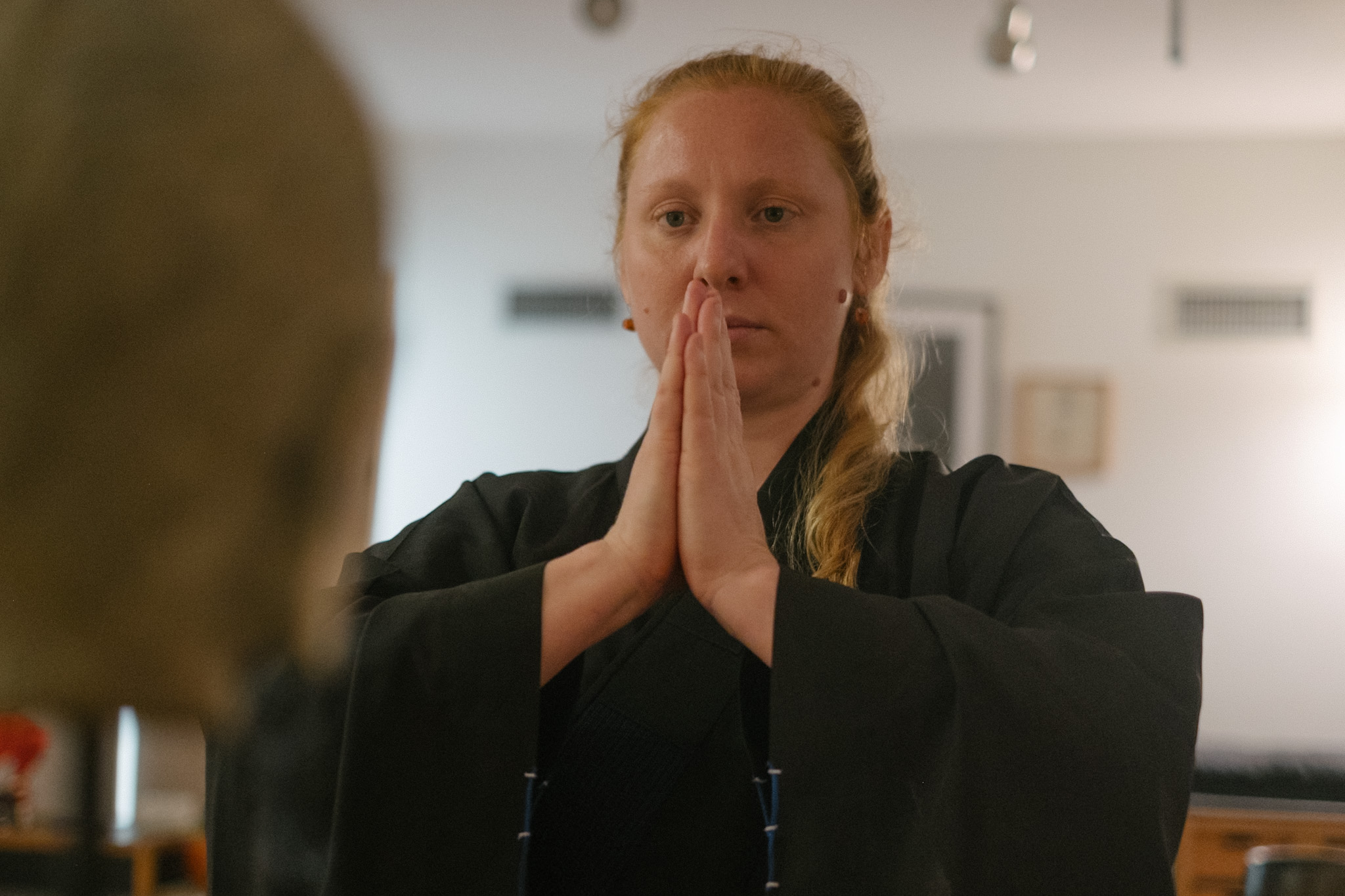
While the original intention was to make the Dharma more accessible to those unfamiliar with Buddhism, a decade of immersion revealed something equally compelling for seasoned practitioners. Again and again, I encountered dimensions of practice that rarely appear in books or formal teachings: how people actually integrate vows into careers, how lineage shows up in moments of doubt, how sangha functions under pressure, and how practitioners reconcile devotion with modern pluralism.
Across the three main vehicles, the foundational truths of the Dharma remain unmistakably intact—yet their expression in the modern Western landscape is strikingly diverse. What stood out most was not doctrinal difference, but resonance. Even with limited formal knowledge, I found myself able to sit, listen, and feel at home in many sanghas. That shared ground—ethics, intention, refuge, and practice—points to something quietly powerful: the possibility of a collective Buddhist voice that honors lineage while speaking meaningfully to our time.
This project does not attempt to synthesize or dilute traditions. Instead, it documents how the three vehicles are actually lived today—how practitioners understand depth, commitment, discipline, and realization in the context of modern life. These lived perspectives offer insight that complements, rather than replaces, classical sources.
If there is an aspiration underlying this work, it is to create a shared archive—one that reflects not only what Buddhism teaches, but how it is practiced, embodied, and transmitted now. In doing so, it may offer practitioners something rarely captured elsewhere: a mirror of the path as it is actually lived, across lineages, communities, and generations.
Of the Three Jewels—Buddha, Dharma, and Sangha—it is often Sangha that feels most fragile in the modern West. Not because it matters less, but because it asks the most of us. In a culture shaped by individualism, mobility, and digital convenience, sustained community is difficult to build—and even harder to maintain.
Many encounter Buddhism as a personal refuge: a private practice, a set of teachings, a solitary path of self-understanding. Buddha and Dharma translate easily into this inward landscape. Sangha does not. Sangha is relational. It asks for presence, participation, and care. Engagement with community is not an accessory to practice—it is a critical part of it.
Sangha is where meditation is tested, where insight moves beyond the self, and where compassion becomes lived rather than imagined. In an age of disconnection, rebuilding Sangha is not optional—it is essential. This invites an honest reflection: Are we doing enough to support the local sanghas that hold the space for our practice? Are we showing up not just for teachings, but for each other?
For many practitioners, the path begins informally—with books, meditation, or retreats that offer real benefit. But over time, a deeper question arises: not just how to practice, but how to go further. Lineage enters at this threshold, providing structure, accountability, and methods refined across generations.
As Ben, a longtime resident of a Buddhist center, puts it:
“Lineage is the antidote to spiritual consumerism. It keeps you honest.”
In these stories, lineage is not about blind devotion. It is about committing to a path that challenges ego, offers continuity, and supports depth. While it raises important questions around culture, identity, and adaptation, lineage ultimately functions as a mirror—revealing the level of responsibility and transformation a practitioner is willing to embrace.
In a spiritual landscape shaped by endless choice, lineage is often misunderstood as rigid or outdated. Yet throughout this project, it consistently emerges as one of the most transformative aspects of sustained practice.
For many practitioners, the path begins informally—with books, meditation, or retreats that offer real benefit. But over time, a deeper question arises: not just how to practice, but how to go further. Lineage enters at this threshold, providing structure, accountability, and methods refined across generations.
As Ben, a longtime resident of a Buddhist center, puts it:
“Lineage is the antidote to spiritual consumerism. It keeps you honest.”
In these stories, lineage is not about blind devotion. It is about committing to a path that challenges ego, offers continuity, and supports depth. While it raises important questions around culture, identity, and adaptation, lineage ultimately functions as a mirror—revealing the level of responsibility and transformation a practitioner is willing to embrace.
More ways to deepen your understanding
With over 70 portrait interviews and hundreds of hours of videos, these stories have been organized to themes that reflect the a modern spiritual journey.
Registration is required to view these power themes and support the project.