Theme · Portraits
Early development
The path inward: how curiosity becomes refuge.
Theme overview
The path inward
Practice has a way of turning the lens inward before you’re entirely ready for it.
There’s something sacred about the beginning of a spiritual path—that wide-open feeling of not yet knowing where you’re headed, but sensing, somehow, that you need to go somewhere.
For most people I’ve encountered who find their way to Buddhism, it doesn’t arrive like a conversion. There’s no dramatic moment, no singular revelation. It arrives more quietly—as a set of teachings that feel less like something to believe in, and more like something to test. Against your life. Against your experience. Against the particular ways you’ve been struggling.
That openness at the start is actually one of the most precious things about it.
But here’s what I’ve noticed, watching people move through the early stages of practice—and honestly, feeling it myself: that sense of discovery gets personal fast.
In their words
Five first steps onto the path
Recovery · Bön lineage
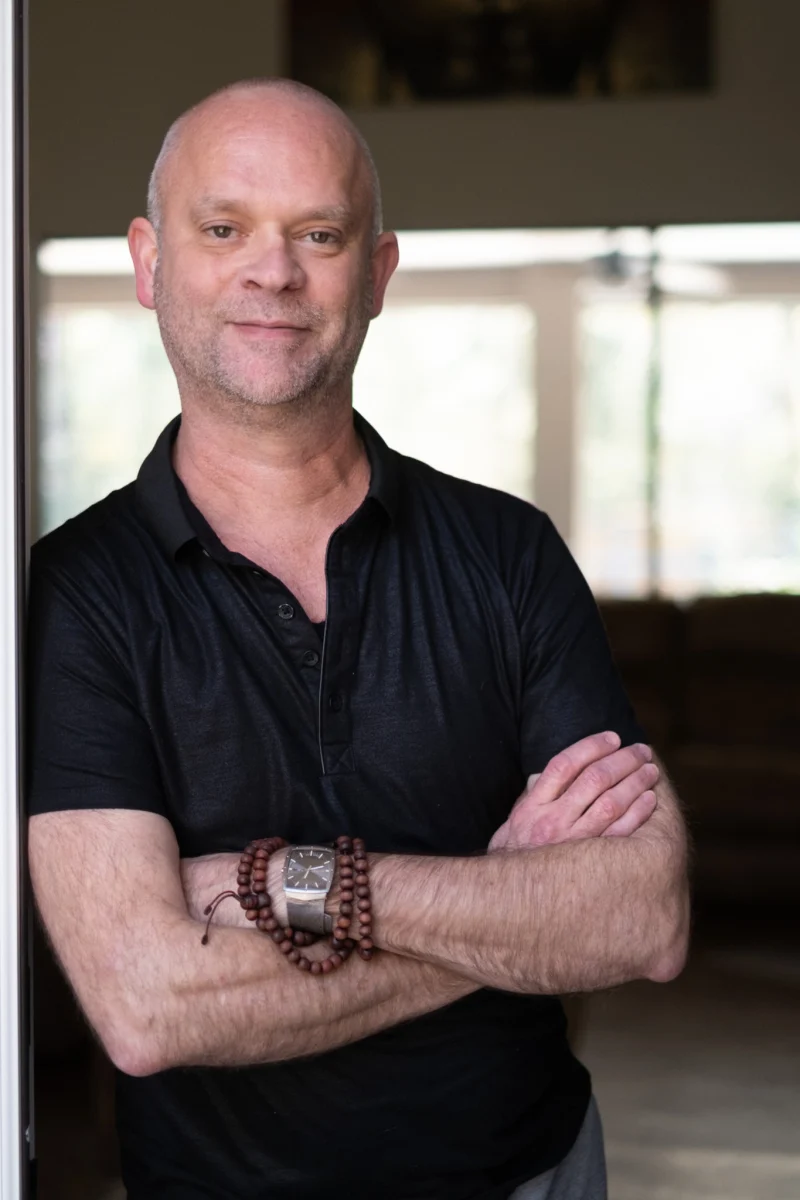
Donovan
Donovan’s story follows a familiar arc: substance abuse brought overwhelming suffering to him and his family. He tried the traditional approaches and was able to “recover”—but the deep healing didn’t come until he met a teacher from the Bön lineage.
Building the sangha he needed
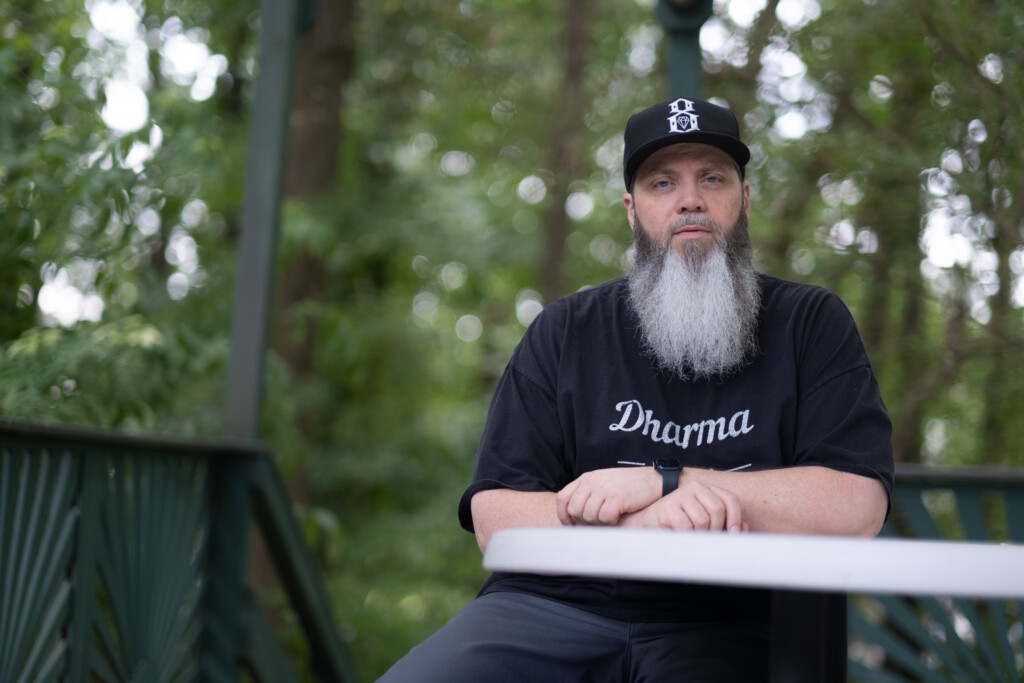
George
George’s way into the Dharma isn’t typical, but it’s relatable. It started with a simple book about mindful eating—and from there he dove hard into the practice, with a strong desire to share the teachings.
George’s early path into Buddhist practice was less about certainty and more about instinct. He felt a strong pull toward the Dharma, but just as quickly realized he didn’t want to walk it alone. The problem was, he couldn’t find a sangha. At a time when Buddhist communities were hard to locate and rarely advertised, he did the only thing that made sense—he started one himself. What began with a single connection slowly grew, teaching him an early lesson that would shape everything that followed: “If the sangha doesn’t exist, you build it—and then you let go and let it grow.”
At the same time, George dove in fast. There was no gradual entry—he went deep, pulled in by something he couldn’t quite explain yet. But those early years weren’t about clarity. They were messy, exploratory, and filled with questions. He began to see that while the Dharma can be understood quickly, living it is something entirely different. Or as he would later put it, “You can learn the Dharma in a few minutes—but it takes a lifetime to live it.”
Even in those early stages, there was a natural urge to share what he was discovering. Teaching wasn’t a formal decision yet—it was more like an extension of his curiosity. But that came with a quiet tension. He didn’t trust himself fully. “I didn’t want to help someone and accidentally cause harm,” he reflected. That awareness kept him grounded, pushing him to take the practice seriously rather than perform it.
Before teachers, before formal training, George’s development came through doing—starting small groups, connecting with others online, and learning directly through experience. His first real sangha wasn’t even physical. It was a loose network of practitioners sitting together across time zones, proving to him that community didn’t have to look traditional to be real.
Looking back, those early stages weren’t polished or certain—but they were alive. They were driven by effort, curiosity, and a willingness to step forward without guarantees. And in many ways, that raw beginning became the foundation for everything that came after.
Won Buddhism · a later start
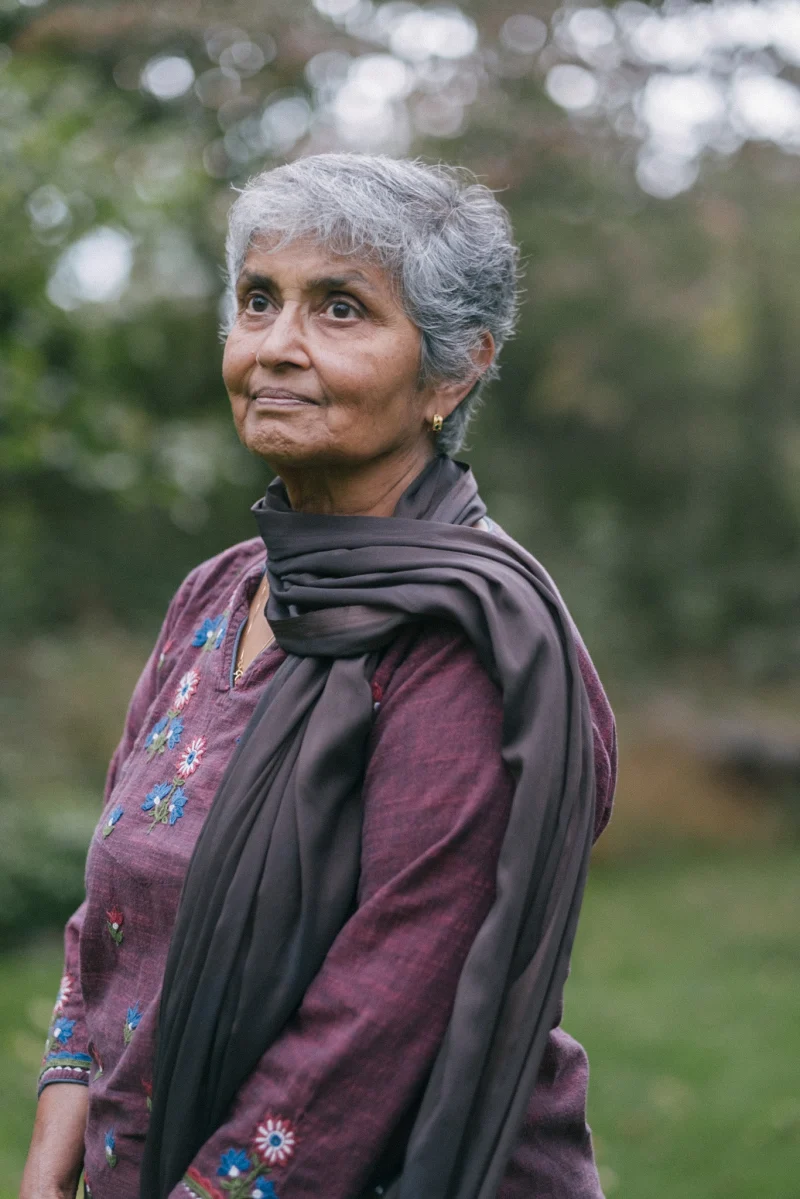
Kalpana
Kalpana spent her childhood in India, surrounded by the country’s rich spiritual traditions. After immigrating to the US to practice Western medicine, she grew disillusioned with its approach to healing and turned to acupuncture. Her discovery of Won Buddhism came later in life—just in time to support her through the challenges of old age and sickness.
Suffering as foundation
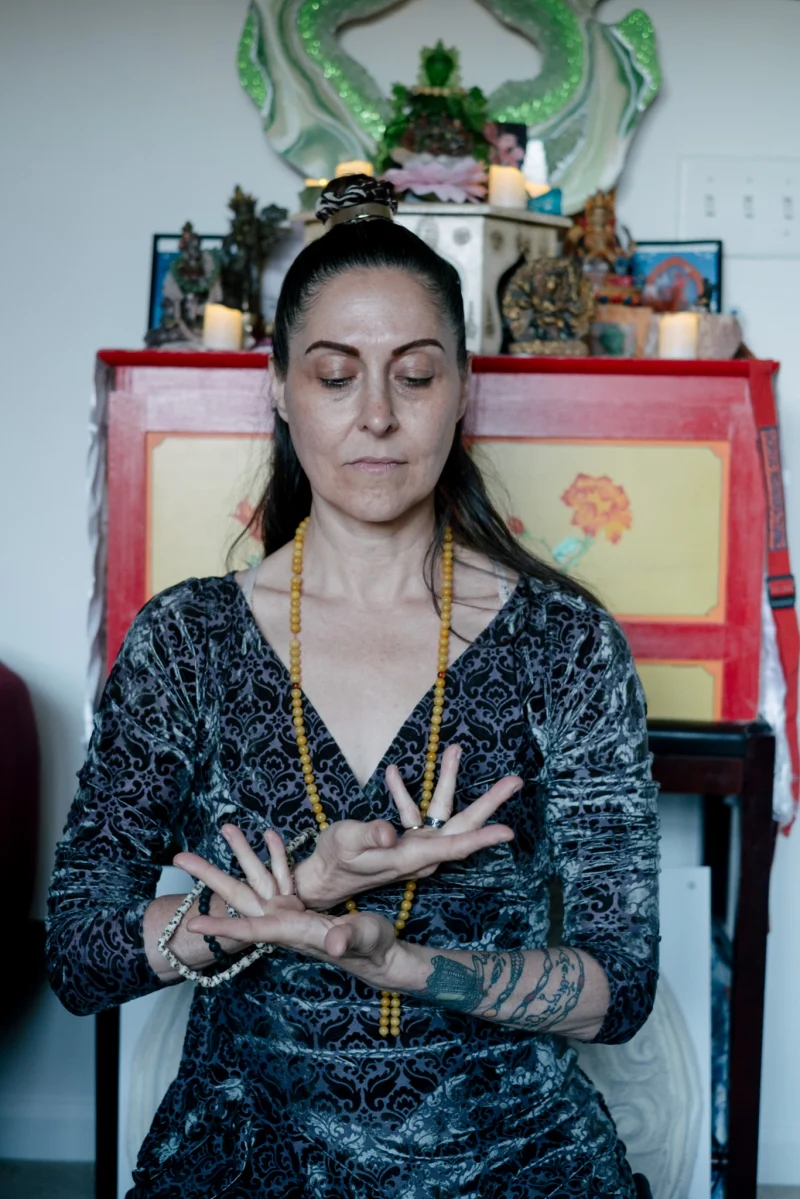
Amber
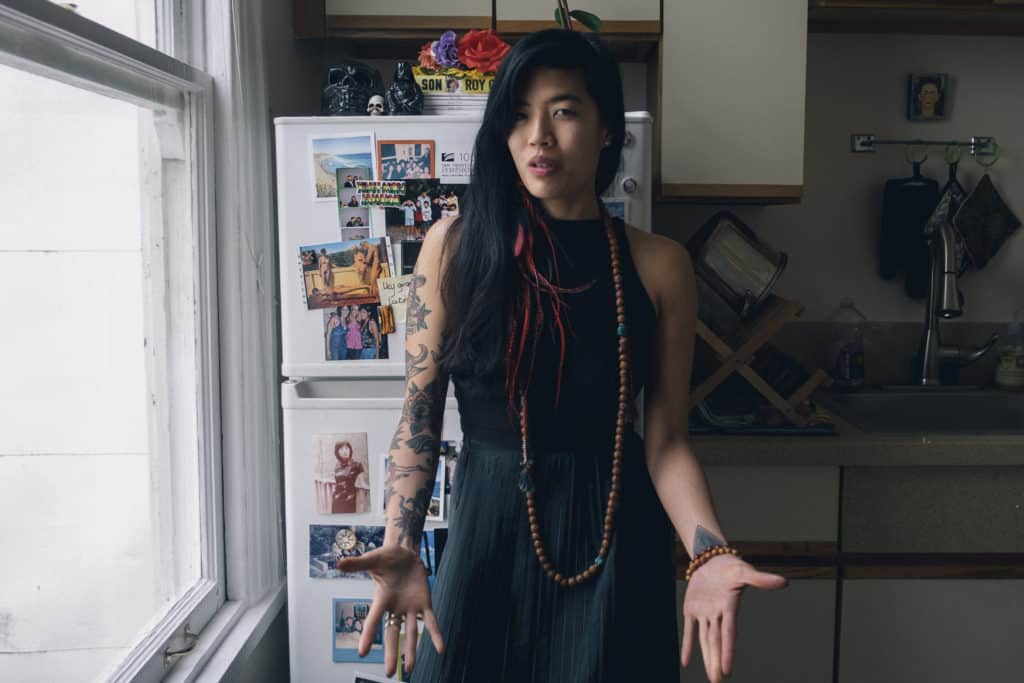
Amber grew up in a fairly well-to-do family, yet suffering still played a significant role in her life. A strong yoga practice supported her through young adulthood, but a meeting with a Tibetan monk blew the doors into the Dharma wide open. She has since embraced the practice wholeheartedly—and come to see her suffering as the foundation of her path.
Raised in Vipassana
Kim
Kim’s journey with Buddhist practice began almost at birth, raised by parents who were both Vipassana meditation teachers. From an early age, her home was filled with weekly Dharma gatherings, quietly shaping her understanding of mindfulness long before she could name it. Though she began meditating as a child, it wasn’t until a high school retreat—where she experienced a profound sense of self-acceptance—that her connection to the practice truly deepened.
Over the years, Kim’s path has been anything but linear. She has navigated bipolar disorder, heartbreak, loss, and moments of spiritual questioning that pushed her beyond the boundaries of a single tradition. Rather than breaking her, these experiences expanded her practice—deepening her resilience, compassion, and ability to meet life as it is. Drawing from mindfulness, community, and even a growing relationship with the concept of God, Kim has cultivated a practice that is both grounded and evolving.
Her teachers, especially those who embody vulnerability and honesty, have played a central role in shaping her understanding. She sees the path not as a pursuit of perfection, but as a continual return—to presence, to awareness, to compassion.
Today, Kim’s life reflects the quiet strength of long-term practice. She doesn’t measure success by external achievements, but by her ability to meet life with steadiness and openness.
“After years of practice, I don’t expect life to be easy—but I trust that I can meet whatever arises and find moments of ease within it.”
Voices
What the early path sounds like
“You start to see the same patterns come up again and again… and you can’t unsee them.”
“At some point, you have to stop looking around and just go deeper.”
“You don’t rise to the level of your intentions—you fall to the level of your habits.”
“I thought I understood self-compassion… until people pointed out how hard I was on myself.”
Reflection
How curiosity becomes refuge
You come in thinking you understand something like compassion or awareness. These are good words. Familiar words. And then you sit down, get quiet, and realize you’ve been holding yourself to a standard that would exhaust anyone. That the concepts you understood intellectually were being quietly undermined by patterns you hadn’t even looked at yet.
What begins as a comforting idea becomes a confrontation. Not a harsh one—but an honest one. Undeniable in the way that only real seeing can be.
And I think that’s where something shifts. Where refuge stops being an abstract concept and starts being something you actually need. Not escape—never really escape—but a place to return to when you’ve caught yourself being unkind to yourself again. Something more honest. Less reactive. A little more solid beneath your feet.
Then comes the moment most practitioners recognize with a kind of tired affection: the patterns.
There’s a stretch in early practice where this feels discouraging. Like you’ve been handed a mirror you didn’t ask for, and it keeps showing you the same thing. Like nothing is changing, and maybe nothing ever will.
But something else slowly becomes clear—and I find it genuinely beautiful when people reach this: seeing the pattern is already a form of freedom. The discovery isn’t that the pattern disappears. It’s that space opens up around it. A breath. A beat. A moment where something other than the automatic response becomes possible.
That space—that small, hard-won gap between stimulus and reaction—that’s where refuge starts feeling less like a concept and more like something you’ve actually lived. Something steady you can come back to when things go sideways.
Of course, then life reminds you that you don’t practice in ideal conditions.
“It’s easy to practice when things are calm… the real test is when life isn’t.”
Work piles up. Relationships get complicated. Someone cuts you off in traffic or says something that lands wrong, and suddenly the equanimity you felt on the cushion this morning seems very far away.
This is the part where early inspiration meets reality, and I think it’s actually the most important stretch of the whole path. Because the discovery here—if you stay with it—is that practice was never meant to be separate from the mess. It is the mess. It’s learning to meet the difficult conversation, the moment of frustration, the uncertainty about the future, with a little more steadiness than you had before.
Refuge, understood this way, becomes portable. You carry it into the hard parts. Not because you’ve mastered anything—but because you keep returning.
And that returning is harder than it sounds. Because there’s a particular kind of humility required that most of us weren’t expecting.
I’ve sat with this one for a long time. There’s something almost uncomfortable about how honest it is. We come to practice with real motivation, genuine desire to change—and then we discover how deep the habits go. How much of our behavior is running on autopilot, underneath the level of our intentions.
The work, it turns out, isn’t dramatic transformation. It’s small, consistent return. Starting again. Noticing you’ve drifted and coming back without making a whole thing of it. Over and over and over.
That repetition used to feel like failure to me. Now it feels like the actual practice.
Then there’s a choice that doesn’t announce itself but eventually has to be made.
In a world built to offer endless options, this might be the hardest step of all. There’s always another teacher, another tradition, another framework that might hold the key. And there’s nothing wrong with genuine exploration—that openness at the beginning is real and necessary.
But depth has its own requirements. It comes not from finding the perfect path, but from staying with one long enough for it to reveal something that only reveals itself over time.
What I keep coming back to, thinking about all of this, is how the early path works.
It doesn’t offer certainty. It doesn’t promise that things will get easier or that you’ll finally figure yourself out. What it offers is something quieter and, I think, more durable: orientation. A way to see more clearly. A way to return, again and again, to something steady—right in the middle of everything that keeps changing.
What begins as curiosity slowly, almost without your noticing, becomes refuge.
Not because life got easier. But because you found a way to meet it.
And honestly? That feels like enough.

The takeaway
Not because life got easier. But because you found a way to meet it.
See every practitioner in the early stages
Registration is required to view all profiles in this theme and support the project.
Members’ view
All practitioners in early development
Portraits · more themes