Theme · Deepen
The vast path of Mahāyāna
What would it mean to wake up—not only for ourselves, but for everyone?
Theme overview
Emptiness and compassion
Wisdom sees emptiness, and compassion responds to suffering.
Mahayana Buddhism begins with a deeply human question: what would it mean to wake up, not only for ourselves, but for everyone?
This is the heart of the Mahayana vehicle. It is not simply a path of personal peace, private clarity, or individual escape from suffering. It is a vast path of responsibility. A path that asks us to look directly at the nature of reality, and then to let that seeing soften the way we move through the world. At its core are two teachings that can feel simple at first, but become more profound the longer we practice: emptiness and compassion.
Emptiness, in the Mahayana view, does not mean nothing exists. It does not mean life is meaningless or cold or void. It means that nothing exists separately, permanently, or independently. Every person, every feeling, every moment, every identity, every wound, and every joy arises through causes and conditions. Everything is relational. Everything is moving. Everything depends on everything else.
And this is where compassion becomes unavoidable.
Because once we begin to see that we are not separate from others, compassion is no longer just a moral ideal. It becomes the natural response to reality. If my life is woven into yours, and yours into mine, then your suffering is not distant from me. Your liberation is not separate from mine. The Mahayana path is built on this recognition: wisdom sees emptiness, and compassion responds to suffering.
For many modern practitioners, this is not an abstract philosophy. It becomes a way of surviving, healing, and participating in the world with more honesty.
In their words
Six ways the path takes hold
Won Buddhism · finding guidance
James
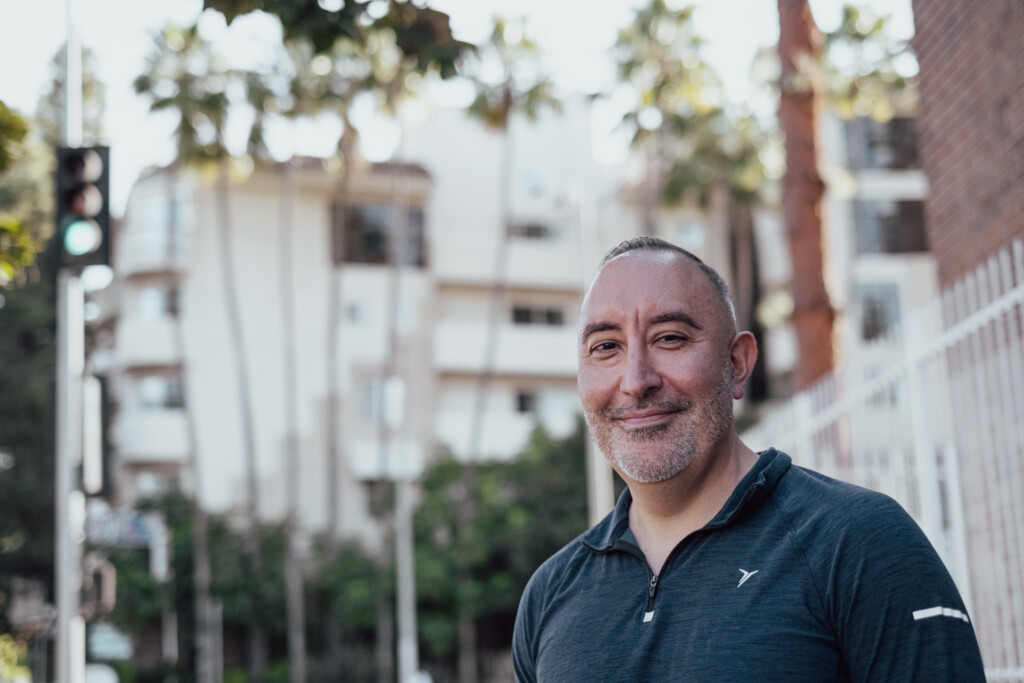
James’ story speaks to the longing many people feel before they find a path with structure and depth. Early on, he sensed that meditation mattered, but he also recognized the limits of trying to figure everything out alone. As he put it, “I knew there were powerful benefits to meditation. I had read about it, people talked about it, but I didn’t have a teacher. I didn’t have the guidance.” In that simple admission is something essential to Mahayana practice: awakening is not just an internal experience. It is supported by teachers, community, lineage, and relationship.
A Chicano educator and longtime public servant from Los Angeles, James found in Won Buddhism a tradition that welcomed all of who he is—a queer Latino man, a former athlete, a school leader, and a seeker—and now shares its tools with educators and students alike.
Jodo Shinshu · “I found my home”
William
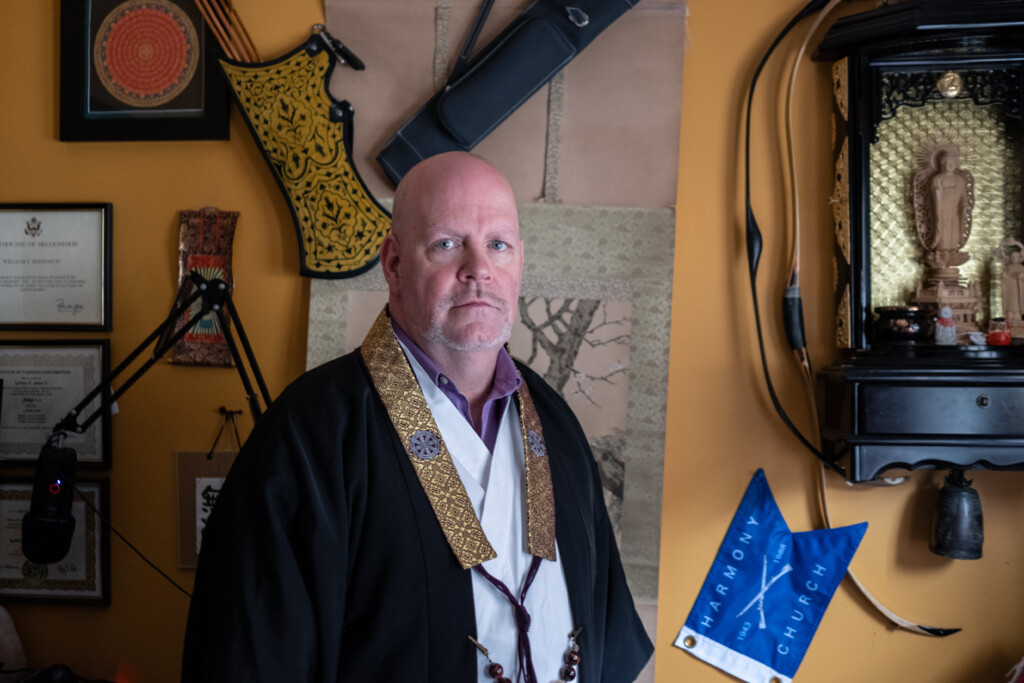
William’s journey reflects another side of this. For him, the Dharma was not only something to study, but something that became a refuge. When he says, “I found my home,” he is pointing to a feeling many practitioners recognize but struggle to explain. A lineage is not merely a set of teachings. It is a living container. It gives form to devotion, grief, ethics, humility, and service. In Mahayana practice, this sense of home expands beyond one person’s comfort. It becomes a training ground for seeing all beings as worthy of care.
“The essence of Jodo Shinshu lies in community and compassion, not dogma or isolation… I reframe Amida Buddha’s 18th Vow in military terms as, ‘Leave no one behind.’”
William is a combat veteran, martial arts teacher, haiku poet, and Buddhist chaplain whose life has been shaped by service, loss, and a relentless search for meaning. Born in Charleston, South Carolina, and raised within a deeply Christian environment, his worldview expanded early through traveling the world with his missionary grandmother. Encounters with different cultures, religions, and philosophies planted the seeds for a lifelong spiritual journey that eventually led him to Buddhism.
After serving in combat and surviving serious injuries, including a traumatic brain injury, William turned toward Buddhist practice not as an escape from suffering, but as a way to meet life directly—with honesty, compassion, and resilience. Through the Jodo Shinshu tradition, he found a path that emphasized community, humility, and “boots-on-the-ground” compassion rather than isolation or spiritual perfection. Today, he works closely with veterans through nonprofit work and as a lay Buddhist chaplain at the Jesse Brown VA Medical Center, helping others navigate trauma, grief, and healing.
The death of his wife deepened his understanding of impermanence and strengthened his commitment to living the Dharma through action. Whether teaching haiku, mentoring veterans, or supporting his daughters, William sees Buddhism as something lived in ordinary moments of kindness and presence.
“You don’t have to sit on a mountain to follow the path. You can serve others right where you are.”
Zen · paralysis by analysis
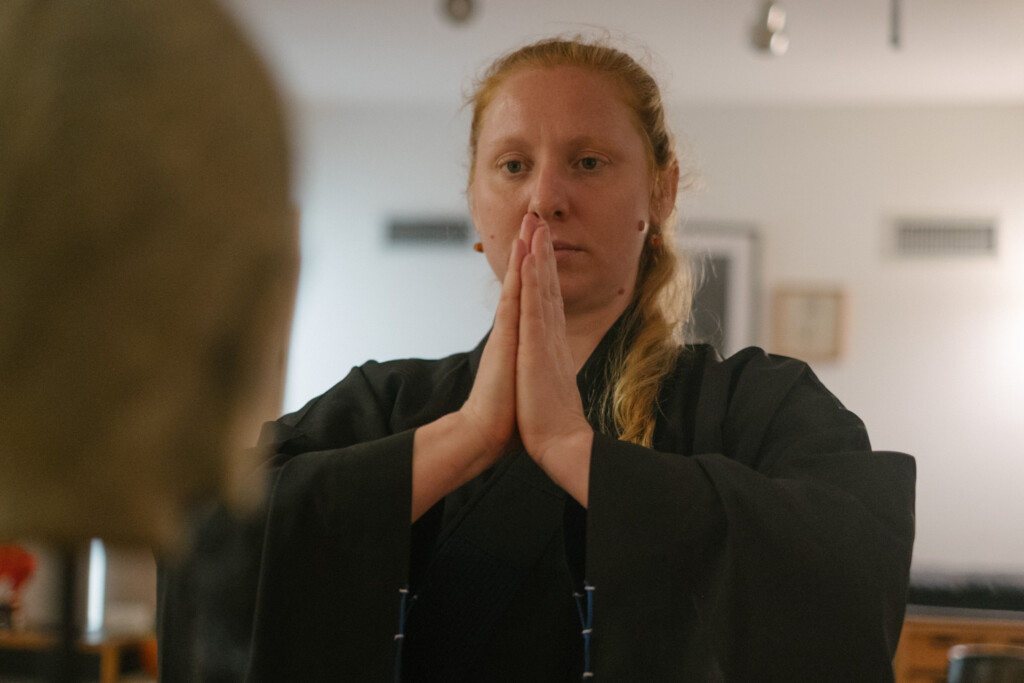
Gina
Gina’s voice is especially important in this modern context. She comes from a generation surrounded by endless choices, spiritual resources, online teachings, meditation apps, and competing paths. That abundance can be beautiful, but it can also become paralyzing. Gina describes this as “paralysis by analysis,” where the sheer volume of available options can make it harder to commit deeply to any one path. Her insight helps frame the challenge of Mahayana practice in the West today: the path is available, but availability is not the same as transformation. Real practice still asks for commitment, patience, and the courage to stay with something long enough for it to change us.
Gina is a Zen monk and teacher based in New Orleans whose path was shaped by Southern roots, a strong work ethic, music, and the discipline of Bikram yoga. Raised in a Methodist family, she grew up with a deep sense of responsibility, humility, and service—values she later recognized as deeply aligned with the Dharma.
Her first encounters with non-Western spirituality, including the Bhagavad Gita and yoga, opened a door to a wider spiritual world. But it was Zen that gave her something more grounded: a consistent practice, a living lineage, and a Sangha to serve. For Gina, Zen is not about chasing answers or collecting spiritual experiences. It is about showing up, sitting down, facing yourself, and learning how to live with more clarity and less fear.
As a millennial practitioner, Gina speaks honestly about the burden of too many choices in modern spiritual life. She understands how easy it is to get lost in information, overthinking, and the pressure to “get it right.” What drew her to this lineage was its steadiness. Zazen gave her a way to stop searching endlessly and begin committing deeply.
Her practice has also become an act of service. As a monk, she sees her role as helping preserve the structure of the temple so others have a place to practice. Her teacher’s words continue to guide her:
“You don’t come to Zazen for yourself. You come here for other people.”
For Gina, that is the heart of the path—freedom found through consistency, humility, and showing up for the Sangha.
Plum Village · recovery and community
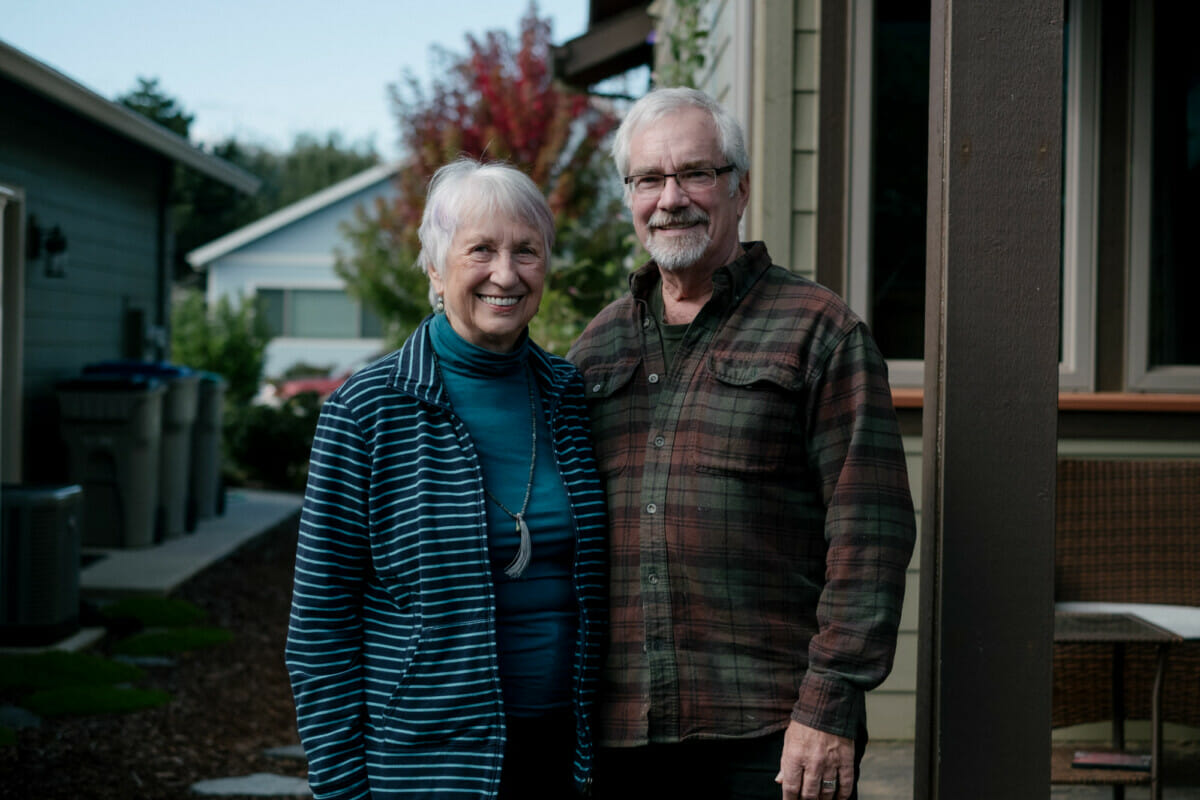
Dick & Bonnie
Dick and Bonnie found healing, community, and transformation through recovery, mindfulness, and Thich Nhat Hanh’s Plum Village tradition.
“There’s a strong overlap between Thich Nhat Hanh’s style of Buddhism and Unitarian Universalism… We practiced body scans, walking meditation, and learned different types of mindfulness techniques.”
Won Buddhism · everyone a Buddha
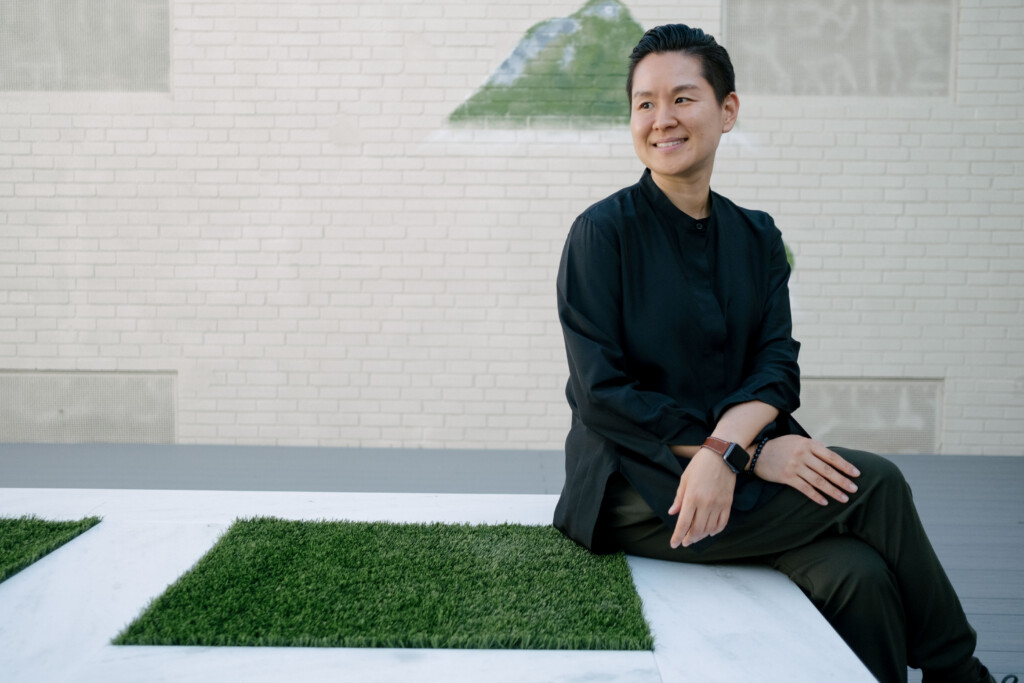
Grace
Grace grew up with Korean Buddhist roots and came into her own practice through the loss of her father. Today she teaches the Dharma as an everyday practice of healing, awareness, and grace.
“Won Buddhism encourages us to make direct offerings to those around us—because they, too, are Buddhas.”
Zen · teachings that felt true
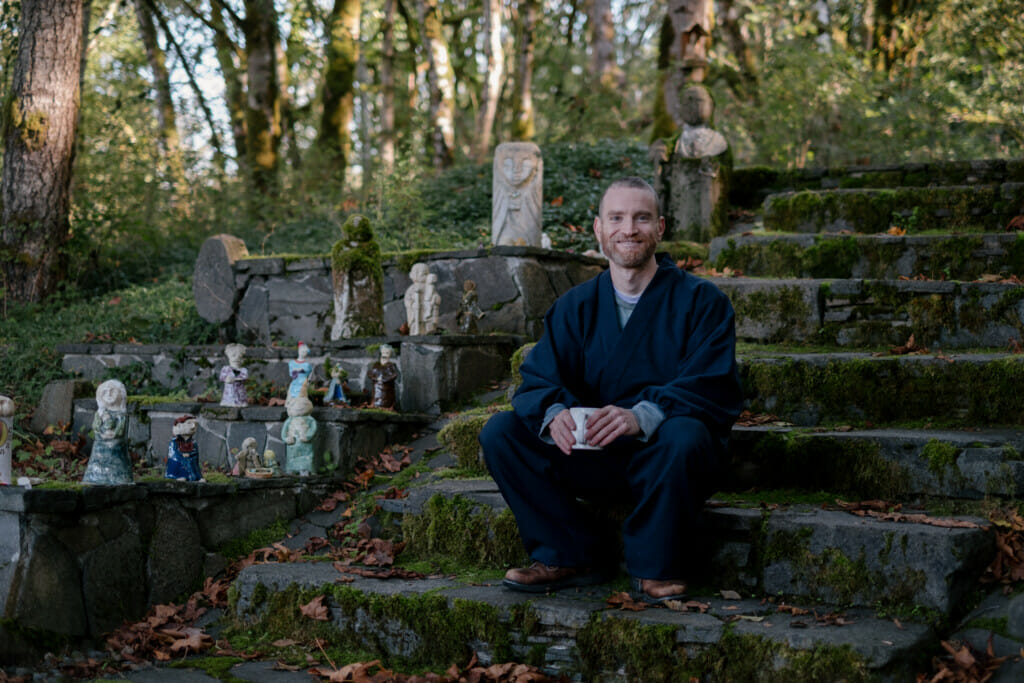
Jogen
Jogen’s path led into Zen and monastic practice, with meditation and Sangha at its center—and a steady interest in bringing the Dharma beyond the cushion and into everyday life.
“When I encountered Buddhist teachings, their acknowledgment of life’s inherent difficulties felt trustworthy and real. They met me where I was.”
Reflection
The bodhisattva path
That is why compassion in the Mahayana is not sentimental. It is disciplined. It is practiced through patience, generosity, ethical conduct, meditation, and the willingness to keep showing up even when the world feels overwhelming. Compassion is not simply feeling bad for others. It is allowing the suffering of others to matter enough that it changes how we live.
This is the beauty of the Mahayana. It does not ask us to choose between wisdom and love. It teaches that the two are inseparable. Wisdom without compassion can become dry, detached, even cold. Compassion without wisdom can become overwhelmed, confused, or attached. But together, they form the bodhisattva path—the path of someone who seeks awakening in order to benefit all beings.
The bodhisattva ideal is one of the great gifts of Mahayana Buddhism. It says that the highest aspiration is not to leave the world behind, but to meet it more fully. To see suffering without turning away. To recognize emptiness without falling into despair. To understand impermanence without becoming numb. To cultivate compassion without needing the world to be easy.
In a time when so many people feel isolated, overstimulated, and spiritually scattered, Mahayana offers something both ancient and urgently relevant. It reminds us that we are not fixed. Our pain is not fixed. Our identities are not fixed. Even the world we have created is not fixed. Because everything arises through causes and conditions, everything can also be transformed through causes and conditions.
This is where the teaching becomes hopeful. If suffering is conditioned, then healing can be cultivated. If anger is conditioned, patience can be cultivated. If confusion is conditioned, wisdom can be cultivated. If separation is conditioned, compassion can be cultivated.
Mahayana Buddhism invites us into that cultivation. It asks us to practice not only for the peace we can find on the cushion, but for the kind of human being we become when we stand back up. It asks us to look at the world with clear eyes and an open heart. To see that emptiness is not a denial of life, but the very reason transformation is possible. And to see that compassion is not separate from awakening, but the expression of awakening itself.
In the end, the Mahayana vehicle is a path of vastness. Vast view. Vast heart. Vast responsibility. It reminds us that our lives are not isolated stories. We are part of one another. We are shaped by one another. And through practice, we can learn to respond to that truth with wisdom, courage, and care.

The takeaway
Vast view. Vast heart. Vast responsibility.
Mahāyāna lineages
Practitioners in the lineage

Zen · from success to practice
Bruce
Bruce is a longtime Zen practitioner whose path to Buddhism emerged after years of outward success left him searching for something deeper. A former professional musician and businessman from Seattle, Bruce eventually left his old life behind to spend over a decade immersed in intensive Zen practice and monastic training in Salt Lake City. His journey through koan study, meditation, and community leadership reshaped how he understood identity, freedom, and compassion. Today, he continues teaching and practicing while integrating Buddhist insight into ordinary family and community life.
Won Buddhism · psychology and practice
Lennell
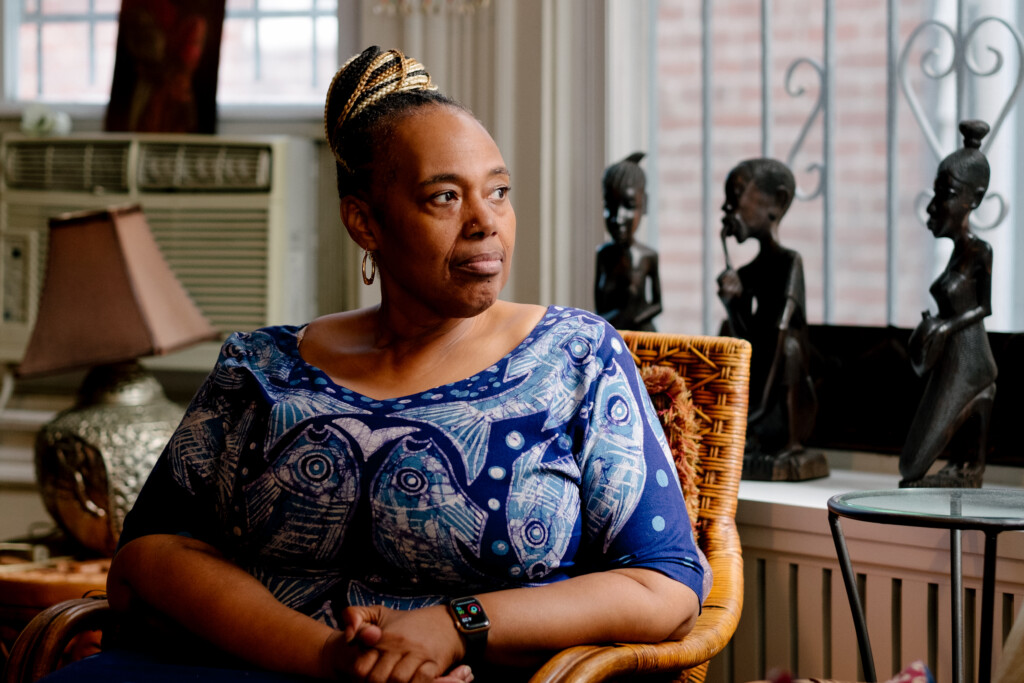
Lennell is a psychologist, professor, and practitioner of Won Buddhism whose work explores the intersection of African philosophy, psychology, and contemplative practice. After a lifelong spiritual search through multiple traditions, she found a home in Won Buddhism, where meditation and mindfulness transformed her understanding of self-knowledge from theory into lived experience. Through her teaching and practice, Lennell encourages others to study the mind, cultivate compassion, and live with greater awareness and harmony.
See every Mahāyāna practitioner
Registration is required to view all profiles in this theme and support the project.
Members’ view
All Mahāyāna practitioners
Deepen · more themes
Continue exploring
Lineages
Why lineage still matters in today’s world.
Open themeTheravāda
The School of the Elders—stripped down and honest.
Open themeVajrayāna
The lightning path in a modern world.
Open themeDeepening the practice
What changes when practice stops being something you do and starts reshaping you?
Open theme