Explore
Explore with a beginner’s mind
What if everything you’ve been looking for has been quietly waiting — not in the next self-help book or the next retreat, but in the simple, radical act of sitting still and paying attention?

Where this begins
Not with doctrine, but with people
In a world that rewards speed, Buddhism asks you to slow down. In a culture obsessed with answers, it hands you better questions.
That question stopped me cold the first time I really let it land. And I think it might stop you too.
Because here’s what I keep noticing: people aren’t turning toward Buddhism because life is going well. They’re turning toward it in the cracks — after the divorce, after the diagnosis, after the moment when all the striving and achieving and optimizing suddenly feels hollow. That’s not a small thing. That might actually be everything.
This page begins there. Not with doctrine or definitions, but with the living, breathing reality of people — real doubts, real searches, real attempts to find something solid in a world that rarely slows down long enough to ask what any of it means. For most of us in the West, Buddhism doesn’t come as inheritance. It arrives as a whisper, a curiosity, sometimes a quiet crisis. And from that moment, something starts to shift.
Three questions to start with
What the practitioners keep returning to
Spiritual exploration
“Exploration is necessary — but depth only comes when you stop searching and start committing.”
Many practitioners describe exploration as an essential first step. Encountering different teachings, communities, and practices clarifies what resonates. But again and again, their stories point to the same realization: real transformation begins when exploration gives way to commitment — to a lineage that offers structure, accountability, and a time-tested framework.
Learn why
Why Buddhism
“The strength of Buddhism is that it meets people where they are, without losing its core.”
Its forms may shift to meet modern lives, but its core teachings — on suffering, impermanence, compassion, and liberation — remain intact and urgently needed. That adaptability lets it speak across cultures, professions, and generations, offering practical tools for stress, identity, and uncertainty while still pointing toward deep inner change.
Learn why it resonates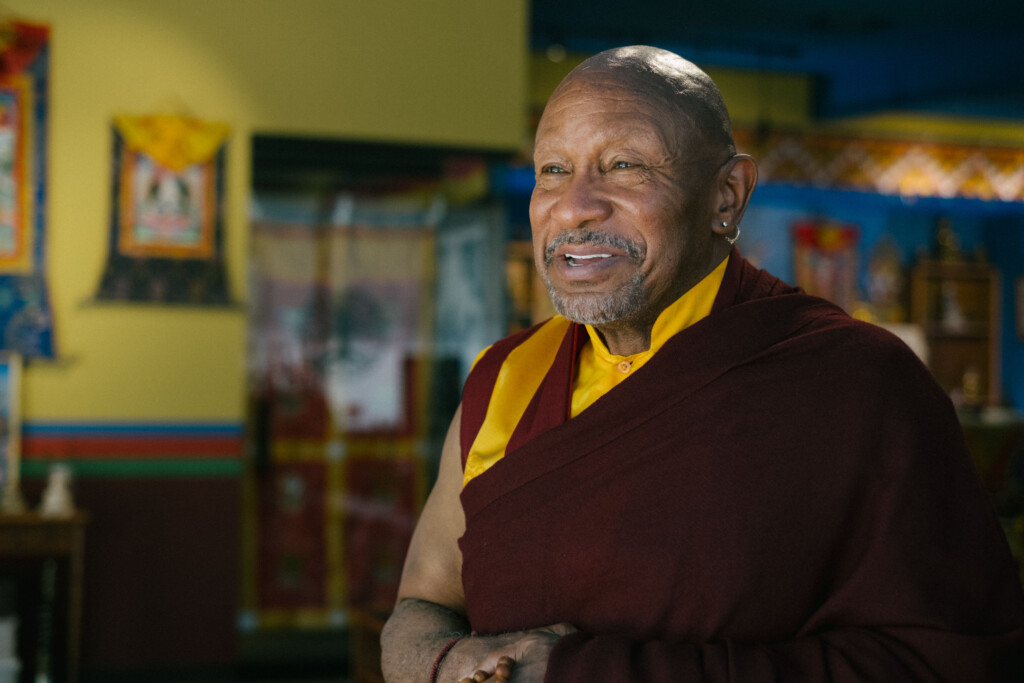
Adapting to the West
How much can Buddhism change without losing what makes it work?
As Buddhism gains traction in Western societies, diverse voices — many from Tibetan traditions — weigh in on the superficial adoption of terms, teacher training, translation, and which practices get passed on. Together they show how the Dharma is finding its way into Western cultures, and the complexities that come with it.
Learn how it’s changingPhoto essays
Places where practice lives
 TaradhatuA lineage rooted in Tibetan Buddhism and carried forward by the vision of Prema Dasara — devotion made visible, devotion made communal.Read the essay →
 Garden of 1000 BuddhasIn western Montana’s Jocko Valley, the Garden of One Thousand Buddhas lies north of Missoula.Read the essay →
 RetreatsIn a world that rewards speed, productivity, and constant responsiveness, stepping into retreat is a quiet act of resistance.Read the essay →
The archive
More ways to explore
More than 70 portrait interviews and hundreds of hours of video, organized into themes that follow how people begin, practice, and meet the challenges of modern life.
Every theme opens with a free preview. Registering unlocks the full interviews and helps support the project.
5 themes
Beginning
How people find their way to the path, and what they bring with them.

5 themes
Practice
What people actually do, and who helps them do it.
The practice
That which makes transformation possible.
Refuge
The depth of this significant milestone.
Role of teachers
Why their role cannot be overlooked.
Other practices
The range of practices suited to different dispositions.
Buddhism and yoga
Why practitioners bring Buddhist practice into their yoga.
4 themes
Meeting modern life
Where the path runs into personal and cultural limits.
The book
Where this work is headed
The culmination of this work will be a book that explores the Buddhist path through lived experience — how people begin, struggle, commit, and change over time. Beyond the book, this website is meant to grow into a long-term resource: a place where the stories can be met without the noise of likes, comments, or algorithms, with space for reflection rather than performance.
The first book focuses on what depth of practice looks like
The power of committed practice within authentic lineages
The wide range of practices beyond meditation alone
The role of embodied community (sangha) in shaping growth
How Buddhist practice responds to personal and societal challenges