Photo essay · Montana
Awakening, again and again
A thousand Buddhas in the Jocko Valley, and the Rimé spirit of Ewam that holds them.
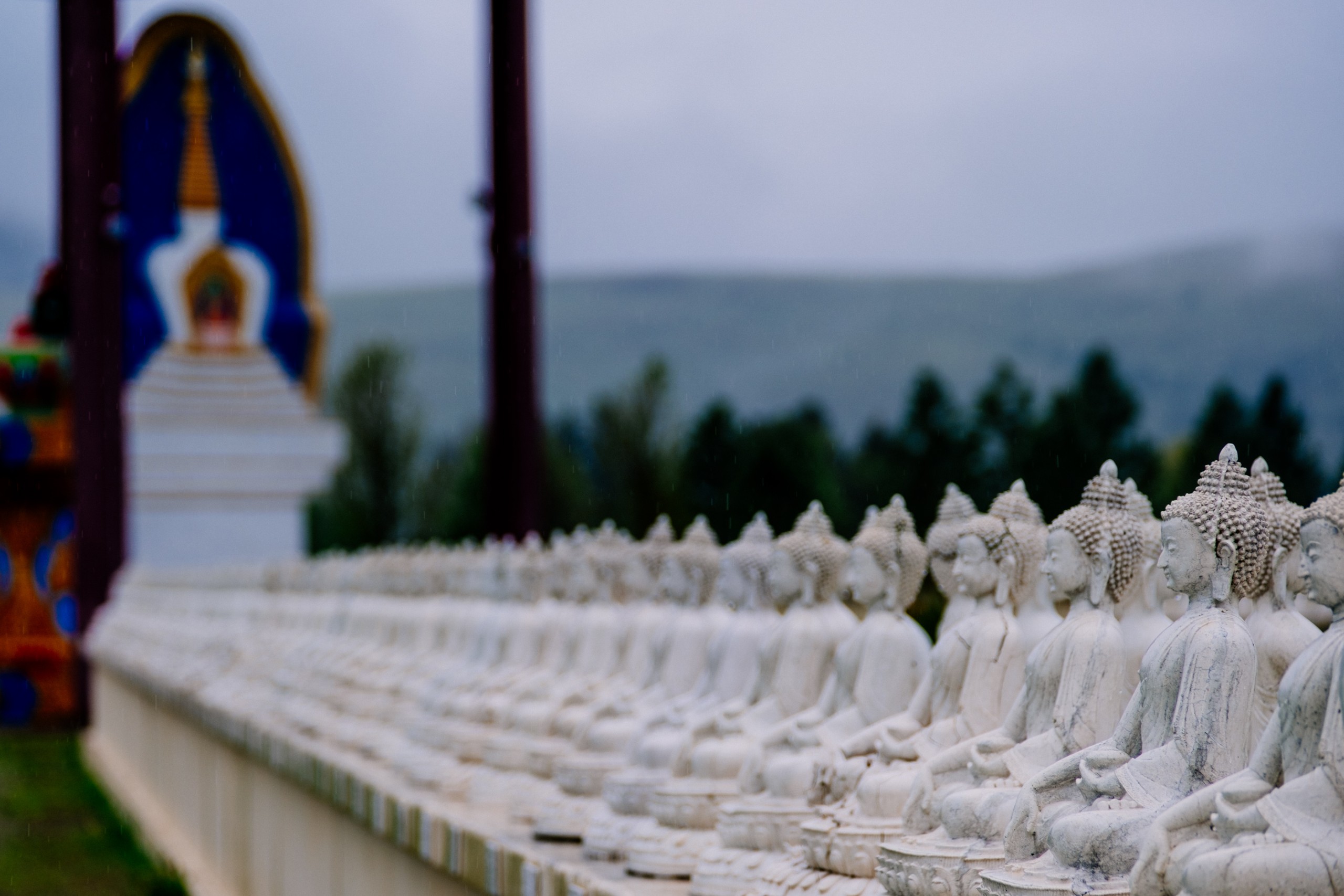
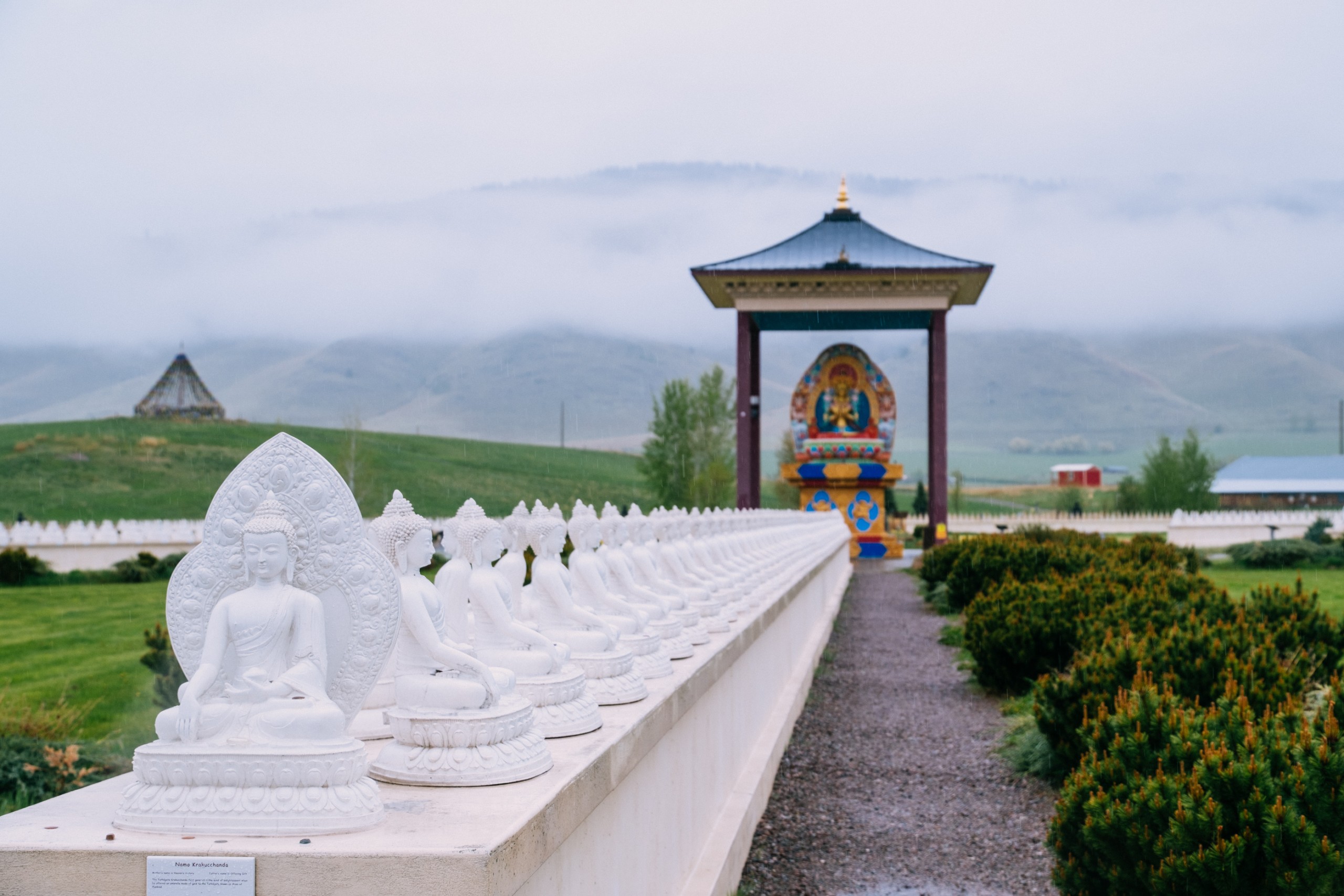
Row after row of identical white Buddhas sits in the rain beneath the hills of the Jocko Valley, a stupa niche painted in blue and gold glowing at the edge of the frame.
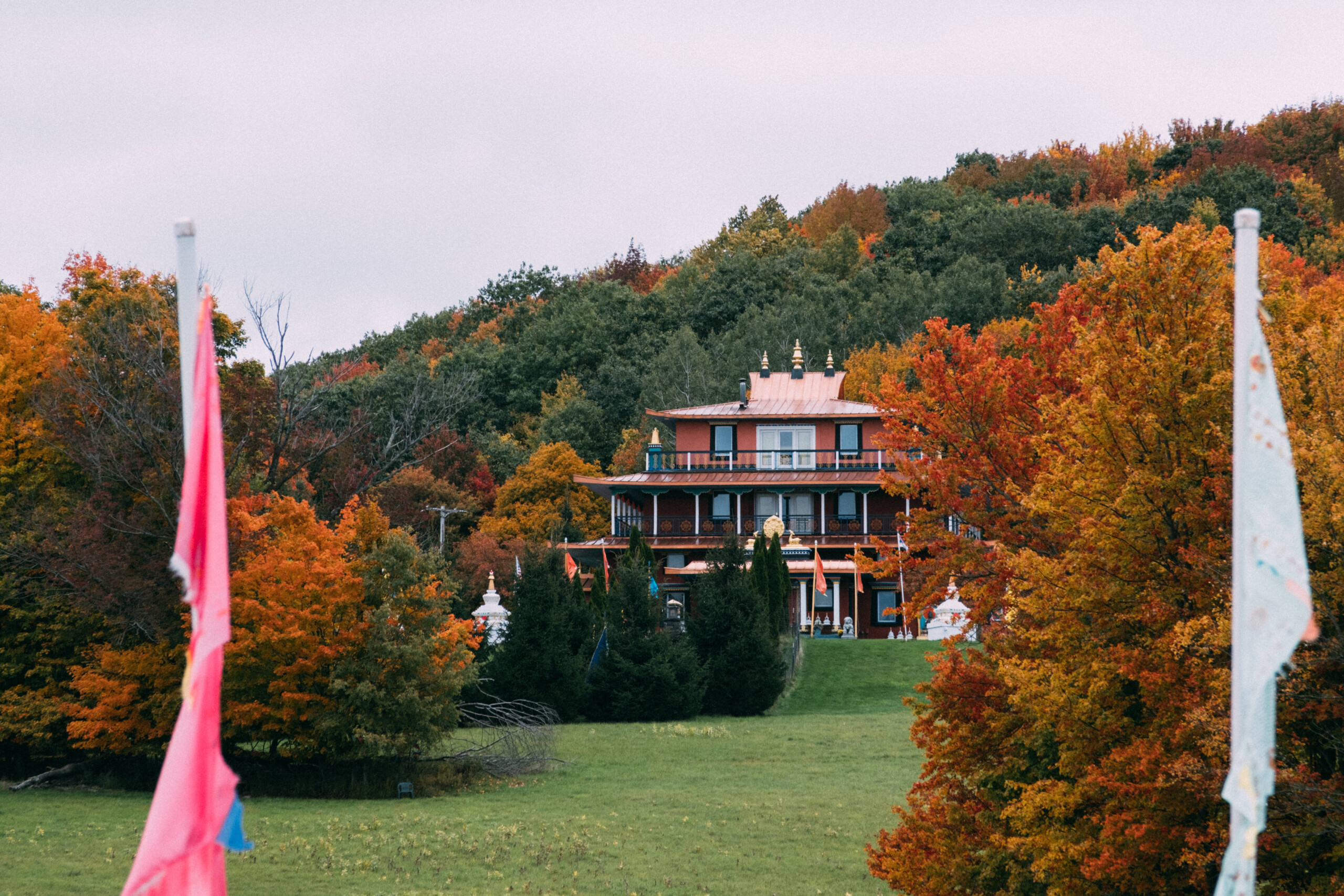
The Buddha Garden is not a place you rush through. It unfolds slowly, asking you to meet it with the same patience it quietly cultivates. Set within the wider land mandala of Ewam USA, the garden feels less like a monument and more like a living field of practice—where form, landscape, and intention merge.
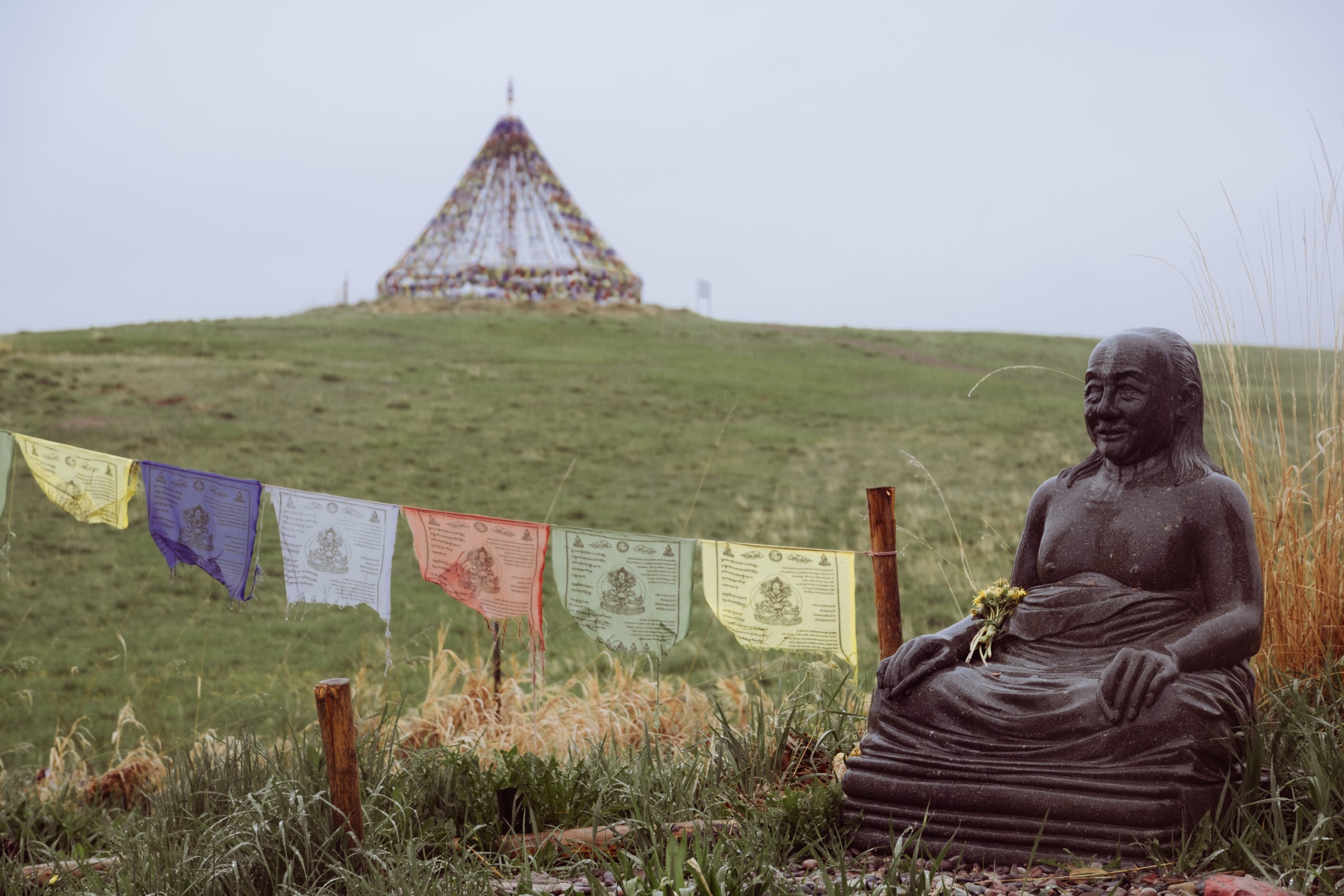
At its heart, the Buddha Garden is an expression of the Rimé (non-sectarian) lineage of Tibetan Buddhism. Rooted in respect for multiple authentic lineages rather than allegiance to a single school, the Rimé approach emphasizes integration, dialogue, and depth over dogma. This spirit is palpable in the garden itself: rows of Buddhas, prayer flags moving with the wind, stupas and shrines placed in conversation with the surrounding hills. Nothing competes for attention. Everything belongs.
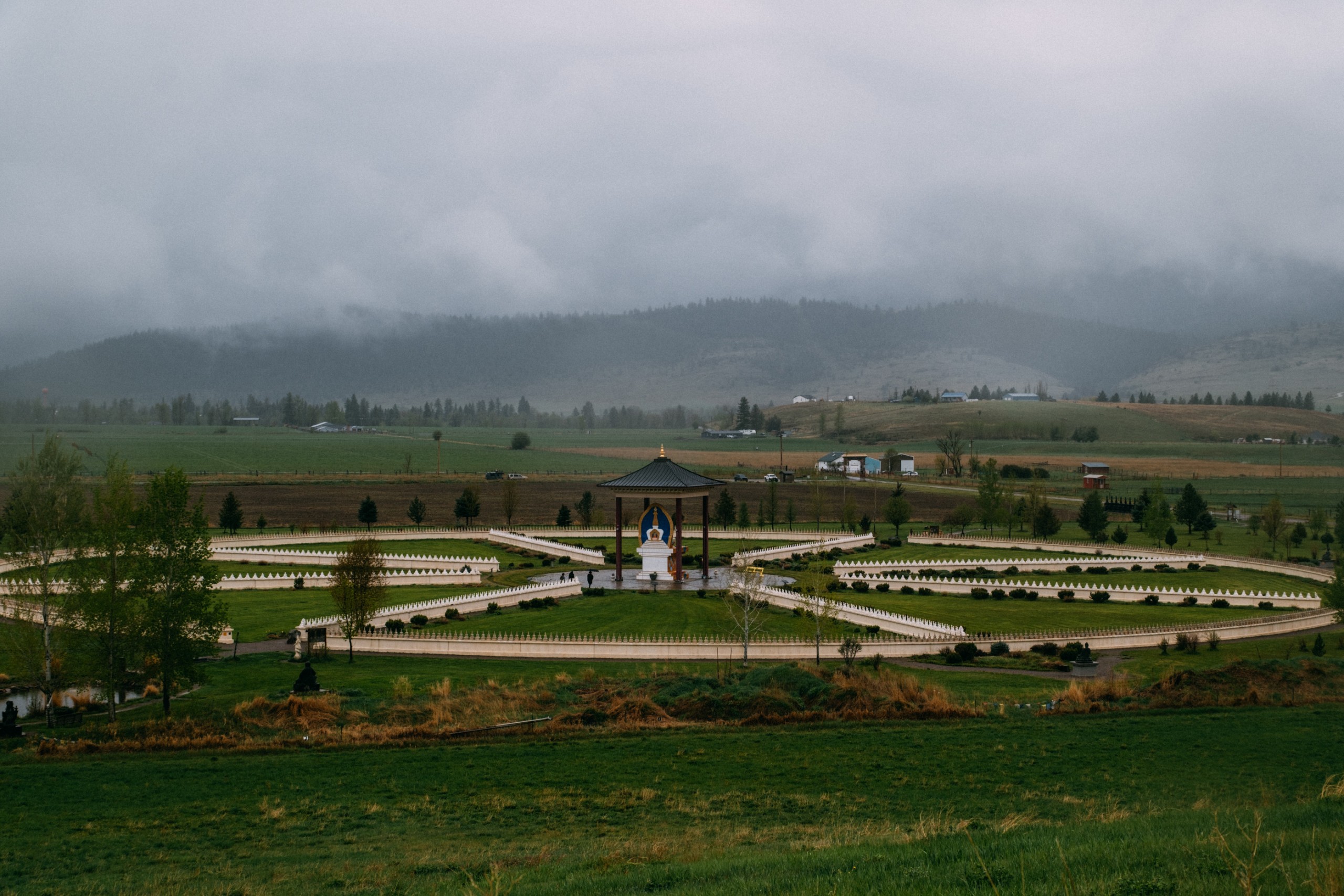
The garden serves as both a contemplative space and a visual teaching. Walking its paths, repetition becomes instruction. Each statue mirrors the next, echoing the Buddhist understanding that awakening is not rare or exceptional—it is possible, again and again, under the right conditions. Weather, seasons, and time are allowed to leave their mark, reinforcing the Dharma lesson of impermanence without explanation.
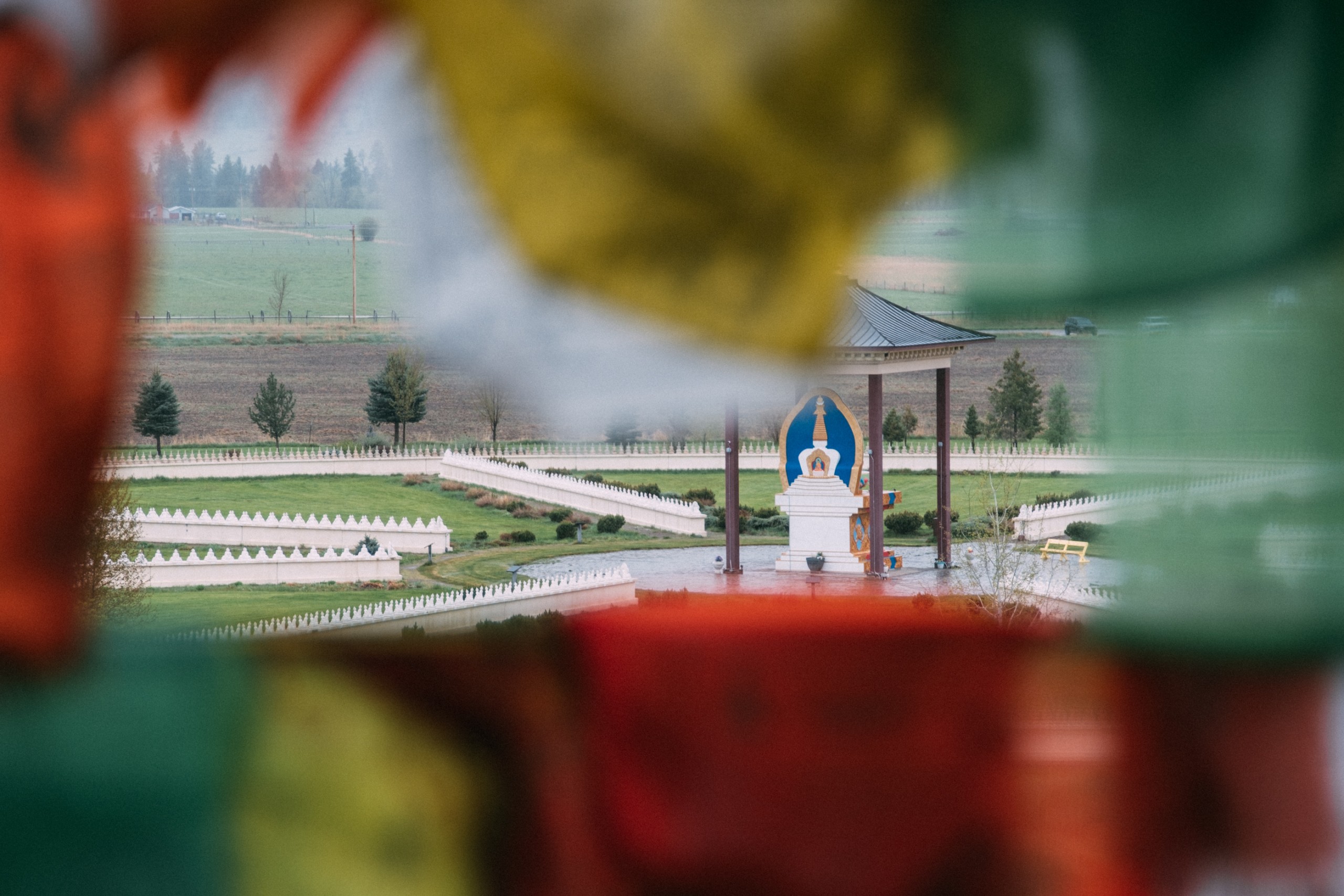
This space is deeply connected to the work of the Ewam Buddhist Institute, which provides the educational and practice foundation supporting the garden. The Institute offers a wide range of programs designed to meet practitioners at different stages of the path, while maintaining fidelity to traditional Buddhist training.
Programs include:
- Meditation instruction and retreats, introducing both foundational mindfulness practices and advanced contemplative methods
- Buddhist philosophy and lineage teachings, grounded in classical texts and oral transmission
- Ngöndro and Vajrayana preparatory practices, emphasizing devotion, discipline, and embodied transformation
- Ritual, mantra, and deity practices, taught with careful attention to context, ethics, and lineage integrity
- Community programs and public teachings, making the Dharma accessible without diluting its depth
What distinguishes the Institute—and by extension, the Buddha Garden—is its refusal to separate study from lived experience. The teachings are not meant to remain intellectual. They are meant to be walked, sat with, and absorbed—often quite literally—into the land.
In a Western context where Buddhism is sometimes reduced to technique or self-improvement, the Buddha Garden stands as a quiet corrective. It reminds us that practice is relational: between teacher and student, lineage and landscape, inner life and outer form. The garden doesn’t explain Buddhism. It embodies it.
The teachings are not meant to remain intellectual. They are meant to be walked, sat with, and absorbed.
To support places like the Buddha Garden and the Ewam Buddhist Institute is to support continuity—of lineage, of depth, and of authentic sangha in the West. These are not just cultural artifacts or scenic spaces. They are conditions for awakening, patiently held open for anyone willing to slow down and step inside.
At a glance
Garden of 1000 Buddhas
- Tradition
- Tibetan Buddhism · Rimé (non-sectarian)
- Home
- Ewam USA and the Ewam Buddhist Institute
- Programs
- Meditation and retreats, philosophy, ngöndro, ritual and mantra, public teachings
- Location
- Arlee, Montana · Jocko Valley

A quiet corrective
The garden doesn’t explain Buddhism. It embodies it.
Photo essays