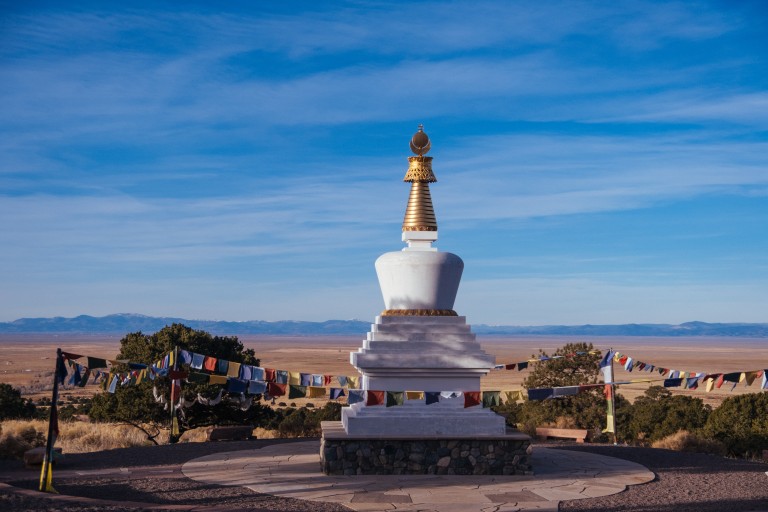
Photo essay · Vajra Vidya
Where retreat becomes everyday practice
A Tibetan Buddhist retreat center in Crestone, Colorado, seen through two lives: Ani Lodro, who found her practice in service, and Nancy, who carried hers through profound physical change.
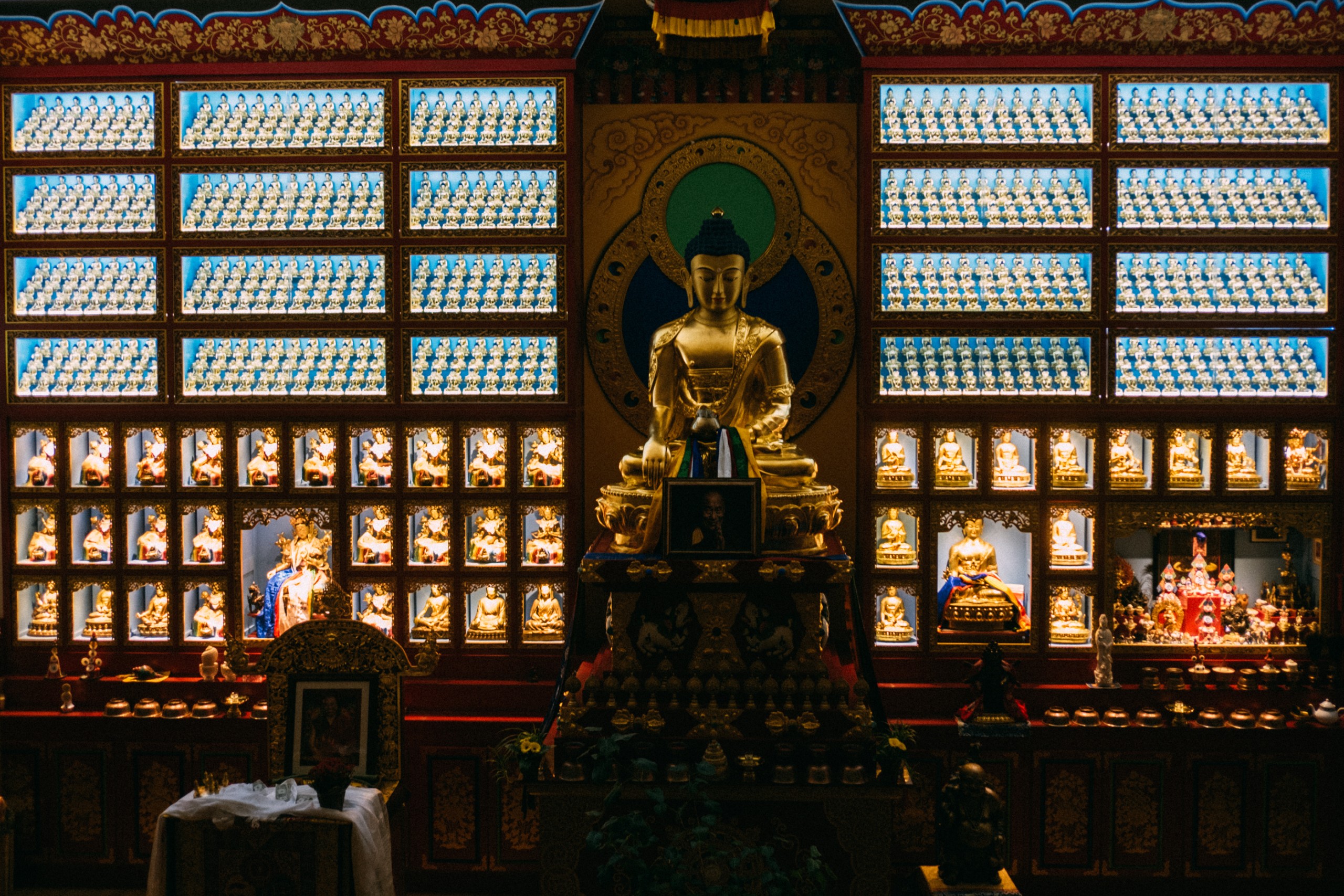
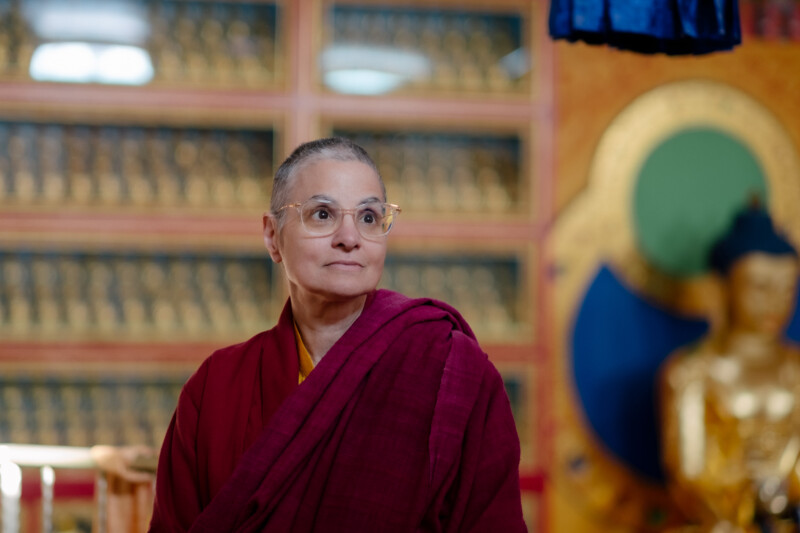
A golden Buddha presides over the shrine hall, surrounded by rows of small, backlit Buddha figures.
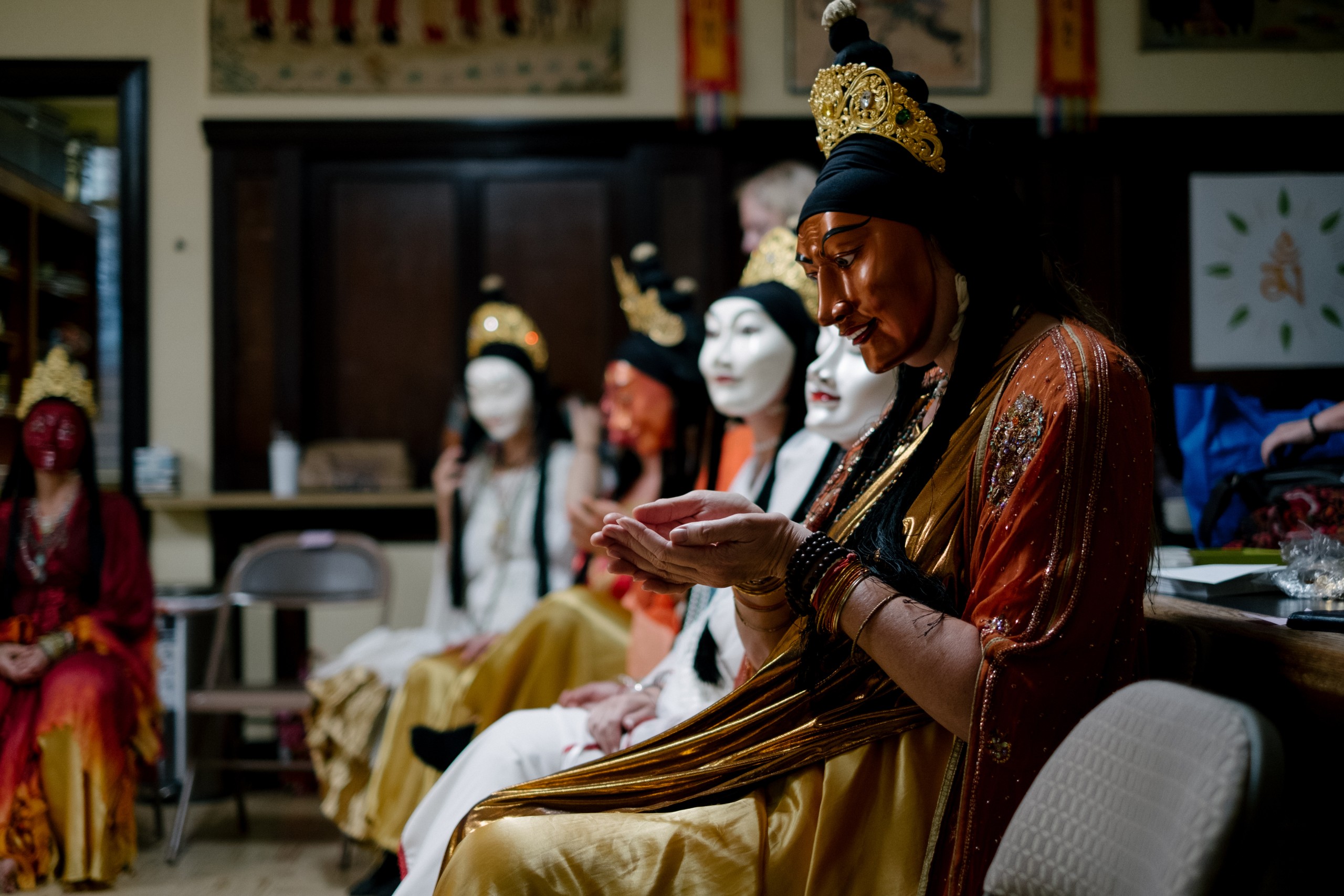
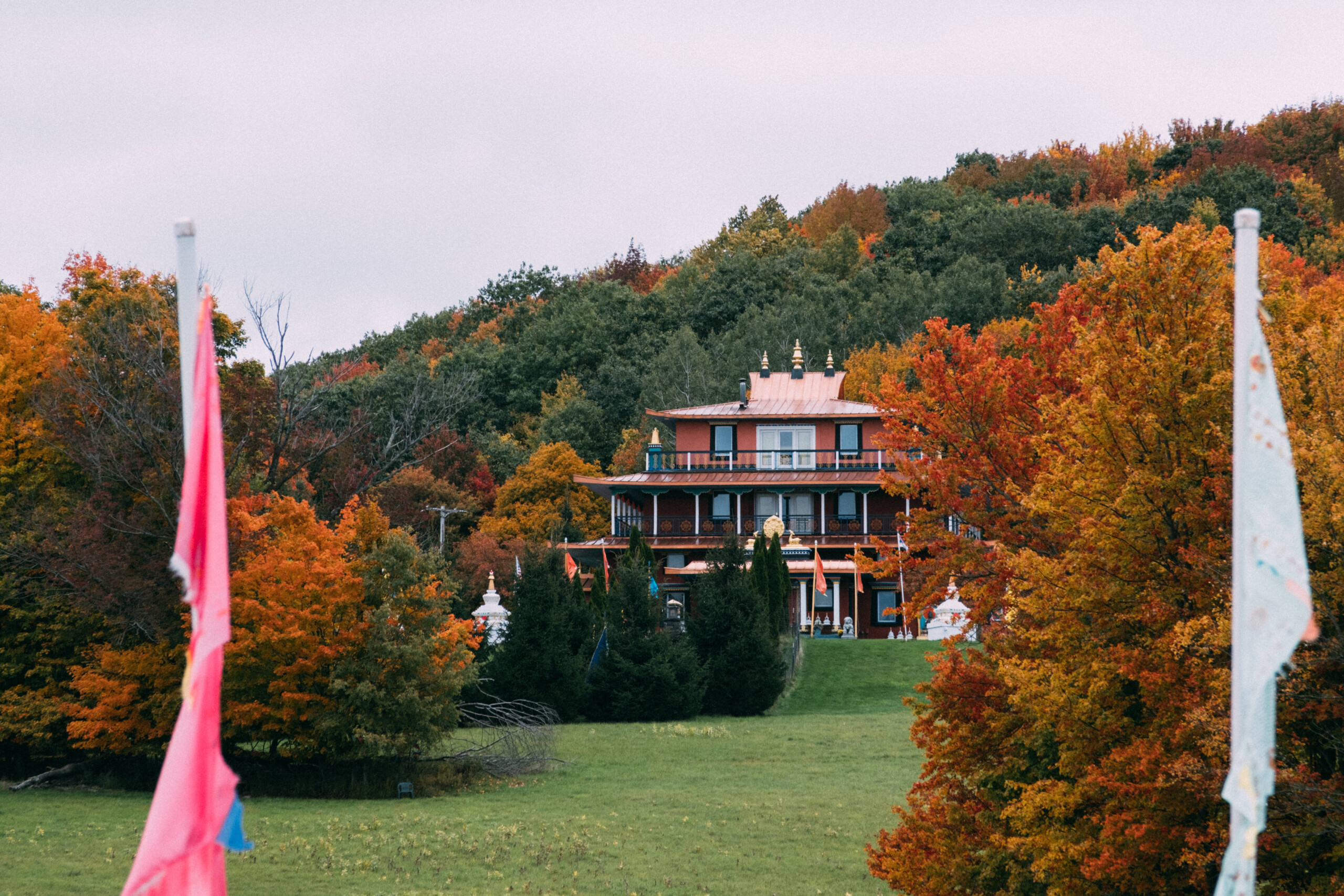
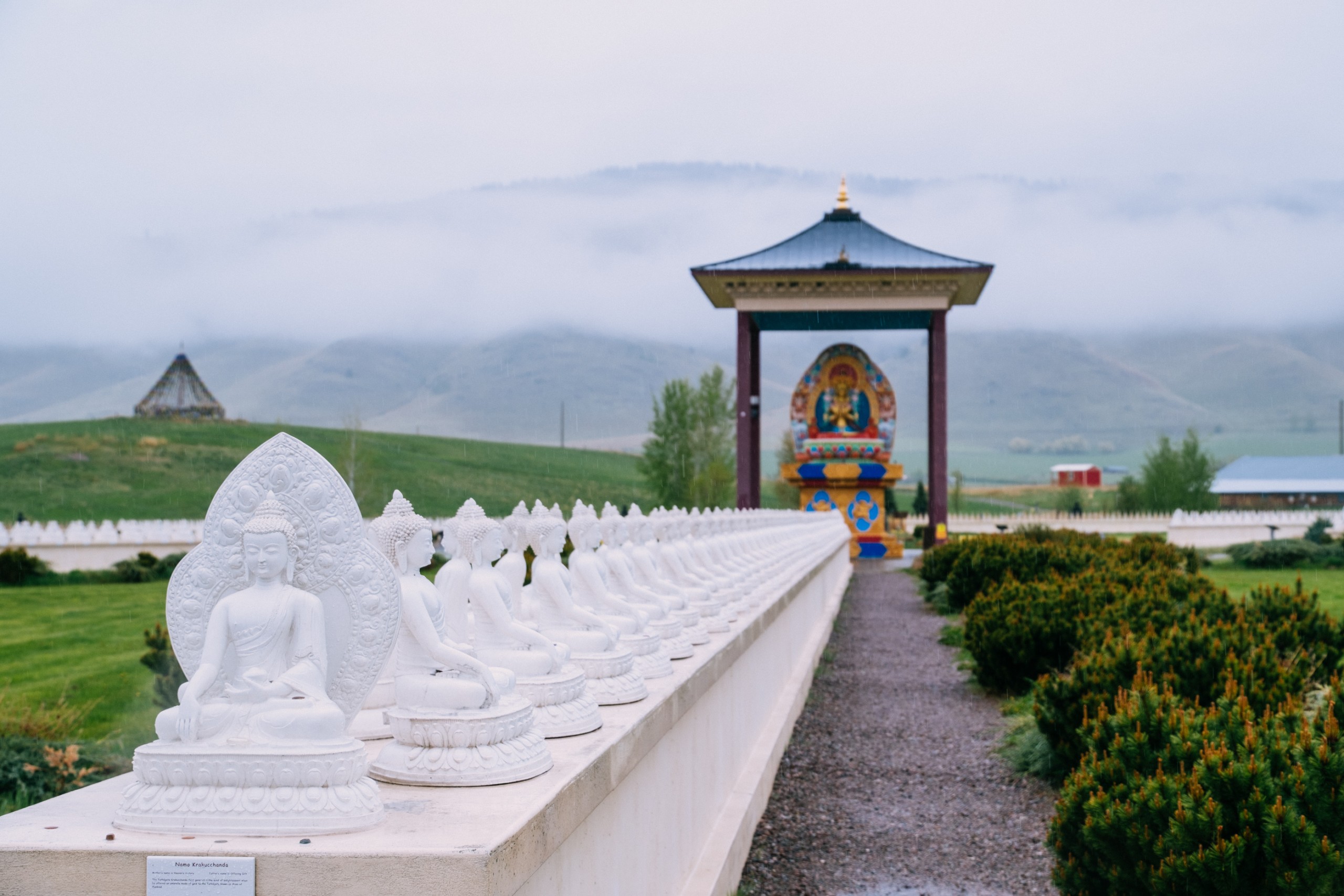
The photographs on this page offer a pause. As you move through them, you can spend a little time with Vajra Vidya before returning to the pace of your own day. That pause is part of what draws people to a retreat center. They come for room to meditate, study, ask questions, and listen more carefully to what is happening in their minds.
When I began Beyond the Cushion, I wanted to understand what happens after such moments of quiet. How does practice change the way someone lives? At Vajra Vidya, my conversations with Ani Lodro and Nancy gave me two very different ways to explore that question. Ani Lodro found a life of practice through monastic service. Nancy continued her practice through decades of spiritual exploration and a serious change in her physical abilities. Their stories have stayed with me as I look at these images.
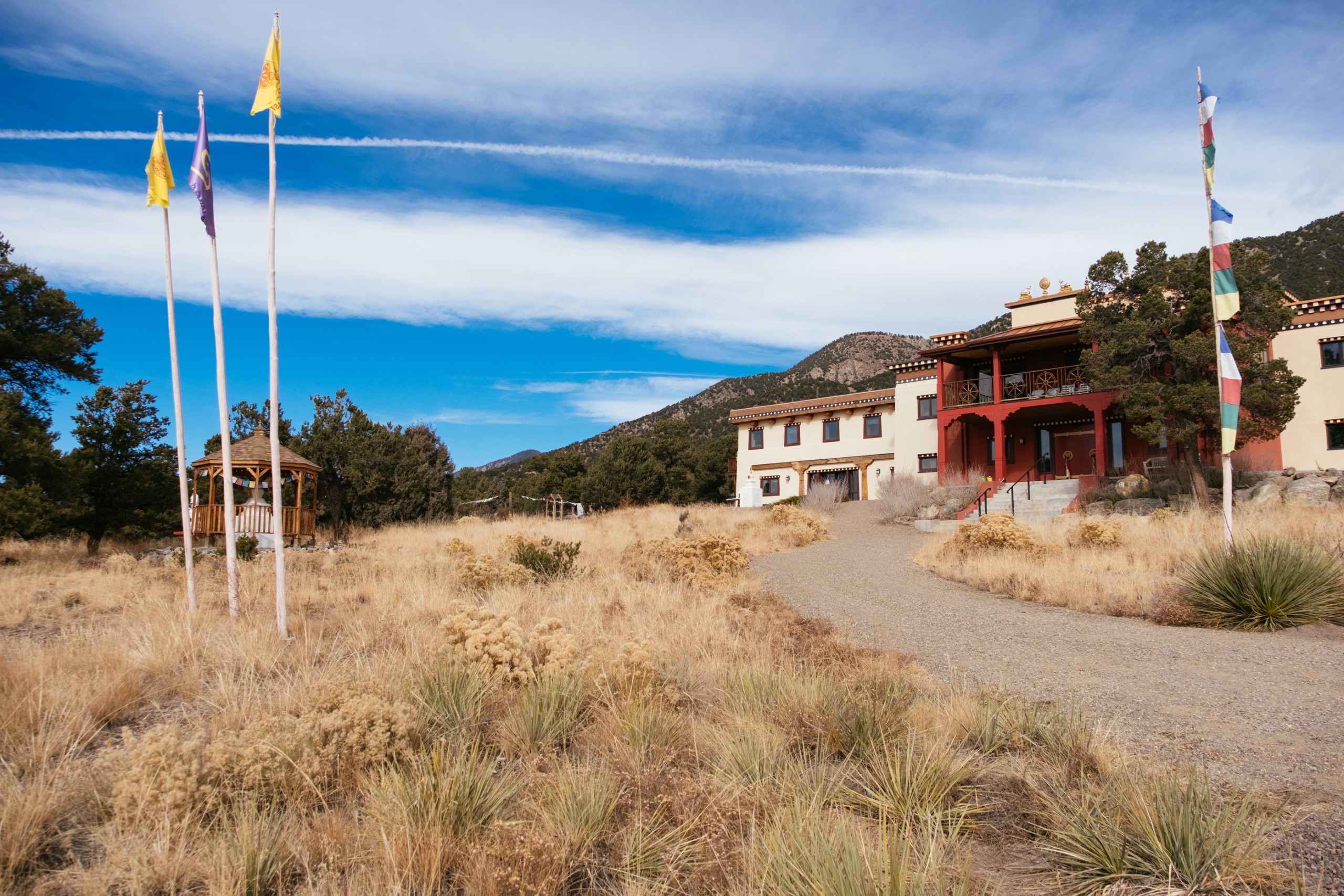
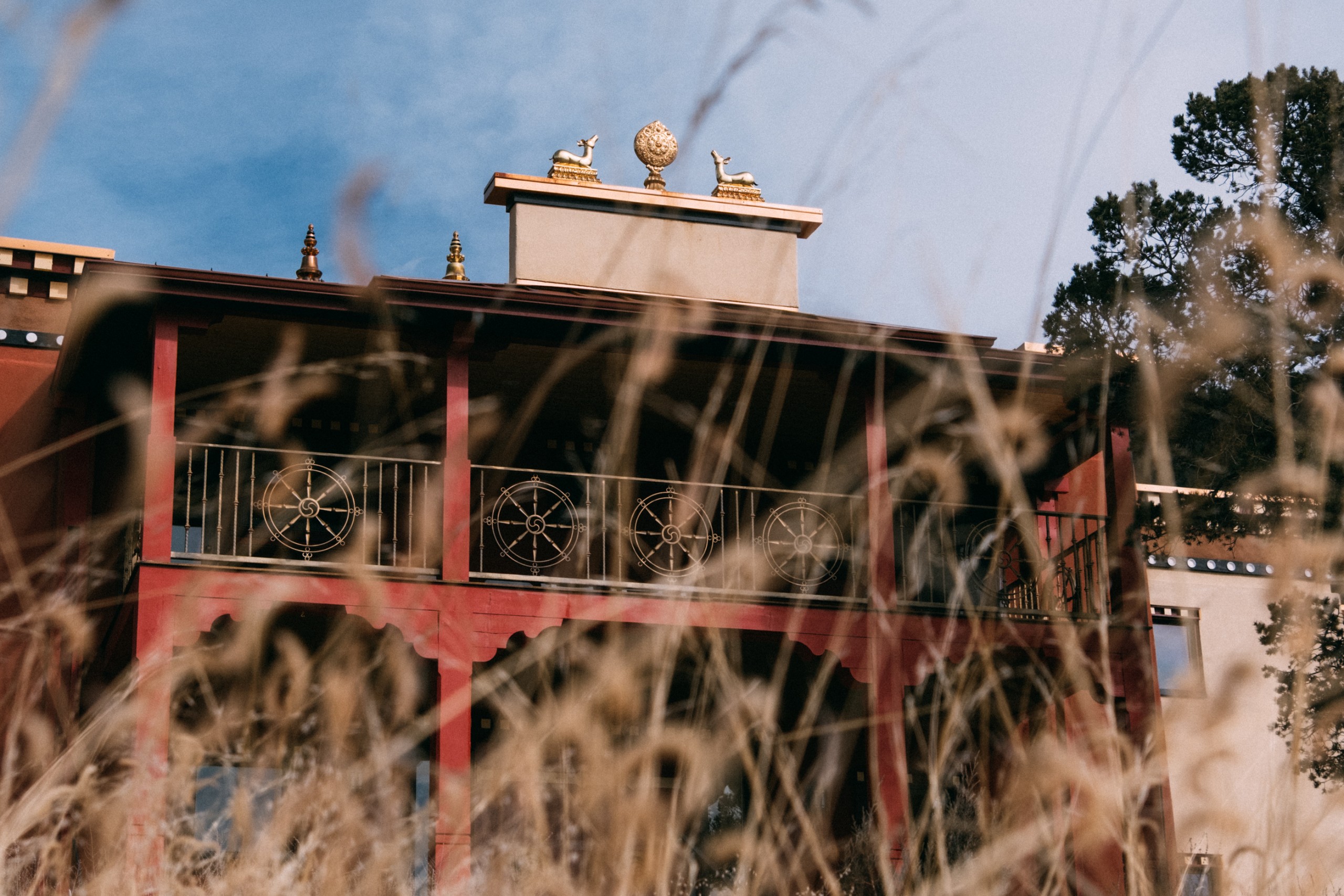
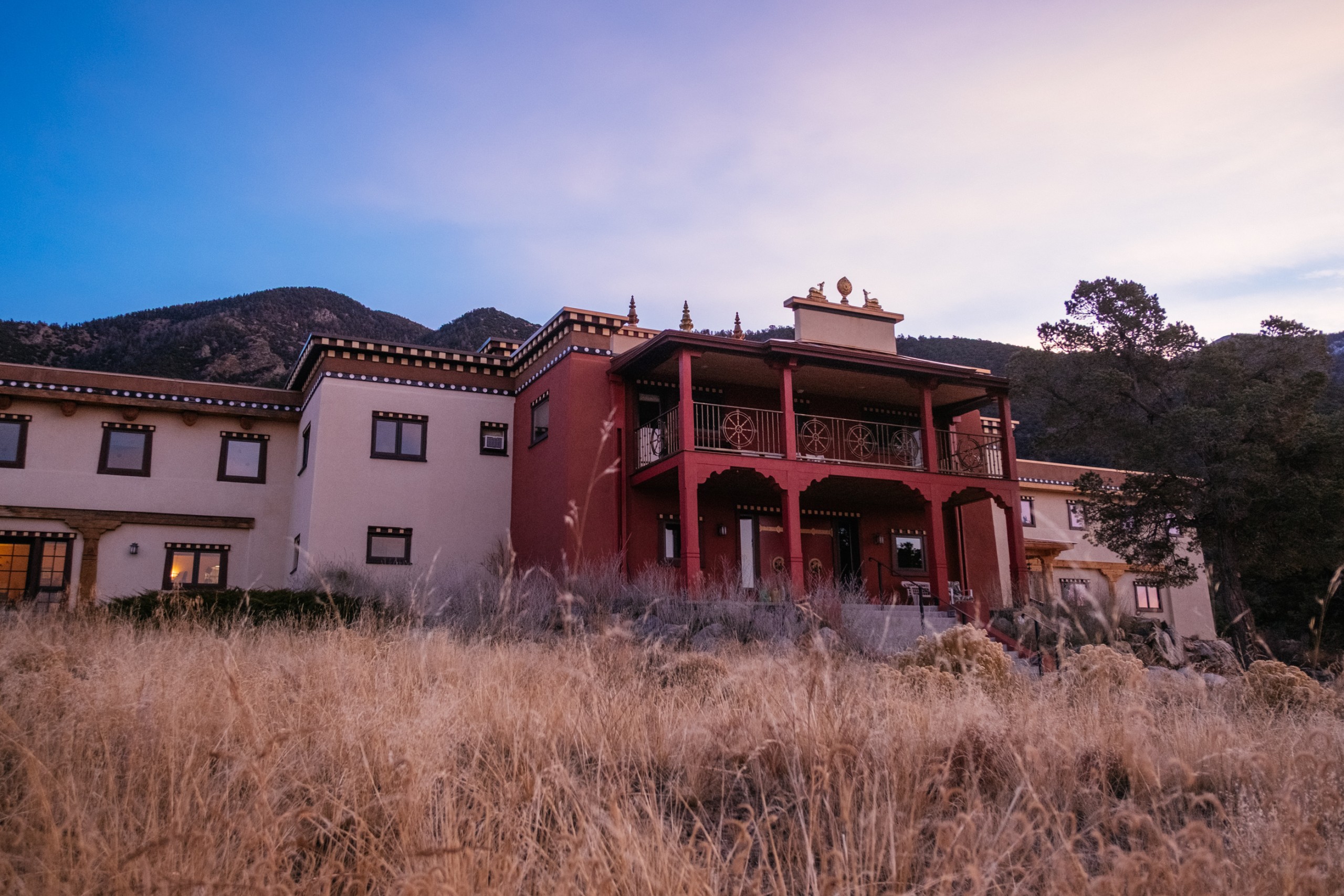
Vajra Vidya is a Tibetan Buddhist retreat center in Crestone, Colorado. People can come for private retreat or organized programs, and the center also offers opportunities for community practice. Vajra Vidya’s retreat information describes a place with space for both solitude and shared life. That combination matters. A person may spend hours in meditation, then meet the same questions about patience, generosity, and self-awareness over a meal or while helping with a simple task.
Ani Lodro: From Spiritual Searching to a Life of Service
Ani Lodro told me that her search began when the life she had built no longer felt satisfying. She had a corporate job and material success, yet she felt an emptiness she could not ignore. She began asking what her life was for and looking for a way to live with greater clarity.
Her path first led her to a Hindu teacher and to the practices of Bhakti Yoga and Karma Yoga. Devotion and selfless service opened something in her. Later, Tibetan Buddhism gave her a more structured way to understand her experiences. In our interview, she spoke about the value of foundational teachings, including the Four Noble Truths, and of learning to examine the mind carefully rather than relying on a powerful experience alone.
She came to the retreat center intending to stay for a short time. She began helping with its daily operations, formed a connection with the teachings and the community, and eventually stayed. In 2020, she took ordination vows as a Tibetan Buddhist nun.
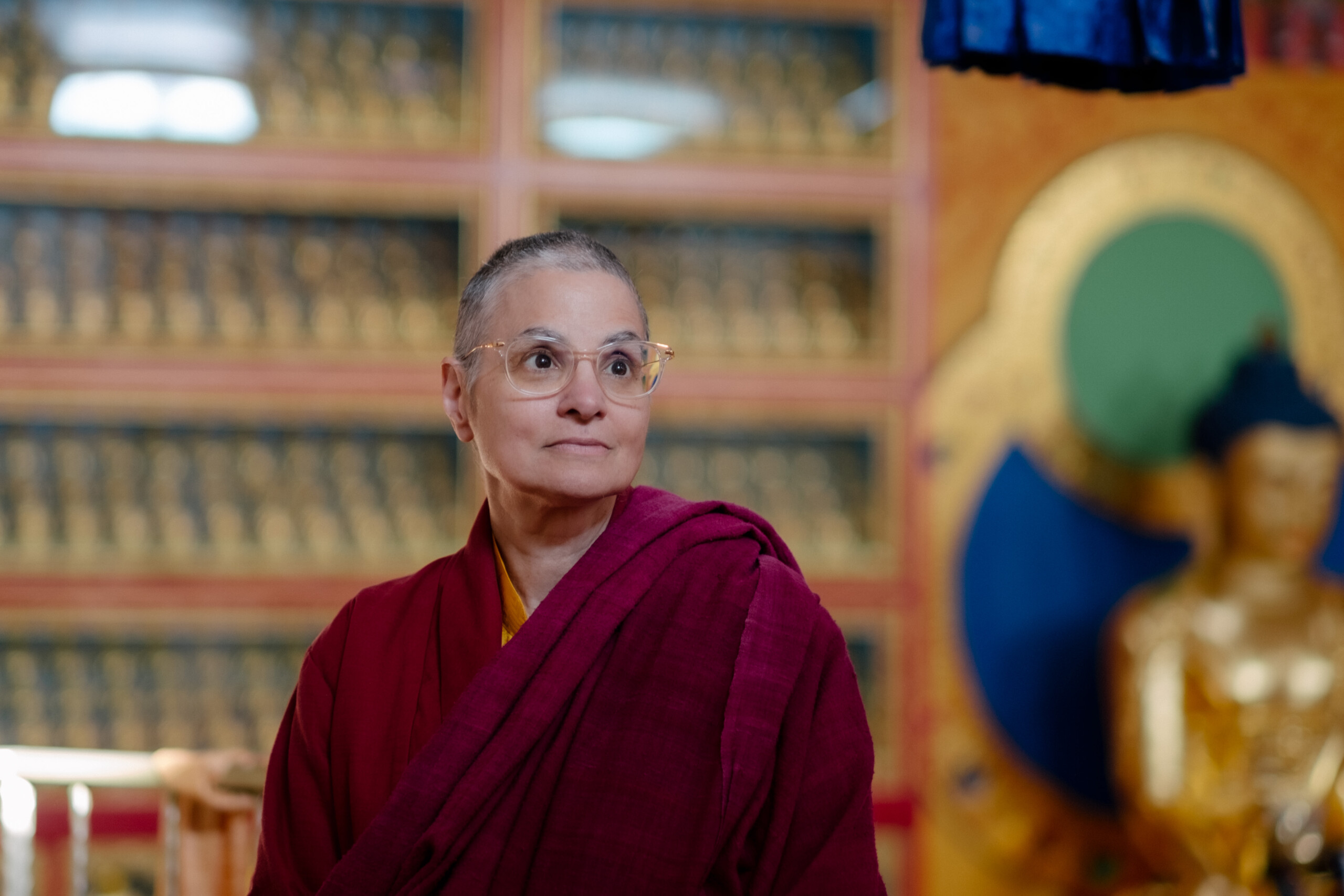
I was struck by the difference between the life she once imagined and the one she described to me. She had expected that deepening her practice might mean more seclusion and meditation. Instead, her days came to include caring for guests, coordinating the center’s needs, answering questions, and attending to practical work. She found that these responsibilities asked her to bring practice into each encounter.
That story adds another layer to the photographs you are viewing. A retreat space can appear peaceful in an image, and that peace is real. It is also supported by people who prepare, clean, cook, organize, teach, and welcome others. Ani Lodro’s account helped me appreciate that work as part of the life of the center. For her, service is a way to notice self-centered habits and turn toward someone else’s needs.
Her story connects with several themes running through Beyond the Cushion: the practice, sangha, and integration. The teachings provide direction. The community gives her relationships in which to practice. The ordinary work of each day gives her a chance to live what she has learned.
What We Bring to Retreat
There is a reason people seek time away. In the middle of work, family responsibilities, and constant demands on our attention, it can be difficult to see what is driving us. A retreat creates conditions in which we can slow down. We may notice a familiar reaction before acting on it, or make room for grief and uncertainty that we have been too busy to face.
That does not mean the difficult parts of our lives vanish when we arrive. In speaking with Ani Lodro, I was reminded that a Buddhist community brings people together as they are. Each person comes with hopes, habits, strengths, and pain. Practicing alongside others can be deeply supportive; it can also reveal impatience or judgment that we might miss when we are alone.
As you spend time with this photo essay, imagine the rhythm that surrounds any quiet moment at a retreat center: meditation, shared meals, individual reflection, and the small acts required to live together. Those daily encounters are among the places where a teaching can become more than an idea.
Ani Lodro also spoke about practice beyond monastic life. She does not believe that sincere spiritual growth belongs only to people who can live at a retreat center. Lay practitioners may need to find shorter periods for retreat amid work, parenting, or other responsibilities. The time away can deepen their attention, but the question continues when they return home. Can they listen with more patience? Can they recognize a reaction before it takes over? Can they be present for someone who needs them?
That is how retreat relates to deepening the practice. Its effects may be gradual and hard to photograph. They become visible in how we live with other people.
Nancy: Continuing Practice When Life Changes
Nancy came to Tibetan Buddhism by a different route. As a child, she visited Christian churches and later explored her family’s Quaker roots. Meditation became part of her life through a Christian spiritual community. She spent years considering the relationship between Christianity and Buddhism before committing to Tibetan Buddhist study and practice.
She was drawn to the breadth and structure of the tradition. In our conversation, she described studying foundational teachings and undertaking practices such as prostrations and Vajrasattva meditation. Her path required dedication, but it also required adaptation when an automobile accident interrupted her physical practice.
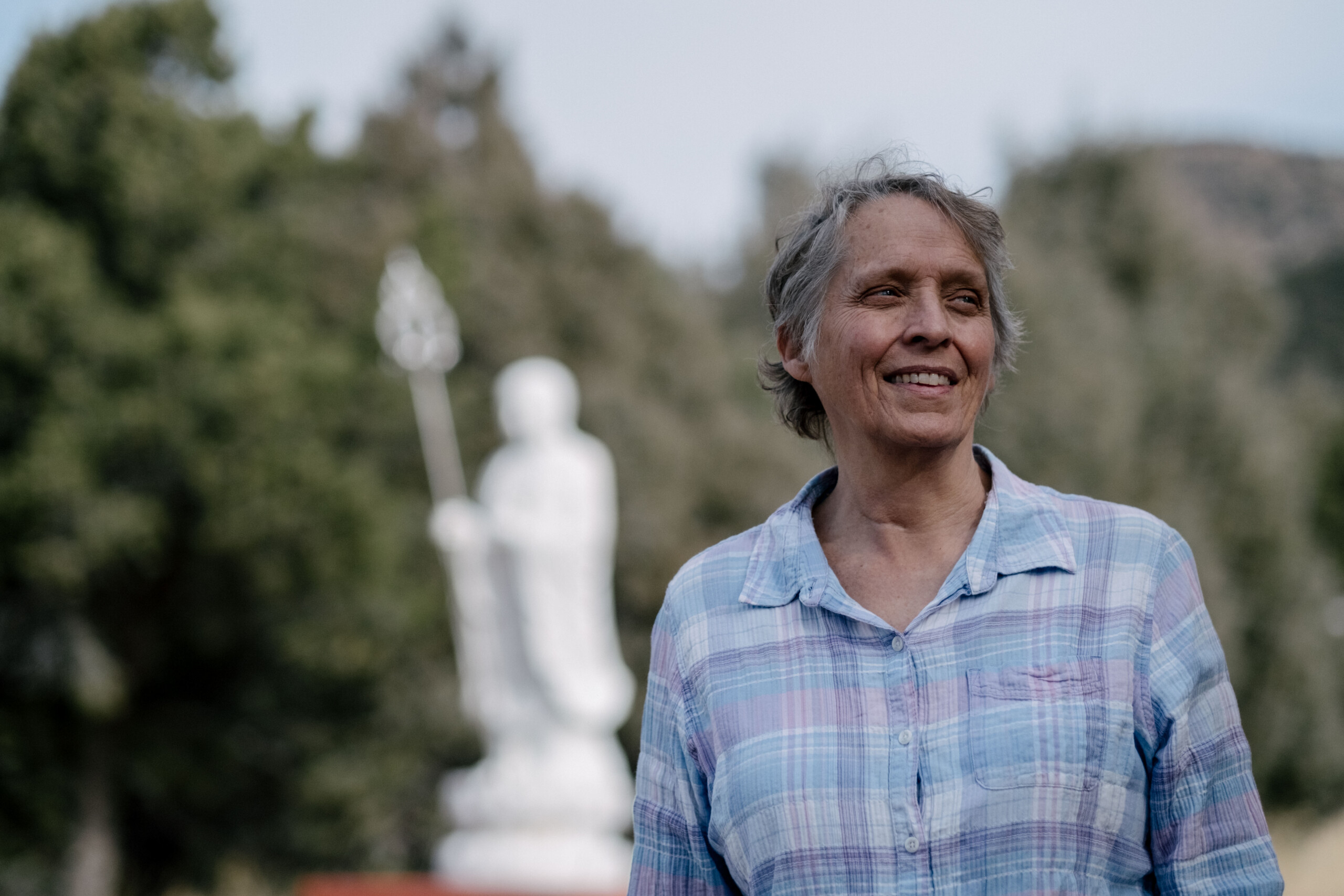
Nancy told me about eight back surgeries and more than a decade using a power wheelchair. She continued meditating and studying, though she could no longer practice in every way she had before. Pain became something she had to meet daily. Through meditation, she explored how to attend to it without adding the same degree of fear or resistance. She also had to reconsider expectations she had held about work, mobility, and independence.
I don’t want to make her experience sound easy. She described loss as well as insight. What stayed with me was her willingness to keep exploring what practice could mean within changed circumstances. She had to work with the body and life she had, not the ones she wished she could recover.
Nancy also offered a wonderfully ordinary example of change. She said she used to become irritated with other drivers; over time, that reaction relaxed. She noticed more patience in her relationships and a greater ability to see critical thoughts arise without following them. These are modest moments when set beside everything she has endured, yet they say a great deal about the fruit of practice. They show how a long commitment can shape the texture of a day.
Her account also speaks to personal adversity. It asks us to make room for many forms of practice and many kinds of bodies within our picture of a Buddhist community.
Carrying the Retreat With Us
Ani Lodro and Nancy helped me see Vajra Vidya from two directions. One story is rooted in the ongoing work of a retreat community. The other shows how a practitioner carries teachings through changing conditions. Both return me to the question that first inspired Beyond the Cushion: how does an encounter with the Dharma shape an actual life?
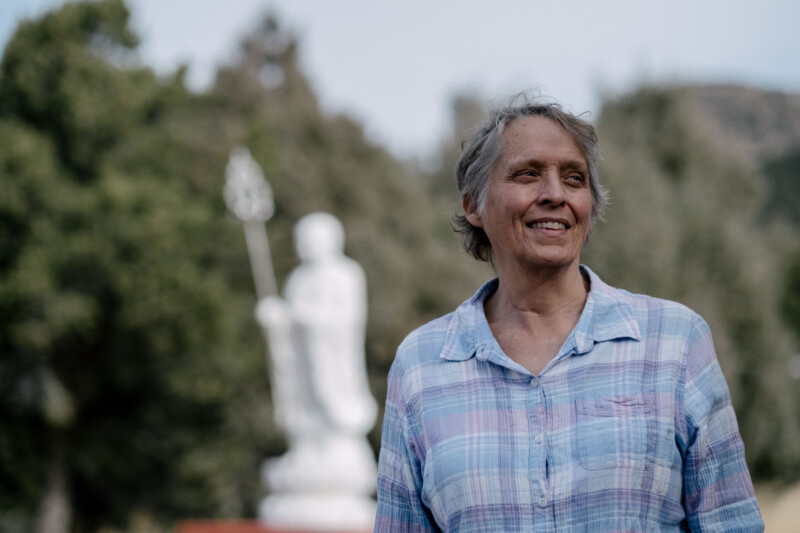
The photographs let us linger with this place. The interviews invite us to consider the lives moving through it. A visitor may arrive looking for quiet or guidance. A resident may be tending to the needs of others while doing her own inner work. A longtime practitioner may come with decades of experience and questions that remain alive.
Perhaps that is what a retreat can offer: time to see more clearly, with the support of a place and a community devoted to practice. Then comes the longer work of carrying that attention into a conversation, a difficult day, an act of service, or a moment of pain. As you continue through the images, I invite you to hold both parts of the story—the time set aside for practice and the life that practice returns us to.

Carrying the retreat with us
The time set aside for practice, and the life that practice returns us to.
Photo essays