Theme · Portraits
Coming down the mountain
After decades on the path, the question is no longer what you’ve seen—it’s how you live it.
Theme overview
The late stage of practice
It’s no longer enough to understand truth. Can you embody it?
There’s a turning that happens after decades on the path. It’s not dramatic. It doesn’t announce itself. But somewhere past the thirty-year mark, something quietly shifts—not away from the teachings, but deeper into them. Into something more demanding than insight. Into the question of how you actually live what you’ve seen.
The early years of practice are full of discovery. The middle years, integration. But this stage asks something different. Something harder, in its own way. It’s no longer enough to understand truth. The question becomes: can you embody it, moment by moment, in an ordinary life?
In their words
Five lives of long practice
Three-year retreat · Tibetan lineage
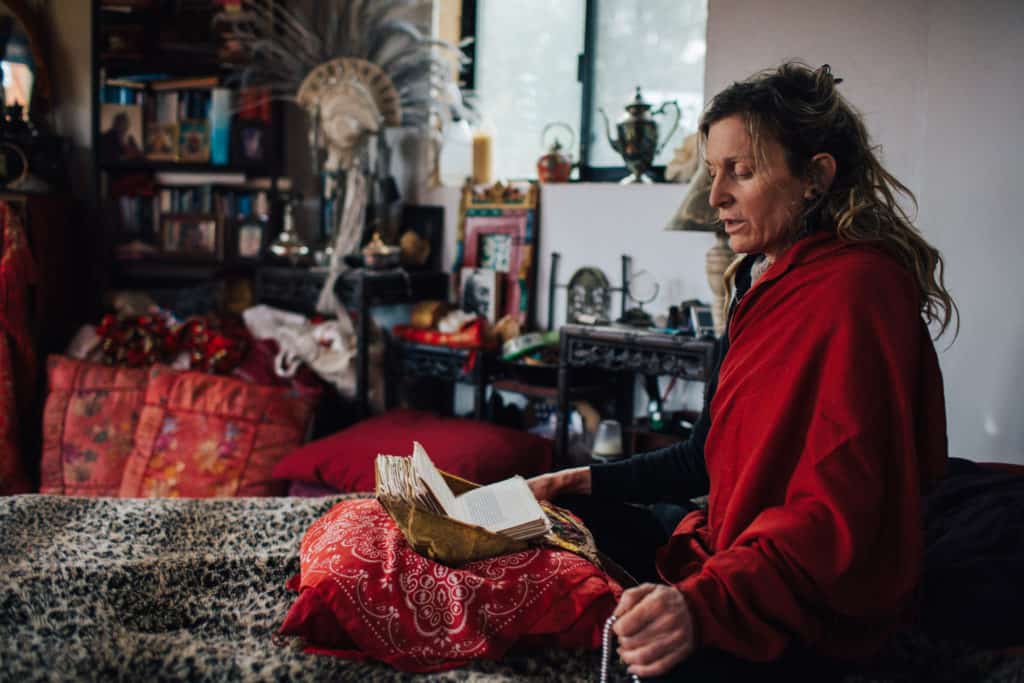
Rigzin
Rigzin’s journey into the Dharma is especially striking given the intimacy she has had with Tibetan lineage masters. Her experience runs the gamut—from completing the traditional three-year retreat to marrying a Tibetan lama and living as a modern-day yogi with wolves.
Vajrayāna · a decade of disability
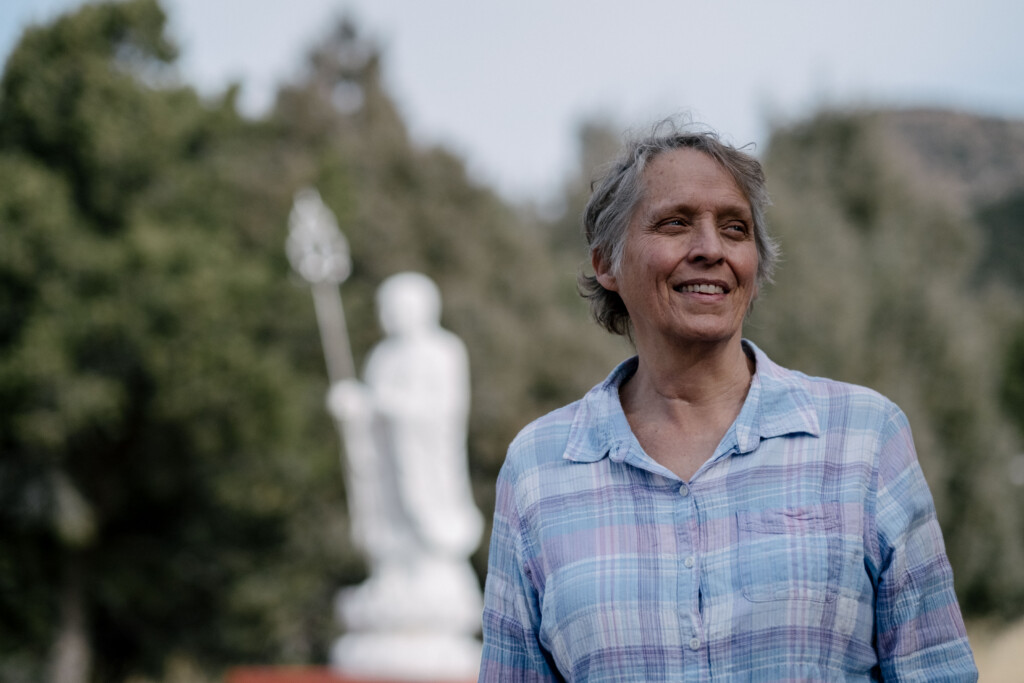
Nancy
Nancy has a rich spiritual history, exploring a number of traditions before a brief encounter with the Dalai Lama accelerated her path into Vajrayāna. She lived with a devastating physical disability for more than ten years, and credits her practice with her ability to navigate it skillfully.
“The real practice is integrating bodhichitta and emptiness in how I actually live.”
“Even in complete darkness, the work is to stay… not let the mind escape.”
Recovery · Shambhala
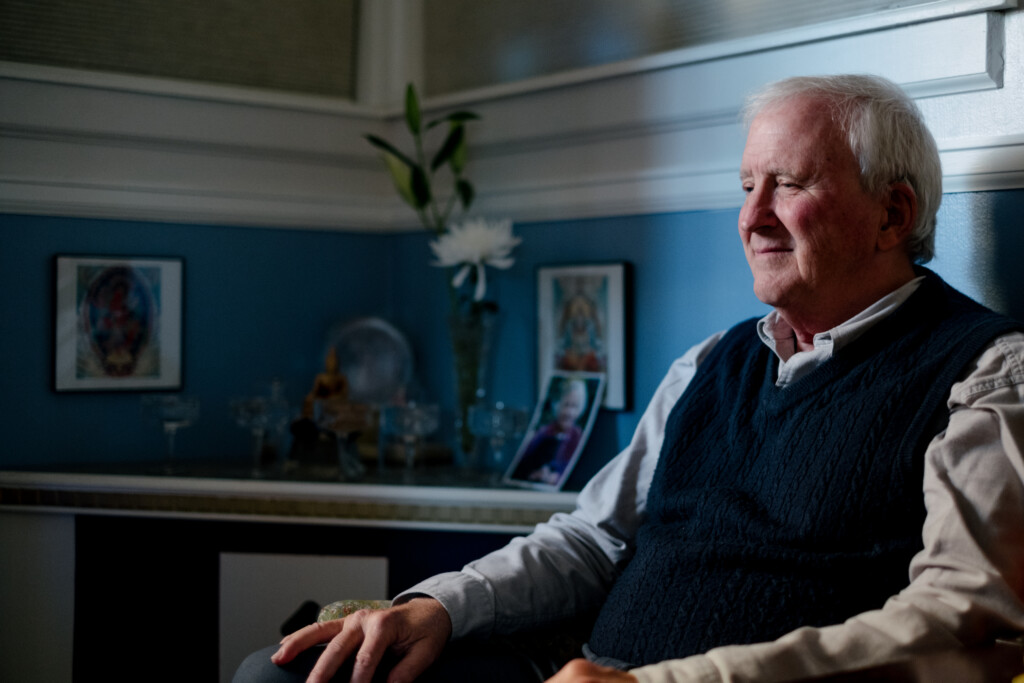
David G.
David G. has walked a path that runs through recovery and Shambhala Buddhism, with more than four decades of meditation and lojong—mind training—aimed at turning suffering into compassion. A stroke later brought a new urgency to the practice.
“After 40 years of watching my mind, I can lean into things I used to run from.”
“You can get caught in the cocoon of the practice… even the good experiences can become traps.”
Korean Zen · four decades
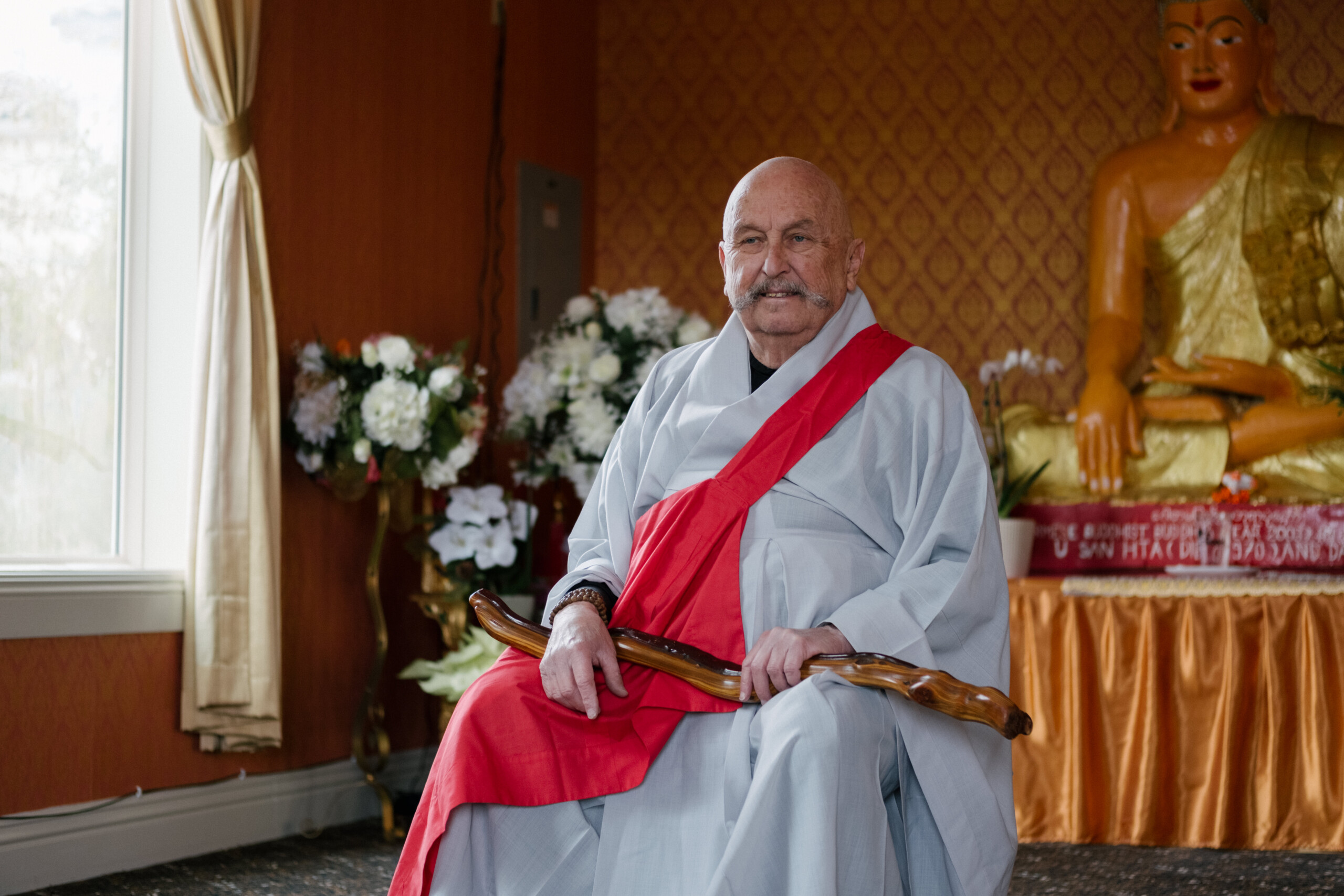
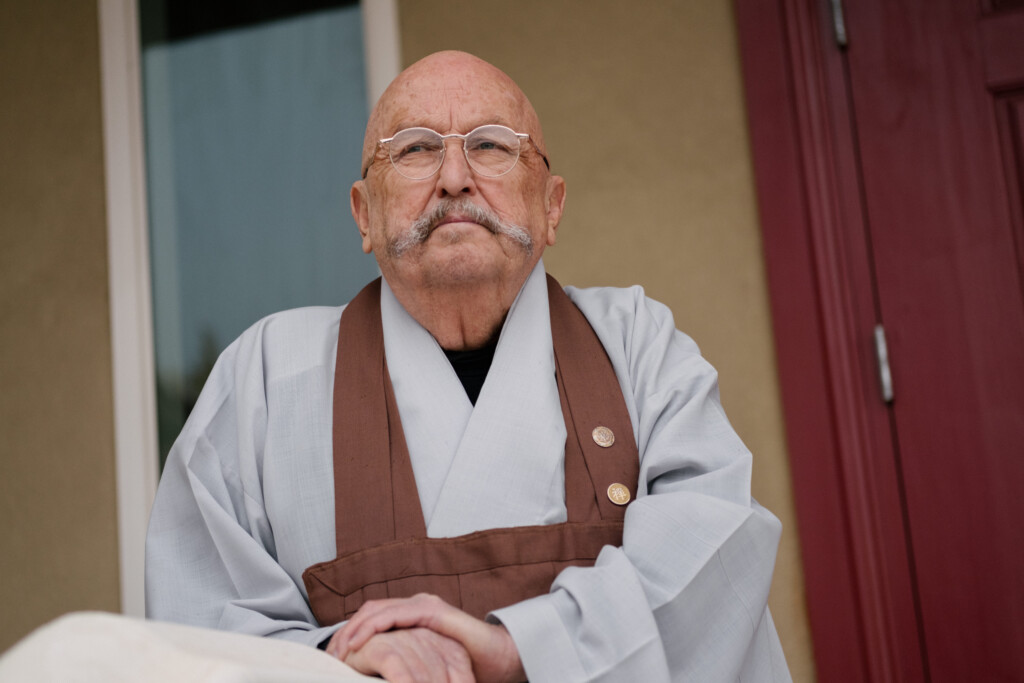
Zen Master Ji Haeng
Thomas (Zen Master Ji Haeng) has spent nearly four decades immersed in Zen practice, integrating meditation not only into formal sitting, but into every aspect of daily life. A longtime practitioner and teacher in the Korean Zen tradition, his path has been shaped by years of disciplined practice, retreat work, koan study, and direct guidance from respected teachers including Zen Master Seung Sahn and Harada Roshi. Before dedicating himself fully to the Dharma, Thomas lived a very different life as a professional musician, performing alongside legendary artists such as Frank Sinatra, Sammy Davis Jr., Tom Jones, Aretha Franklin, and Patti LaBelle.
Over the years, his understanding of Buddhism evolved from seeking calm and concentration into a profound realization of impermanence, non-attachment, and compassionate presence. His teaching style reflects that maturity—grounded, direct, and deeply human—emphasizing that true practice is not about escaping life, but meeting it fully with clarity and steadiness.
“After all these years of practice, I’ve come to see that meditation isn’t about becoming something special. It’s about cutting through the illusion of who you think you are and being completely present for this moment.”
Zen · the real monastery
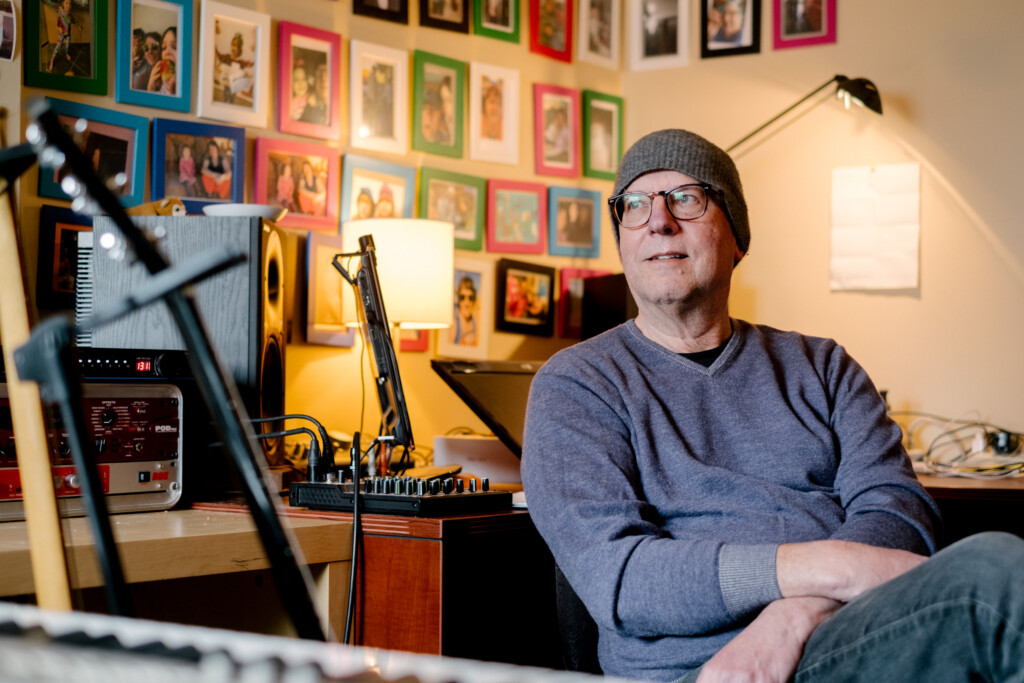
Bruce
Born and raised in the Pacific Northwest, Bruce spent decades searching for meaning beneath the surface of ordinary success. Before discovering Zen, he lived many lives—a professional musician touring through his twenties, a businessman building a career in Seattle, and a spiritual seeker quietly haunted by what he calls “the bigger questions.” Despite achieving the outward markers of success, Bruce felt an unmistakable emptiness underneath it all. “Success without meaning is a slow kind of despair,” he reflects.
That search eventually led him into Buddhist practice, first through Tibetan teachings and later into the rigorous world of Zen monastic training. In 2003, Bruce left behind his business life and moved into a monastery in Salt Lake City, where he immersed himself in over a decade of intensive practice—meditating for hours daily, studying koans, serving as a monk, and eventually becoming executive director of the community. His years in practice profoundly reshaped how he understood freedom, identity, and compassion. “My self is no longer my master; it’s a tool I wield with skill.”
Bruce’s path has never been about escaping life, but learning how to fully inhabit it. Drawing from both Zen and Tibetan traditions, he speaks openly about ego, suffering, teacher misconduct, family life, and the challenge of bringing awakening back into ordinary human relationships. Today, he continues to teach, mentor students, and practice Tonglen while raising a family and living what he calls “the real monastery”—daily life itself.
“At a certain point, it’s not just about awakening—it’s about learning how to help others.”
“It’s not about staying on the mountaintop… it’s about coming down and being a human being in the middle of everything.”
Reflection
Bringing the absolute into the everyday
The central work at this stage, from what I’ve witnessed and what practitioners with this kind of depth describe, is learning to bring the absolute down into the everyday.
Experiences of oneness, emptiness, interdependence—these are no longer peak moments to be sought, no longer the goal. They become something closer to responsibilities. Because once you’ve touched something true, you can’t pretend you haven’t. The question that presses forward is: how does that realization actually show up in how you speak to someone? In how you handle money, navigate conflict, sit with illness?
The practice matures into something grounded, relational, and genuinely practical. And that integration, I want to be honest, isn’t comfortable. It isn’t the serene picture we sometimes project onto long-term practitioners. It’s demanding in a way that’s almost invisible from the outside.
What does seem to develop, though—slowly, over decades—is a capacity to turn toward difficulty rather than away from it.
There’s a kind of fearlessness that emerges here. Not because discomfort disappears—it doesn’t—but because it’s no longer being fled. A deeper insight has taken root: that so much of what we suffer from isn’t coming from the outside, but from the mind’s relationship to what’s outside. Seeing that clearly doesn’t remove pain. But it changes everything about how pain is held. There’s space around it. There’s choice inside it.
That gap—between what arises and how you meet it—is what decades of practice have been quietly building all along.
And then, inevitably, impermanence stops being a teaching and becomes something personal.
“Working with death, you see how the teachings aren’t abstract—they’re happening in real time.”
Aging, illness, death—at this stage, these are no longer philosophical concepts to contemplate at a comfortable distance. They arrive. They become part of the practice itself. The teachings on dissolution, on letting go, on what remains when everything falls away—they migrate from the page into lived experience.
And what I find quietly moving about this is the sharpening that tends to follow. Less time spent circling. More willingness—sometimes urgent, sometimes tender—to meet what actually matters.
But even here, there’s another layer to see through.
“After the stroke, there was a new urgency… you realize how quickly this can end.”
This, to me, is one of the most honest observations about the long path. Attachment doesn’t only live in the obvious places. It hides in spiritual practice too—in clinging to rituals, to peak experiences, to the identity of being someone who has practiced for a long time. Letting go of those things requires an even subtler honesty than anything the early years demanded.
What begins to emerge, when that subtler letting go happens, is a movement toward service. Not as obligation or achievement, but as something that arises naturally—almost inevitably—from genuine understanding.
“To really walk this path, you have to be willing to open even to those who harm you.”
Compassion at this level isn’t conceptual anymore. It’s demanding in ways that are hard to describe. It asks for a depth of realization that can hold contradiction, difficulty, even harm—and still not close down.
When practitioners at this stage offer guidance, it carries the particular weight of time—something you can feel even in the brevity of how it’s expressed:
“Don’t mistake the experience for the path. Keep going.”
“What you realize has to be lived—otherwise it doesn’t mean much.”
“Stay long enough to see through even the subtle attachments.”
After thirty years, the practice becomes both simpler and more profound at once.
Not about attaining anything new. Not about arriving somewhere finally, definitively, for good. But about fully inhabiting what’s already been seen—again and again, in the middle of a life that keeps changing, keeps aging, and will eventually, as all lives do, come to an end.
The mountain was never the destination.
Coming back down, and learning to live here—that was always the practice.

The takeaway
The mountain was never the destination.
See every practitioner in the late stage
Registration is required to view all profiles in this theme and support the project.
Members’ view
All practitioners in the late stage
Portraits · more themes