

The magic of Vajrayana
I didn’t expect Vajrayana to feel the way it did when I first encountered it.
I’d spent years circling spiritual practice the way you circle something you want but aren’t sure you deserve — picking up books, sitting occasionally, telling myself I was building toward something. And then I sat with these conversations, really sat with them, listening to practitioners speak about this path, and something shifted in a way I still haven’t fully found words for.
Vajrayana doesn’t really accommodate that circling. It doesn’t leave space for someday. It just looks at you and asks — gently, but unmistakably — are you ready now?
What stopped me cold was this idea at the heart of it: the resultant vehicle. Not becoming something. Not earning your way toward a distant version of yourself. Uncovering what’s already there.
Alex G said something that I keep returning to. He described a moment in his practice where he stopped feeling like he was building something and started feeling like he was clearing debris. Like something had always been present underneath — whole, already intact — and the work was simply learning to see it without all the layers in the way.
I sat with that for a long time.
Because if that’s true — if Buddha nature is already fully present, right now, in you and in me — then the question becomes uncomfortable in a way that’s hard to look away from. What’s actually in the way? And more honestly: am I willing to face it?
Lama Palden had come to Vajrayana after years of moving through other spiritual systems, always adding something. Another practice. Another framework. Another experience. He described the shift plainly: “Vajrayana felt different. It was like — no, nothing’s missing. You just have to stop avoiding what’s already here.”
That hit somewhere specific. Because I recognized the accumulation he was describing. I’d been doing it too — collecting insights like I was storing up credit for a transformation I’d claim later.
Vajrayana doesn’t really offer that option.
But here’s what surprised me. For all its directness, this path isn’t something you walk alone. And for a lot of us raised in traditions that prize self-reliance, the centrality of the guru is the part that takes the longest to understand.
I kept asking: if the view is that you already have everything you need, why would you need a teacher at all?
Ben, who had spent decades within a structured lineage, gave me the most honest answer I’ve heard. He didn’t frame it as spiritual theory — he framed it as simple observation. “Left to my own mind, I’ll just reinforce my own patterns. That’s the truth.” A teacher, a real one, sees through those patterns faster than you can. Because the thing you’re trying to see through is the very lens you’re using.
That’s not a comfortable thing to admit. It wasn’t comfortable for me to hear. But there’s something relieving about it too — the recognition that clarity isn’t always something we can generate on our own.
Ngondro
And then there’s Ngondro. The foundation practices. The part that doesn’t get romanticized.
When practitioners talked about their actual daily lives — not the philosophy, not the vision of what the path could lead to — Ngondro was what came up, again and again. Repetition. Discipline. The slow, unglamorous work of meeting yourself over and over without flinching.
Prostrations were where it got real for most people.
You read about it and it sounds almost meditative. Then you do it. Your body hits the ground, your breath shortens, your muscles start to burn, and suddenly there’s nothing abstract left. There’s nowhere to hide in a concept when your knees are aching and your lungs are working that hard.
Ben didn’t soften what came up for him: “It’s a humbling, pride-bashing experience. You’re literally throwing yourself on the floor again and again, and all the stuff you don’t want to look at starts coming up.”
That’s the part I don’t think I fully understood before I heard people speak about it. The practice doesn’t just work on the body. It pulls up the mind — the irritation, the boredom, the resistance, the darker currents you don’t usually acknowledge. Because when distraction is no longer available, what’s been waiting underneath has nowhere else to go.
And then there’s the voice. Ben laughed when he described it, but it was the kind of laugh that comes with recognition. “That lazy part of you doesn’t really want to do it. It’ll come up with every excuse.” Every reason that today is too much. That your body needs a break. That this particular session doesn’t count.
What I found remarkable is that this negotiation doesn’t disqualify you from the practice. It is the practice. The point isn’t to silence that voice — it’s to see it clearly. To watch how quickly the mind reaches for an exit, and then, consciously, choose to stay.
Over time, something loosens. Not in a dramatic way. More like the gradual erosion of something that once felt solid and immovable. The resistance that seemed absolute begins to reveal itself as just a pattern — one you’ve seen so many times it starts to lose its authority.
You hit the ground. You stand back up. And somewhere in the rhythm of that, something quiet begins to change.
Mandala offerings were the piece I struggled with the longest. Intellectually, I couldn’t locate the logic. You visualize offering the entire universe — all of it, every beautiful thing — and somehow this is supposed to make you more generous in ordinary life? With real people, real relationships, real circumstances?
-Elinore
-David
-Giulietta
-Colleen


Elinore was honest about that same confusion. From the outside, she said, it just didn’t connect. And I appreciated that she admitted it, because I think Vajrayana actually invites that skepticism. It doesn’t ask you to perform understanding you don’t have yet.
What shifted for her wasn’t intellectual. It was something that emerged from the repetitions themselves — slowly, without her forcing it. “At some point, it stopped feeling like imagination,” she told me. “There was this kind of joy that came up — like giving wasn’t something I had to force anymore.”
Natural. That word kept finding its way back to the center of everything.
She described something quietly profound: a shift in orientation. Less preoccupation with herself. More genuine curiosity about the people around her — how she could actually support them, actually benefit them. Not as an ideal to aspire toward, but as what started to feel like the most obvious, natural response.
That’s the thing about these practices. What looks, from the outside, like elaborate ritual or symbolic gesture becomes, from the inside, something else entirely. An ongoing impulse. A way of moving through your life.
Even Vajrasattva, often described as purification, carried that same quality. Alex G put it simply: “It’s not about guilt. It’s about clearing what you don’t need to carry anymore.”
And maybe that’s the thread that runs through all of it.
Vajrayana, for all its intensity and its complexity and the way it doesn’t let you look away, isn’t asking you to build something. It’s asking you to stop holding so tightly to what was never really you to begin with.
It asks for honesty. For commitment. For the willingness to stay when the impulse to leave is loudest.
What I came away with — from all these conversations, all these voices — is that this path is less a set of practices than a way of relating to your own experience. It meets you exactly where you are. And then it asks, quietly but without compromise, whether you’re ready to go deeper.
Not eventually.
Not when the conditions are better.
Now.
Practitioners in lineage
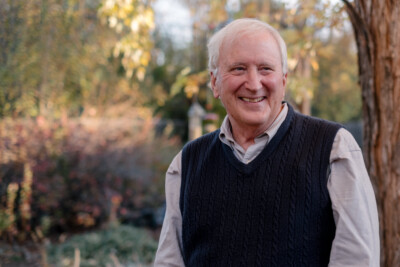
David is a longtime Buddhist practitioner whose path was forged through recovery, meditation, and decades of deeply personal inquiry into suffering, identity, and transformation. Originally from a strict military-style upbringing, he spent years building a successful career designing ponds and waterfalls while quietly wrestling with addiction, restlessness, and a persistent sense that external success could never fully satisfy him. His introduction to Buddhism came through recovery work and the Shambhala tradition, where meditation, lojong mind training, long retreats, and community practice gradually transformed the way he related to himself and others.
Over more than forty years of practice, David immersed himself in the Shambhala lineage while also exploring broader Buddhist teachings through silence retreats, death meditation, and service-oriented recovery work. His practice became less about attaining enlightenment and more about learning how to become kinder, more honest, and more present with the realities of being human. Deeply influenced by teachers like Martha Hildreth and Dan Jesse Soria, David came to value lineage not as rigid ideology, but as a living transmission carried forward through transformed hearts rather than perfected personalities.
“The teachings have to remain alive, but they survive through people whose hearts have actually been changed—not through people trying to act spiritual.”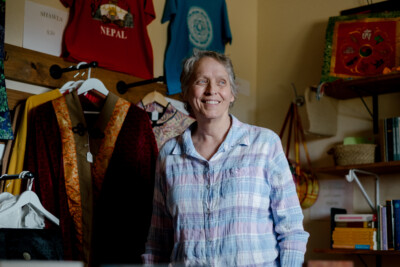
Nancy’s spiritual path has been shaped by a lifetime of searching, contemplation, and direct experience. Raised within a broad Christian background that included Methodist, Catholic, and Quaker influences, she spent years exploring the common ground between mysticism, meditation, and contemplative traditions. Her early involvement in esoteric Christian meditation groups and later studies comparing Buddhism and Christianity laid the foundation for a deeper spiritual calling.
Everything changed when she encountered Tibetan Buddhist teachers and, eventually, the Dalai Lama. In their presence, she experienced what she describes as “space filled with compassion,” a moment that confirmed the direction her life had been moving toward all along. Drawn to the depth and transformative power of Vajrayana Buddhism, Nancy committed herself to decades of practice within the Tibetan tradition, immersing herself in Ngöndro, deity yoga, Mahamudra, dream yoga, and hospice work centered around death and dying.
Her path was later tested through a devastating car accident that resulted in years of disability, chronic pain, and multiple surgeries. Rather than abandoning practice, she integrated suffering into the path itself, using meditation to transform her relationship to pain, identity, and fear. Today, she continues her practice with deep devotion, seeing every experience—joyful or difficult—as an opportunity to cultivate compassion and awareness.
“Buddhism isn’t about feeling better or relieving stress. It’s about transformation all the way through.”
Learn more
Registration is required to view all profiles in this theme and support the project.