Theme · Portraits
The middle stage
The practice that weaves itself into everything.
Theme overview
Somewhere past the first decade
The challenges don’t go away. They just change shape.
Somewhere past the first decade, something changes.
It’s hard to name exactly when it happens—there’s no ceremony, no clear threshold you cross. But at some point, practice stops being a thing you do and starts being something closer to how you are. The cushion, the retreat, the formal study—they don’t disappear, but they stop being containers. The practice starts leaking into everything else. The ordinary Tuesday. The difficult conversation. The quiet moment washing dishes before anyone else is awake.
And what I find both beautiful and a little humbling about this stage is that the challenges don’t go away. They just change shape. They get quieter. More subtle. In some ways, more demanding—because they ask something of you that urgency and novelty no longer provide.
In their words
Five practitioners in the long middle
Won Buddhism · keeping it alive
Grace
Grace was born into a family of practitioners but had to forge her own path within the Western expression of the lineage. Her appreciation of the practice didn’t come until she faced her father’s death and saw firsthand the transformation he embodied through it.
“At some point, the teachings don’t feel new anymore… and you have to find a way to keep them alive.”
Bright Dawn · studentship
Christopher
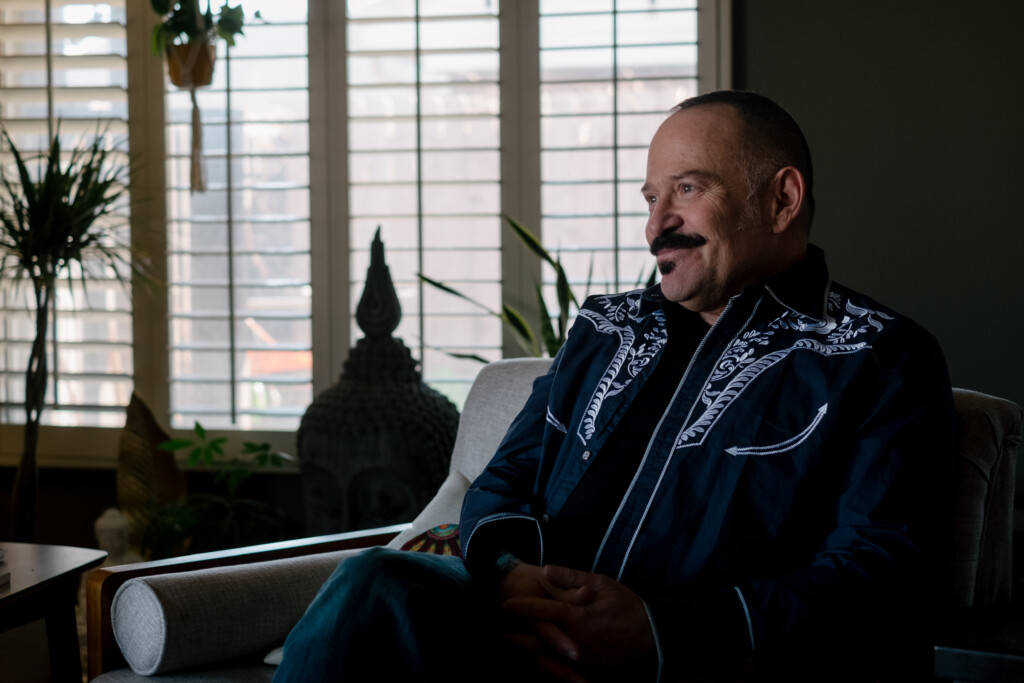
Christopher is a lay minister, father, and founding sensei of the Salt Lake Buddhist Fellowship, where he has spent nearly a decade cultivating a community rooted in compassion, authenticity, and real human connection. Practicing within the Bright Dawn Way of Oneness—a modern expression emerging from Jodo Shinshu—his approach to the Dharma is deeply personal, non-hierarchical, and grounded in everyday life.
His journey into Buddhism was not linear. Raised Catholic, later becoming a Latter-day Saint missionary, and eventually stepping away after years of inner conflict, Christopher’s path was shaped by a sincere search for truth, love, and meaning. That search ultimately led him to Buddhism—not as a belief system to adopt, but as a way to engage life more honestly. What resonated most was a shift in perspective: not original sin, but ignorance; not judgment, but understanding; not perfection, but presence.
In his teaching, Christopher emphasizes that practice is not confined to the cushion. It unfolds in relationships, in struggle, in ordinary moments. He encourages an open, consistent approach—drawing from meditation, ritual, compassionate listening, and community engagement—what he often calls a “boundless bag of tools for awakening.” His sangha reflects this inclusivity, welcoming practitioners across belief systems while grounding them in shared values of compassion and interdependence.
“It’s one thing to be peaceful on your own… it’s another to stay open in the middle of a difficult conversation.”
At the heart of his work is a deep humility and commitment to studentship.
“After all these years, I’m still not here because I’m awakened—I’m here because I’m still learning how to show up.”
Recovery · Vajrayāna
Cynthia
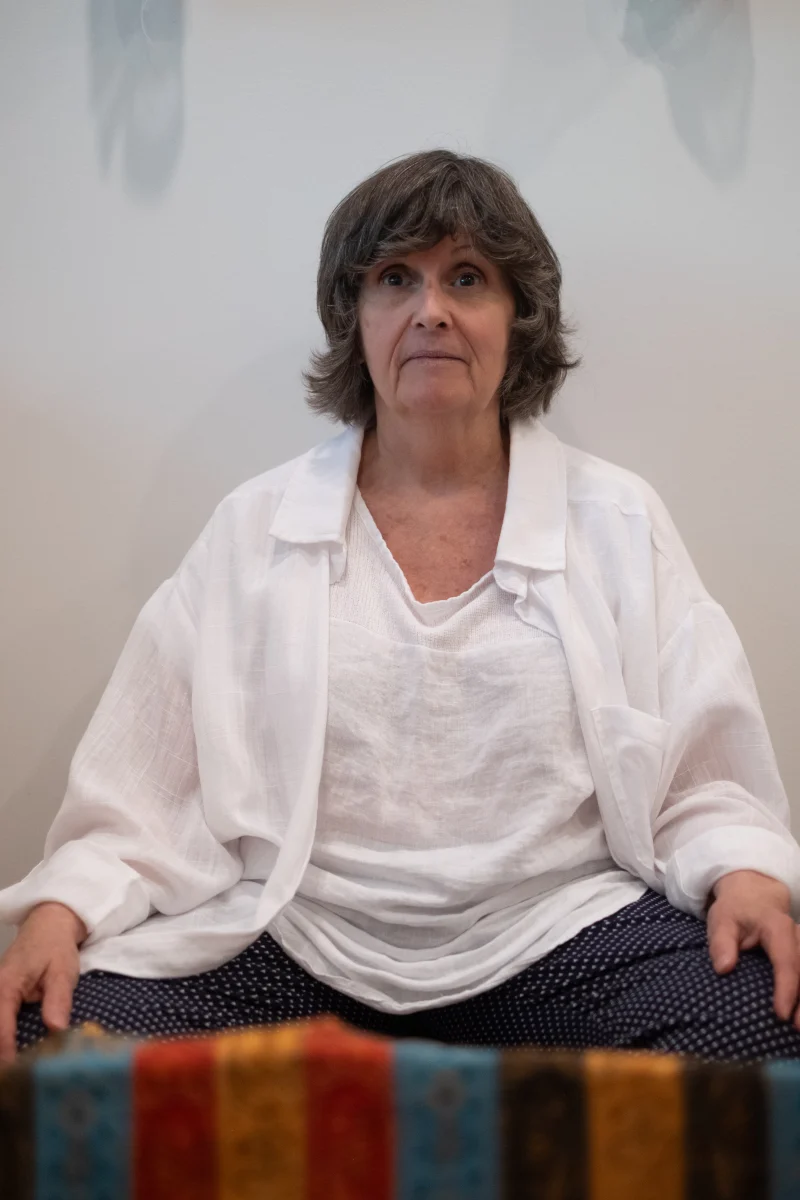
Cynthia’s way into the Dharma came through AA’s 12-step program. Like others who achieved “success” by Western standards and then recognized its limits, she pivoted her life toward finding true liberation through the teachings.
Jodo Shinshu · service
William
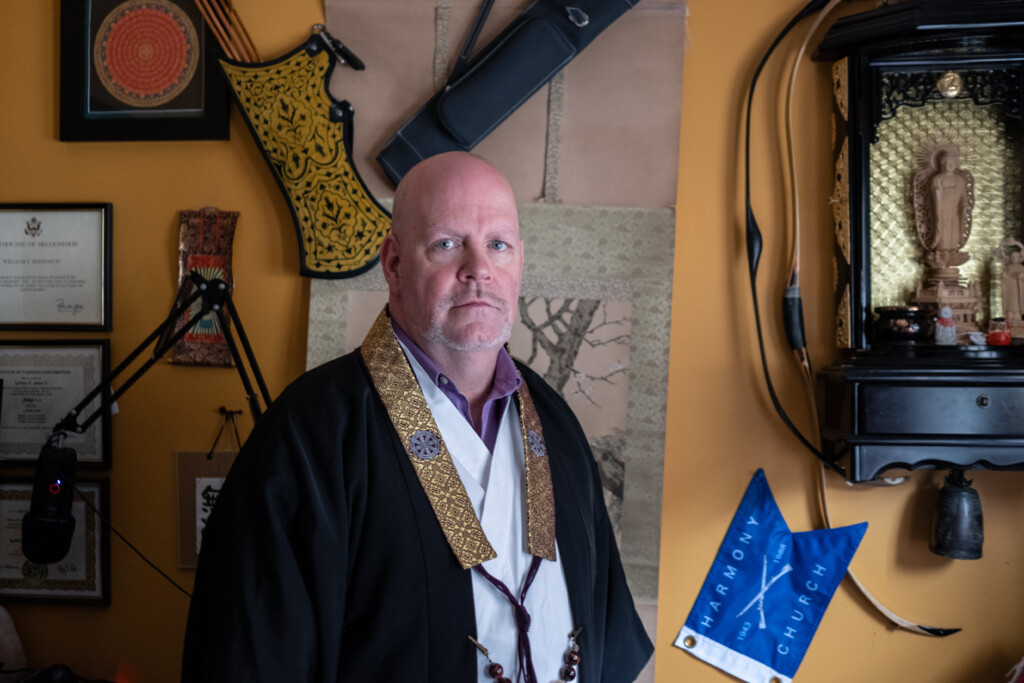
William is a combat veteran who found healing through Jodo Shinshu Buddhism, turning trauma and loss into compassionate service for fellow veterans and his community. For him, practice is measured less on the cushion than in how he meets people.
Zen · trusting silence
Linda
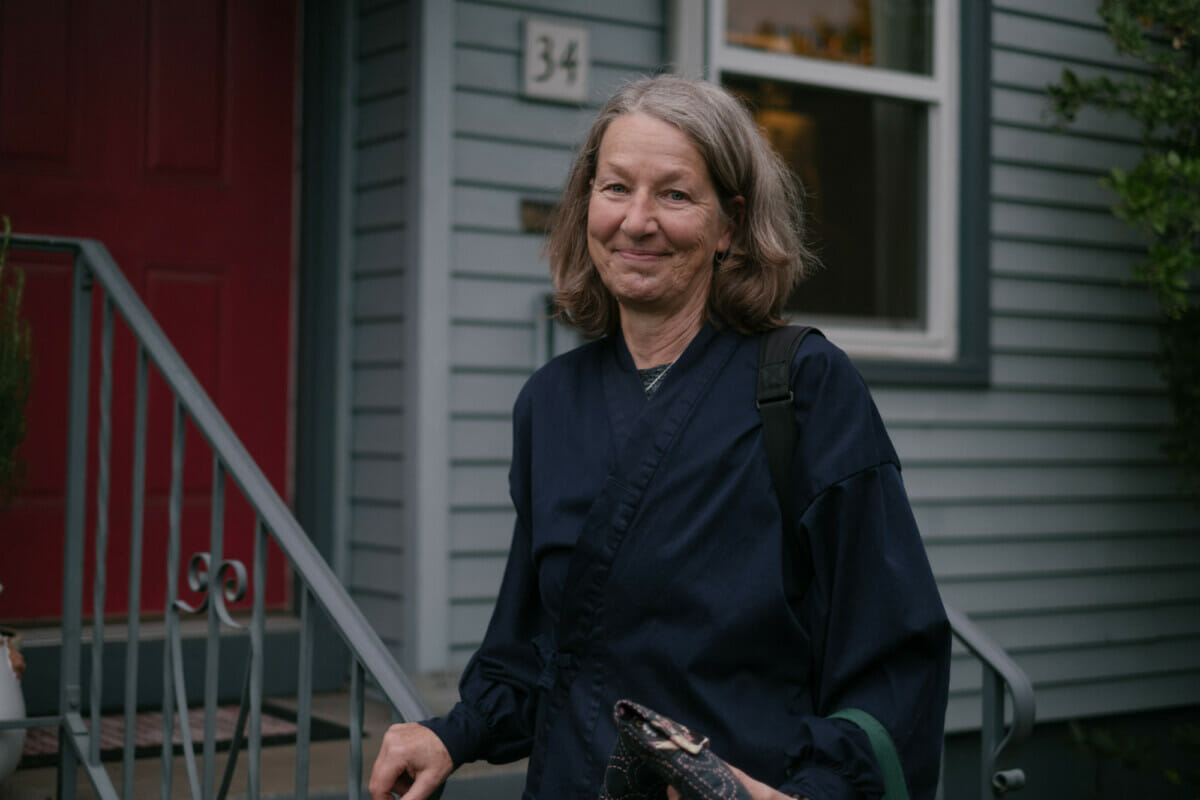
Linda’s journey into Zen began with a simple and unexpected sense of relief. After years without a steady spiritual practice, she found something powerful in sitting quietly on a cushion, with no need to explain herself, perform devotion, or make anything happen. What first brought her back was not doctrine, but the direct experience of silence.
Over the years, that simple act of showing up became the foundation of her practice. Through meditation, retreats, one-on-one meetings with her teacher, and a growing appreciation for lineage, Linda began to see how Zen quietly reshaped her life. It helped her become calmer, more present, less driven by old habits of control or scarcity, and more able to meet difficulty with compassion.
For Linda, Zen is not about forcing transformation. It is about returning again and again to what is already here, trusting that something real can emerge through patience, presence, and practice.
“There’s something that is honest, however difficult to put into words, that is real.”
Reflection
When practice becomes the texture of life
The first thing that catches people off guard at this stage is how familiar it all starts to feel.
After years of study, of returning to the same texts and the same practices and the same breath—the edge softens. The urgency that pulled you through the early years starts to fade. And there’s a real question underneath that: if I’m not feeling inspired, am I still practicing?
What practitioners like Grace begin to discover, though, is that the practice was never meant to stay interesting. It was meant to stay true. The work quietly shifts—from seeking that fresh feeling of discovery to something more patient. Renewing attention rather than chasing inspiration. Coming back to the same teachings, the same patterns, the same simple breath—but seeing them more clearly than you could before. More honestly.
Integration at this stage looks a lot like simplicity. Not dramatic. Not especially exciting. Just showing up, consistently, in small ways. Recognizing depth in the ordinary rather than going looking for it somewhere else.
And then there’s the thing nobody quite prepares you for: the patterns are still there.
“You think after all these years certain patterns would be gone… but they’re not. They just get quieter, more subtle.”
“The work doesn’t end—it just gets more refined.”
I’ve heard versions of this from practitioners at every level, and there’s something both humbling and oddly reassuring about it. Practice doesn’t erase who you are. It doesn’t reach some finish line where the difficult parts of your conditioning finally dissolve. What it does—slowly, almost invisibly—is change your relationship to those patterns.
The reactions still arise. The old habits still surface. But something is different in how they’re met.
The fruit, I’ve come to believe, isn’t perfection. It’s a kind of intimacy with your own experience. You start to recognize the familiar patterns earlier—sometimes just barely, sometimes with real clarity. You can hold them a little more gently. You’re not as completely overtaken. And in the moments that used to swallow you whole—conflict, stress, emotional charge—there’s occasionally a breath of space where before there was none.
That space is the practice. That’s where it actually lives.
But perhaps the place where all of this gets most real is in relationship.
“Practice really shows up in how you treat people—especially when it’s inconvenient.”
Solitude has its own kind of grace. Silence is relatively easy to be present in. But family, community, work—these are a different kind of testing ground entirely. The moments that reveal where you actually are aren’t the quiet ones.
This is where the path stops being about personal calm and starts being about responsiveness. Listening more fully. Reacting less quickly. Choosing to stay open when closing off would be so much easier. Extending compassion not in the abstract, but in the specific, inconvenient, imperfect moment right in front of you.
For many practitioners, this is where practice fully integrates—not as something alongside life, but as the texture of life itself. The difficult conversation becomes the practice. The moment of frustration becomes the practice. Washing the dishes, navigating something hard with someone you love, choosing how to respond when you’re tired and stretched thin—all of it, the path.
There’s a quiet shift that seems to define this whole stage, and I find myself returning to it again and again.
The practice is no longer about becoming something different. It’s about being with what’s already here—with more clarity, more patience, more care.
Not perfect. Not finished.
Just… deeply, honestly lived.
And maybe that’s exactly what it was always leading toward.

The takeaway
Not perfect. Not finished. Just… deeply, honestly lived.
See every practitioner in the middle stage
Registration is required to view all profiles in this theme and support the project.
Members’ view
All practitioners in the middle stage
Portraits · more themes