Theme · Deepen
Deepening the practice
What changes when practice stops being something you do and starts reshaping you?
Theme overview
Will you stay?
It asks for something quieter, more sustained, less dramatic. It asks: will you stay?
Audio overview
Listen to the narrative exploring this theme in podcast format.
I’ve noticed something over time—people don’t deepen their practice the same way they begin it. The beginning is usually driven by need. Relief. Curiosity. That quiet sense that something isn’t quite right. But deepening is different. It asks for something quieter, more sustained, less dramatic. It asks: will you stay?
What I’ve come to see, across so many different practitioners, is that this deepening tends to move in two directions at once—through steady, unglamorous commitment, and through being challenged beyond the edges of what’s comfortable. And honestly, both of those things are harder than they sound.
In their words
Six ways the path goes deeper
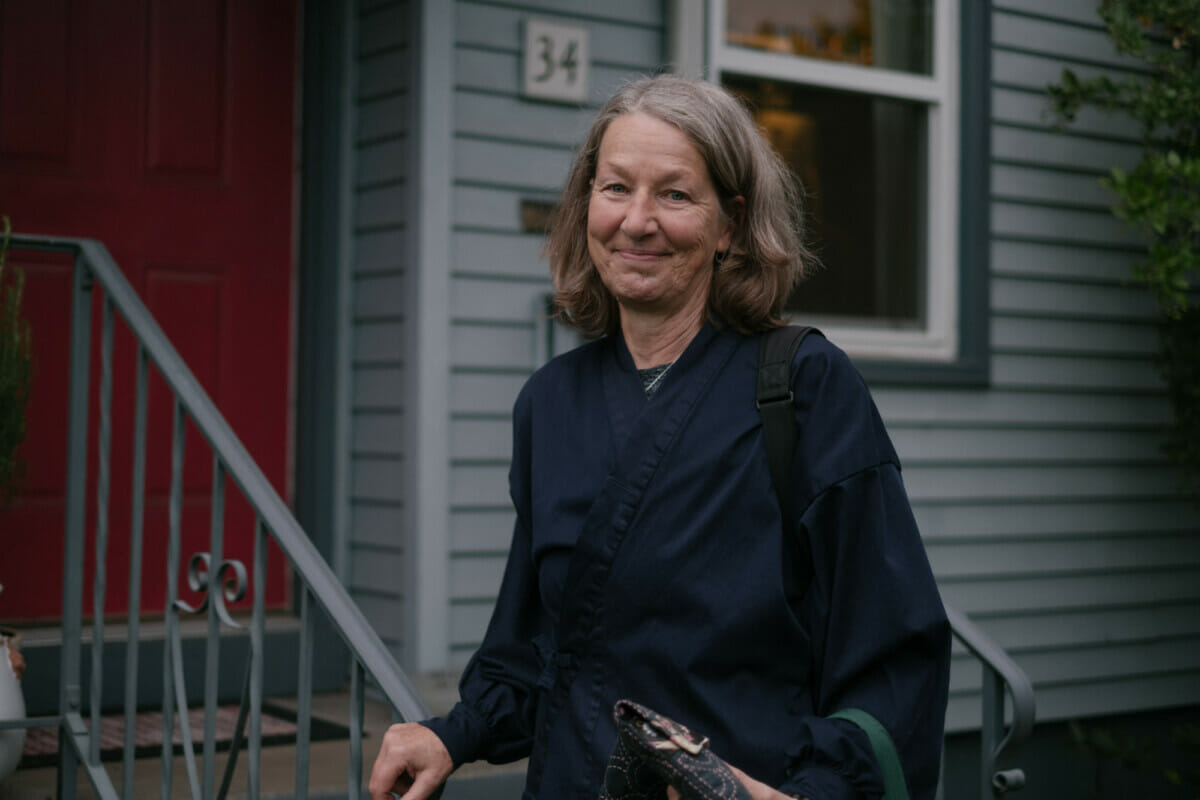
Just keep showing up
Linda
For some people, deepening doesn’t look dramatic at all. It looks like repetition. Like returning again and again, long after the initial spark has faded into something ordinary. Linda’s path feels like that. It started with a simple instruction from her teacher—just keep showing up. No pressure to understand everything. No expectation of transformation. And at first, she didn’t think anything big was happening. She was just showing up. And yet, slowly, almost invisibly, something was. Her work as a lawyer began to soften, moving away from conflict and into something more measured. A client noticed before she did.
“You seem calmer.”
That’s when it landed for her—practice wasn’t something separate from her life. It was shaping it from the inside out. Taking the five precepts marked another step, not as restriction, but as alignment.
“It wasn’t about punishment. It was about the challenge of actually living ethically.”
What had begun as simple routine became curiosity, then study, then a deeper inquiry into how the Dharma actually lives inside a real, complicated, everyday life.
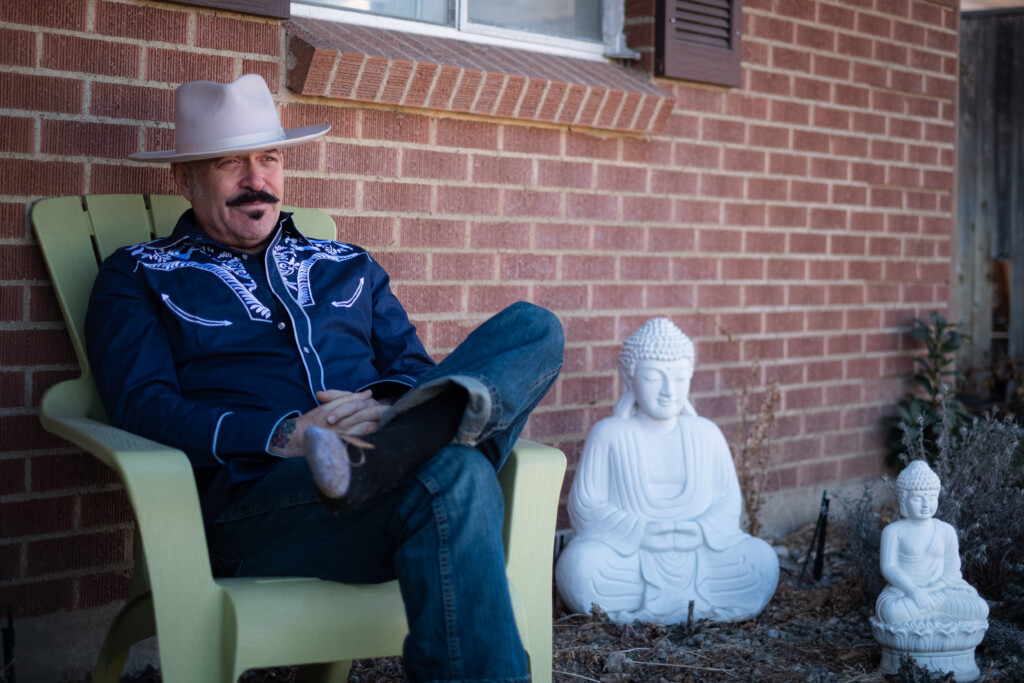
From thinking to doing
Christopher
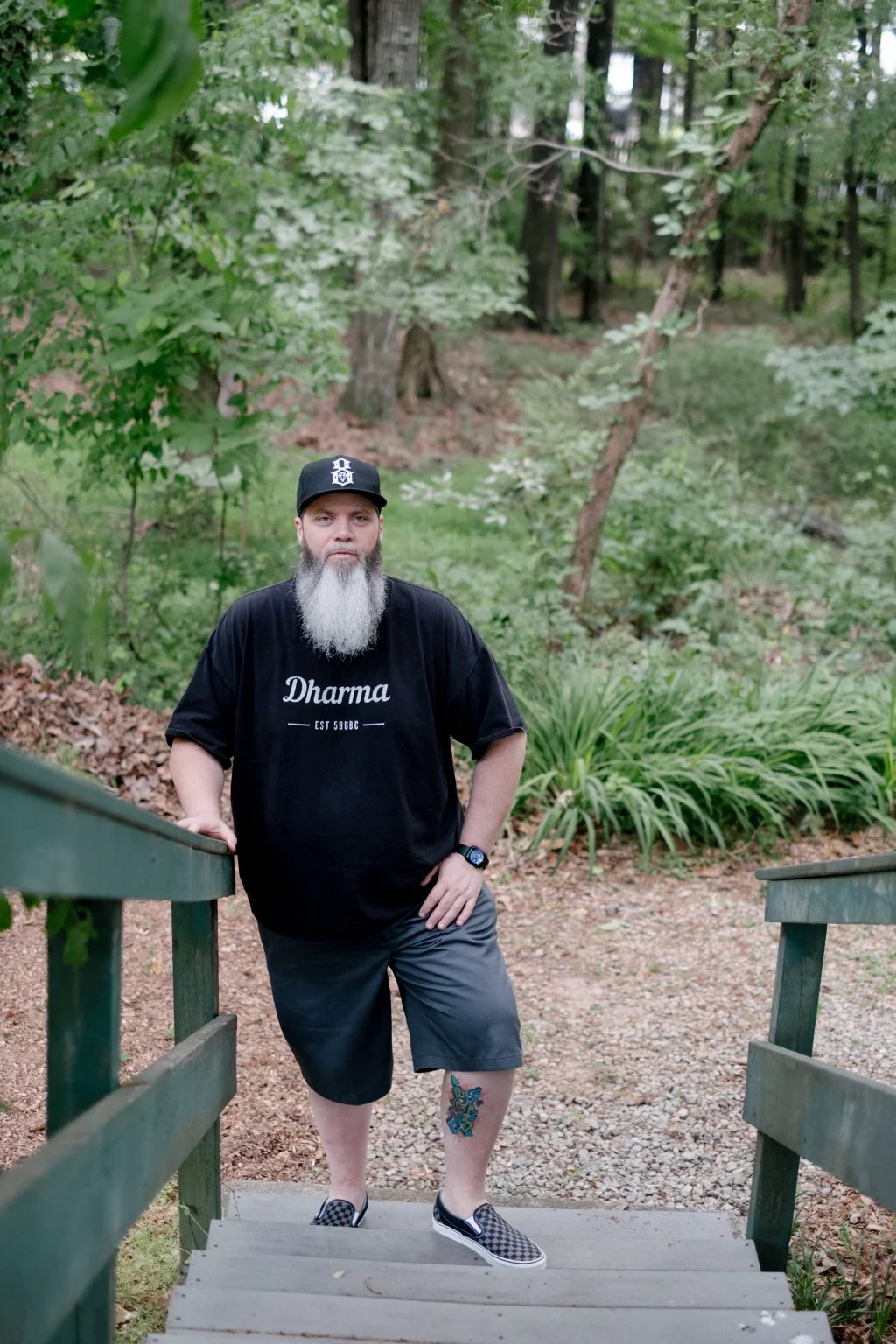
Christopher’s journey echoes that same movement from surface to embodiment. His early connection to Buddhism was unconventional, even fragmented. But over time, his practice became more formal, more grounded in ritual—meditation, chanting, bowing. At some point, he realized he couldn’t just think about it anymore. He had to actually do it. And through that doing, something shifted.
“The longer I practice, the more I connect through the ritual. It takes me out of my head and into the experience.”
What once felt abstract became tangible. And interestingly, even with the freedom to explore, he found himself returning to more traditional forms—not out of obligation, but simply because they worked.
Living the Dharma
George
George takes this even further. For him, deepening is no longer really about learning at all—it’s about embodiment. He’s said it plainly: it’s easy to talk about the Dharma. The harder part is actually living it. His relationship to teaching has changed too, becoming less about explaining and more about demonstrating.
“I don’t just want to explain it—I want people to see it in how I live.”
There’s a quiet responsibility in that—the understanding that practice isn’t confined to meditation cushions or Dharma talks. It’s expressed in how you show up in every single interaction.
“Whether we realize it or not, we’re always teaching something.”

Depth through acceptance
Albert
Then there’s Albert, whose deepening took the form of healing. Coming from a background shaped by guilt and self-rejection, Buddhism didn’t just offer insight—it offered relief.
“For the first time, I didn’t feel like there was something wrong with me.”
But it didn’t stop there. Through teachings like the Eightfold Path, and the deep compassion woven through Pure Land Buddhism, he began to change his relationship to himself.
“I stopped fighting myself. Even my struggles became part of the path.”
For Albert, depth wasn’t about discipline first—it was about acceptance. Learning that brokenness wasn’t something to fix, but something to hold gently, with compassion.
Challenged on retreat
Lisa
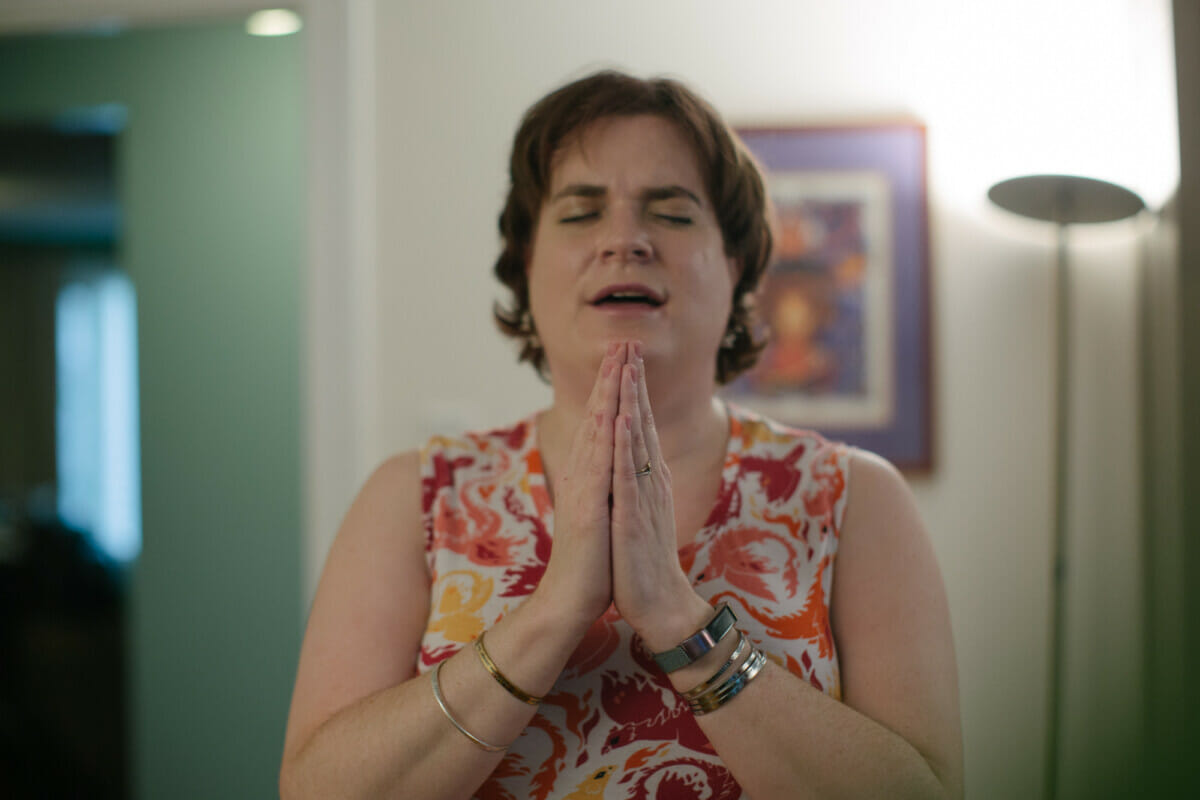
But showing up alone isn’t enough. At some point, practice has to disrupt you. It has to reach into the places where you’re still holding on, still resisting, still quietly avoiding. That’s where the second layer of deepening happens, and it’s where things get genuinely hard. Lisa’s journey sits right in that tension. She resisted ordination for a long time, feeling like she needed to be fully ready before she could take that step. But something shifted when she realized that the very things she thought she needed first—support, guidance, deeper training—were actually what the path itself would give her. That reframing changed everything. It allowed her to step in without needing certainty first. But the real deepening came through challenge, especially on retreat.
“I thought I understood self-compassion… until people pointed out how hard I was on myself.”
That realization didn’t come easily. It took days of sitting with it, letting it unfold slowly.
“That kind of challenge—you don’t really get that in everyday life.”
Retreat became a mirror. A place where her blind spots couldn’t hide from her anymore.
Going deeper to share
Mingo
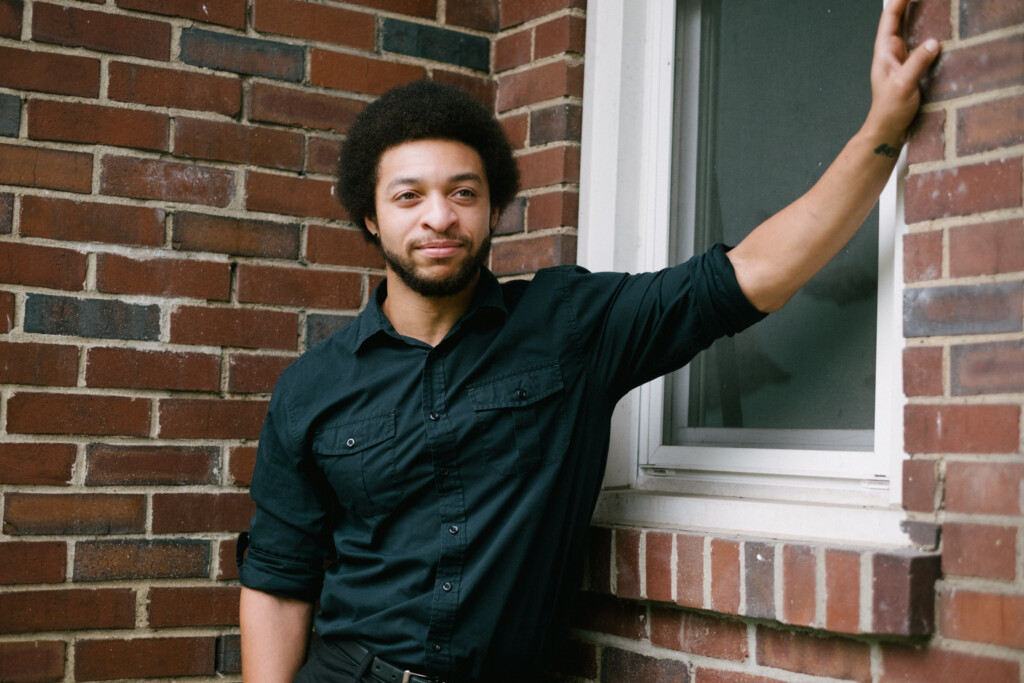
Mingo’s experience carries that same intensity, but in a more immersive way. For them, retreat wasn’t just challenging—it was transformative.
“When you’re in it like that—no distractions—you really start to see yourself.”
Days of silence, no external input, just direct experience. And through that, a deeper awareness emerged—not just internally, but relationally. They began to notice how people communicate beyond words, how presence itself can shift the energy of a space. And then something unexpected happened: they didn’t plan on teaching, but people kept coming. That recognition became its own kind of challenge, its own responsibility.
“If I’m going to share this, I have to go deeper myself.”
Teaching wasn’t separate from the practice. It demanded more of it.
Reflection
Am I willing to let this change me?
When I sit with all of these stories together, what becomes clear is that deepening isn’t one thing. It’s not just discipline. It’s not just insight. It’s not just challenge. It’s the interplay between all of it—showing up when nothing feels special, staying when things get uncomfortable, allowing the practice to reach into parts of your life you never expected it to touch.
Because at a certain point, the question changes. It’s no longer is this working? It becomes something quieter, and honestly something more demanding: am I willing to let this change me?

The takeaway
It’s no longer “is this working?” It becomes: am I willing to let this change me?
Deepen · more themes