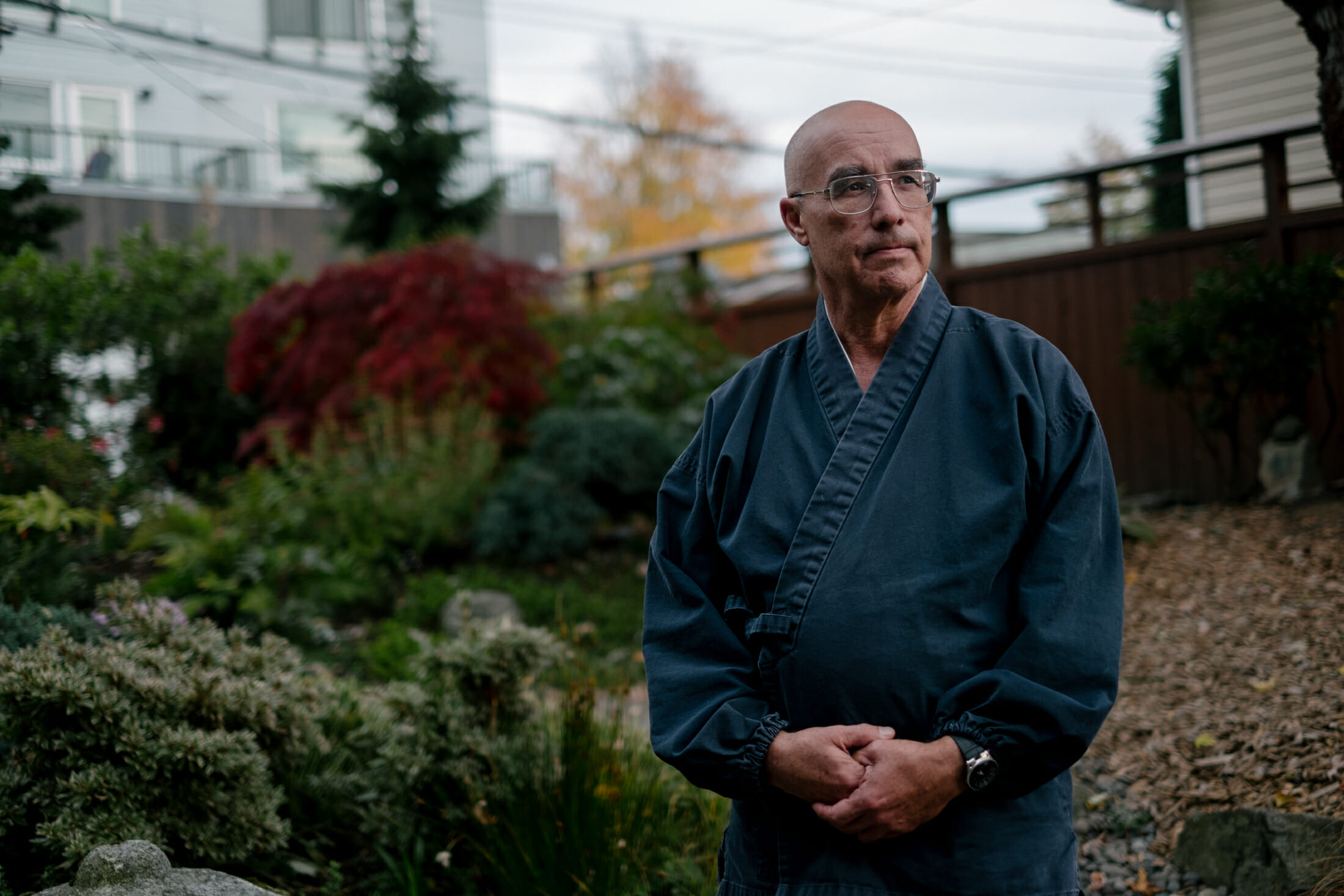
Genjo
Seattle, WA
Genjo’s journey into Zen began with skepticism and a search to understand the nature of existence. What he discovered was not a belief system, but a practice grounded in direct experience. Moving from Soto to Rinzai Zen, decades of meditation, retreats, koan study, teaching, and community engagement shaped his understanding that awakening cannot remain on the cushion. The meditation hall is the laboratory; everyday life is where the practice is tested. For Genjo, Zen means meeting ordinary life with awareness—through relationships, work, service, social responsibility, and the inevitable difficulties of being human. His approach also challenges the idealization of spiritual teachers, emphasizing that teachers are human and that life itself ultimately becomes our greatest teacher.
Background
Genjo’s journey began in a family disconnected from religious traditions, shaped by a scientific worldview. Intrigued by the origins of inspiration and insight, he embarked on a spiritual quest during college. A transformative encounter with an English teacher, Jim Chambers, introduced him to the classical humanistic tradition, prompting profound questions about the sources of creativity and wisdom.
Initially drawn to science, Genjo’s quest led him to Buddhism, which offered a harmonious blend of spiritual practice and scientific inquiry. Engaging with a Vinaya teacher at UCLA’s College of Oriental Studies, he discovered the fusion of social activism and spirituality through a Zen priest who had evolved from a Christian missionary to a Vietnam War protester.
Amidst encounters with colorful characters, including the humorous Zen priest Swami X, Genjo found resonance in Zen’s mysterious nature. The allure of a practice that both challenged and teased the intellect through Zen’s enigmatic koans captivated him. With guidance from a Zen priest named Dizaine Victoria, Genjo embraced meditation, overcoming initial challenges like sitting cross-legged.
His commitment to a daily meditation practice since 1975 reflects the profound impact of that early experience. A moment of heightened awareness during meditation, where he felt intimately connected to his surroundings, marked a pivotal turning point, reinforcing his dedication to the spiritual path. Thus, Genjo’s journey unfolded, blending science, spirituality, and the quest for insight in a rich tapestry of self-discovery.
Learn more
For Genjo, Zen becomes most meaningful when it moves beyond meditation and enters the complicated, imperfect terrain of everyday life. His practice raises a question at the heart of Beyond the Cushion: What happens when the insights we encounter in meditation are tested by relationships, community, responsibility, and the world around us?
In the rest of his profile, Genjo reflects on what it means to go deeper into the practice, including the discipline of retreat and koan study, while exploring how practice gradually becomes less confined to formal meditation. He speaks candidly about the role our teachers play along the path, including the danger of idealizing them and how his understanding of the teacher-student relationship has changed through decades of experience.
His story also explores the importance of lineage and the traditions we inherit and the role of Sangha as a community of practice—not simply as Buddhist institutions, but as living relationships through which practice is challenged, supported, and passed forward. At the same time, Genjo considers what it means to bring Zen into our relationship with society and the wider world, engaging suffering rather than using spiritual practice as a way to withdraw from it.
Perhaps most importantly, Genjo returns again and again to the challenge of integrating practice into everyday life: the gradual realization that the meditation hall is only one part of the path. Relationships, conflict, work, service, and ordinary moments all become places of practice.
Register to explore Genjo’s full profile and discover how decades of Zen practice have shaped his understanding of awakening, teaching, community, and what it really means to carry practice beyond the cushion.
Share This Story, Choose Your Platform!
Other Portraits
How Gareth Integrates Buddhist Practice into Everyday Life
Why Lisa Chose Ordination: Deepening Buddhist Practice Through Spiritual Friendship and Retreat
Karen’s Buddhist Journey: Zen, Creativity and the Art of Everyday Practice
Dennis : Zen, Enlightenment, and the Freedom of Letting Go
Kim’s Buddhist Journey: Mindfulness, Resilience, and Finding Peace Through Vipassana Practice
Zselyke: Growing Up with Diamond Way Buddhism and Making the Dharma Her Own
Colleen’s Buddhist Journey: Finding Meaning Through Impermanence, Death, and Midlife Awakening
Christopher | Finding Compassion Through Everyday Practice | Bright Dawn Way of Oneness Buddhism
Marc: From Marching Band to Buddhist Practice Through Logic, Lineage, and Compassion