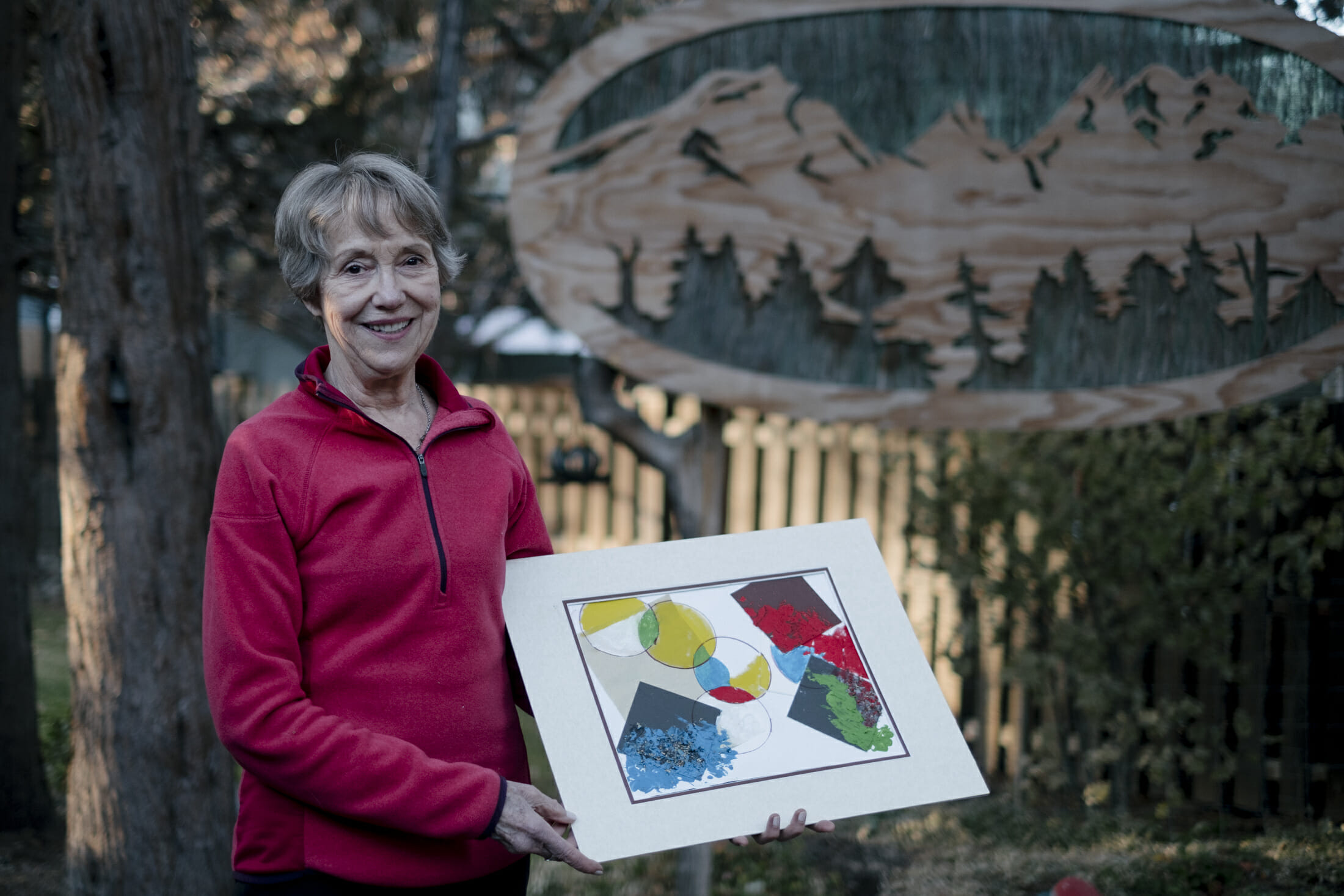
After the devastating loss of her son, Mara turned more deeply toward Buddhist practice, meditation, and Sangha to find a way through grief. Rather than trying to escape her suffering, she learned to meet it with compassion, loving-kindness, and equanimity. Inspired by the Buddha’s teachings on loss and the shared nature of suffering, Mara helped create a grief community where people could sit together, listen, and bear witness to one another’s pain. Her journey reveals how the Dharma does not necessarily take grief away—it can transform our relationship to it, allowing profound loss to become a source of connection, compassion, and service.
Dick & Bonnie: Finding Recovery, Connection, and Community Through Plum Village Buddhism
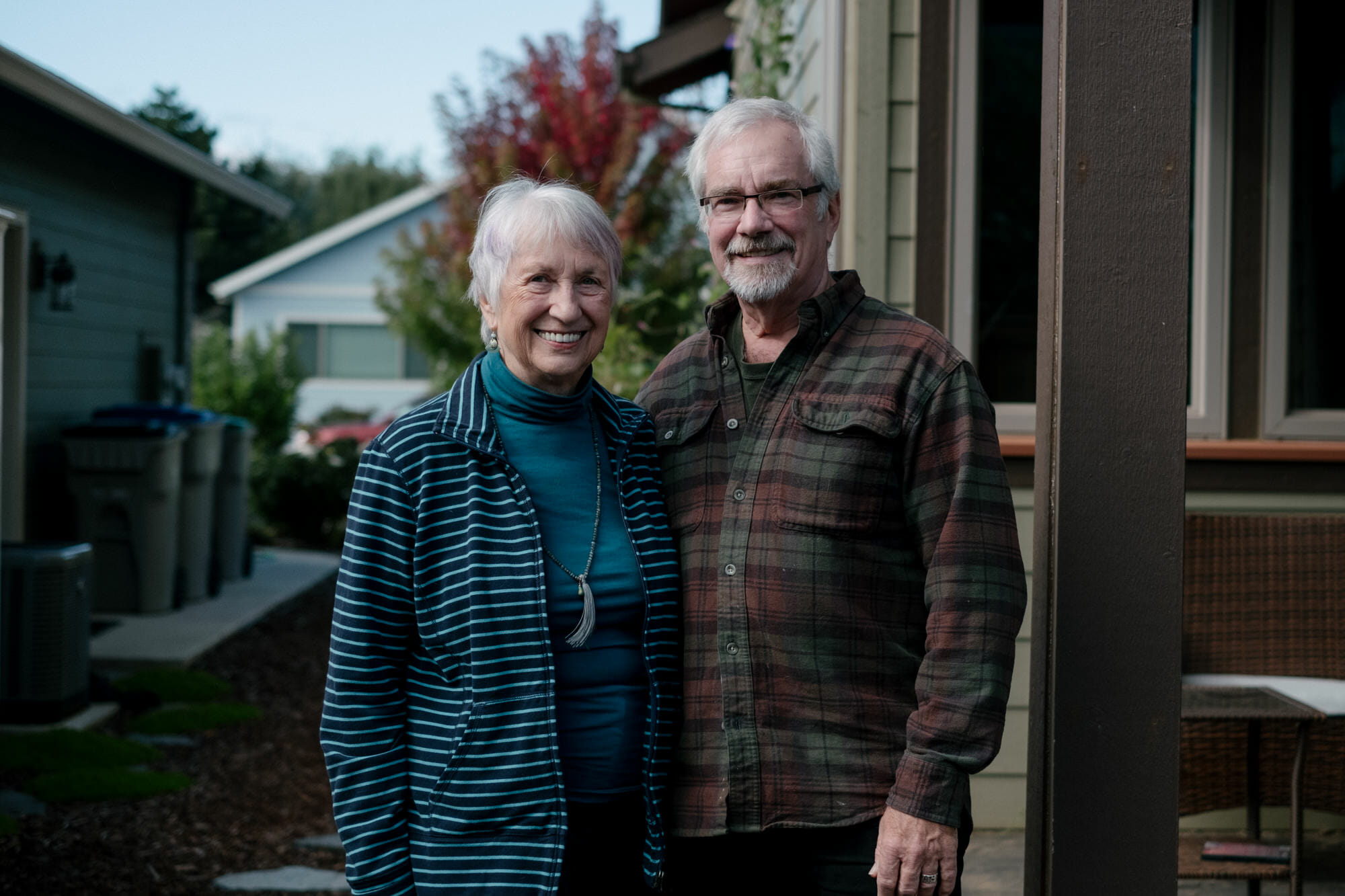
ronak2026-09-11T07:28:55+00:00Dick and Bonnie’s journey into Buddhism began with a moment of profound change. When Dick entered recovery from alcoholism, he discovered a mindfulness-based recovery group rooted in the Plum Village tradition of Thich Nhat Hanh. What began as a search for healing soon became a shared spiritual path. Together, Dick and Bonnie found a form of Buddhism grounded not only in meditation, but in everyday life—deep listening, mindful breathing, compassionate communication, interbeing, and the support of sangha. Drawing on Dick’s Baptist roots and Bonnie’s Unitarian Universalist background, they see Buddhism not as a rejection of their past, but as an expansion of it. Through Plum Village teachings, their relationship with one another and their community has deepened, while Dick’s work bringing mindfulness and meditation into recovery programs and correctional settings reflects Thich Nhat Hanh’s vision of engaged Buddhism: taking practice beyond the cushion and into the places where compassion is most needed. Their story reveals how Buddhist practice can quietly transform a life—not by separating us from the world, but by teaching us to listen more deeply, respond rather than react, recognize our interdependence, and discover that healing is something we rarely have to do alone.
Dottie’s Journey: From Christianity to a Buddhist Life of Practice, Impermanence, and Rebirth
ronak2026-09-11T07:26:48+00:00Dottie’s Buddhist journey began later in life, after decades shaped by an Episcopalian upbringing, marriage, personal struggle, and an ongoing search for a spiritual path that could be lived rather than simply believed. After discovering Buddhist teachings and eventually finding a Tibetan Buddhist Dharma center, she encountered a tradition that spoke directly to questions she had carried for years. Through meditation, Dharma practice, and teachings on impermanence, Dottie began to reconsider her relationship with attachment, death, and what it means to live a meaningful life. Buddhism’s willingness to confront mortality openly helped transform death from something to fear into a natural part of existence. Her understanding of reincarnation evolved more slowly, but over time rebirth became connected to something deeply practical: how she chooses to live now. Taking the bodhisattva vow further transformed this perspective, turning the possibility of returning for the benefit of others into an expression of compassion and purpose. Rather than rejecting her Christian past, Dottie sees her Buddhist journey as an evolution—another way of approaching the enduring questions of who we are, why we suffer, how we live, and what may continue beyond death.
Aaron’s Journey Through Zen, Yoga, and the Transformative Power of Buddhist Retreat
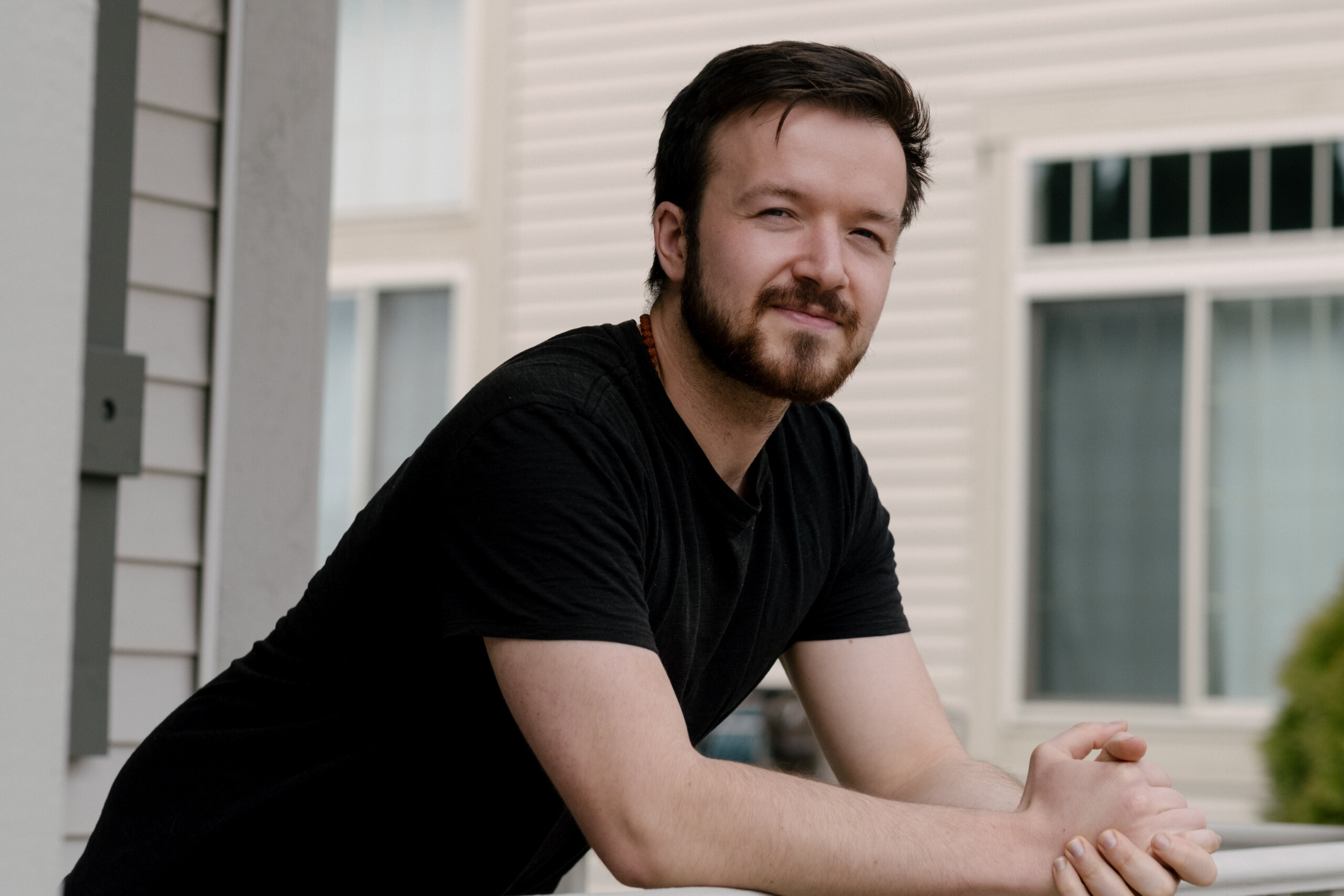
ronak2026-08-26T05:55:52+00:00Aaron’s Buddhist journey began with an intense awakening experience at eighteen that fundamentally changed the direction of his life. Searching for a way to understand and ground that experience, he turned first to Ashtanga yoga and later discovered the rigor of Zen meditation and monastic practice. Through retreats, teachers, Sangha, and years of dedicated practice, Aaron came to see monasteries not as places of escape, but as powerful training grounds for developing clarity, compassion, and freedom from suffering. His experience ultimately inspired Dharma Gates, an effort to connect young people with Buddhist practice, retreat opportunities, and contemplative communities. At the heart of Aaron’s path is a conviction that genuine transformation requires more than spiritual experiences—it requires commitment, trustworthy lineage, community, and the willingness to go deeply into practice.
Zselyke: Growing Up with Diamond Way Buddhism and Making the Dharma Her Own
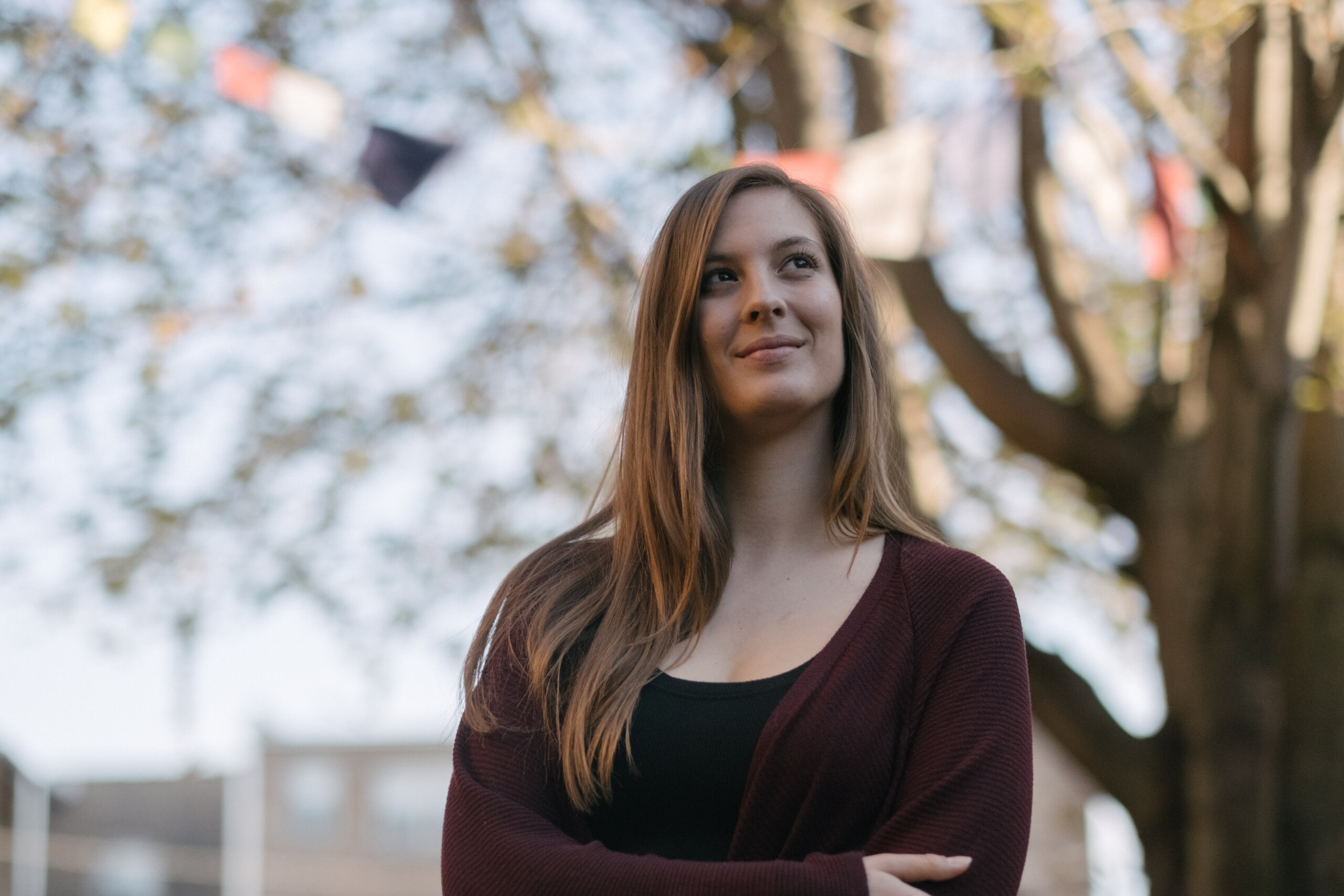
ronak2026-08-15T23:18:48+00:00For Zselyke, Buddhism was part of life long before she consciously chose it as her path. Raised in Finland by parents deeply involved in Diamond Way Buddhism, she grew up surrounded by meditation, Sangha, visiting teachers, and summer courses across Europe. She took refuge with Lama Ole Nydahl at just eight years old, yet her relationship with Buddhism was never forced. As a teenager, she stepped away from practice before eventually returning on her own terms—transforming something inherited from her family into a deeply personal commitment. Through meditation, Ngöndro, retreats, service, and years of involvement with the Diamond Way community, Zselyke began to discover what sustained practice could offer. Her experiences at the Europe Centre in Germany—meditating, receiving teachings, volunteering, and even helping cook for thousands of practitioners—revealed how Dharma can move beyond the cushion and become part of how we work, serve, and relate to others. For her, Buddhist meditation is ultimately not simply a technique for relaxation or stress reduction. It is a path toward seeing the mind and the impermanence of experience more clearly.
Josh: Finding Freedom Through Zen Practice, Lineage, and Daily Meditation
ronak2026-08-15T22:23:38+00:00Josh came to Zen during a period of anxiety and uncertainty, discovering in meditation a practice grounded not in belief, but in direct experience. Through consistent sitting, chanting, retreats, and practice with Sangha, Josh began to understand Zen as something lived rather than merely studied. He respects the Korean Zen lineage that shaped his practice while believing that Zen must continue to evolve as it takes root in American culture. For Josh, lineage remains alive only when its teachings are embodied in everyday life. At the heart of his practice is a simple insight: Zen is not about attaining something—it is about showing up, practicing, and learning to meet life exactly as it is.
Kyle’s Journey into Plum Village Buddhism | Finding Peace Through Mindfulness and Community
ronak2026-08-03T14:41:07+00:00After leaving the strict religious environment of his childhood, Kyle searched for a path that could help him heal anxiety, reconnect with himself, and live with greater presence. His journey eventually led him to Thich Nhat Hanh's Plum Village tradition, where he discovered that Buddhism wasn't about escaping life—it was about fully inhabiting it. Through mindful breathing, everyday awareness, and the support of a compassionate Sangha, Kyle transformed meditation from something he did into a way he lived. His story explores how mindfulness, community, and the joy found in ordinary moments can become powerful tools for healing and awakening.
David M on Vajrayana Buddhism: Finding Freedom Through Curiosity, Death, and Direct Experience
ronak2026-07-23T10:56:16+00:00David M's Buddhist journey is driven by an enduring curiosity about the nature of reality. Drawn to Vajrayana Buddhism for its direct and experiential approach, he explores how practices such as Ngöndro, contemplation of death, and devotion transform everyday life. Through reflections on reincarnation, identity, family, and the role of authentic teachers, David shares how Buddhism has become a living framework for cultivating wisdom, compassion, and freedom from fixed views. Rather than seeking certainty, he embraces practice as a lifelong process of inquiry, discovering that true liberation begins with giving ourselves permission to see beyond who we think we are.