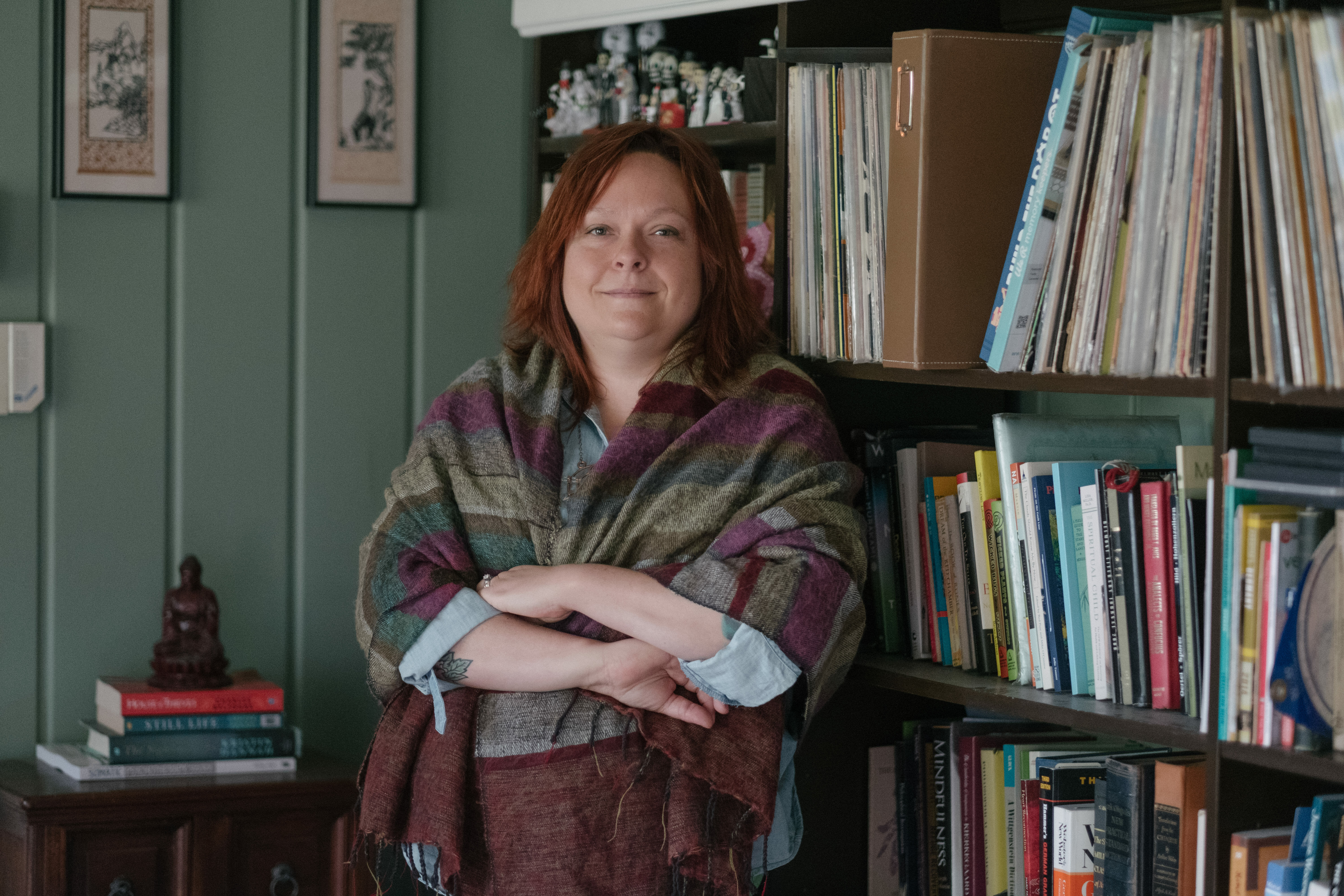
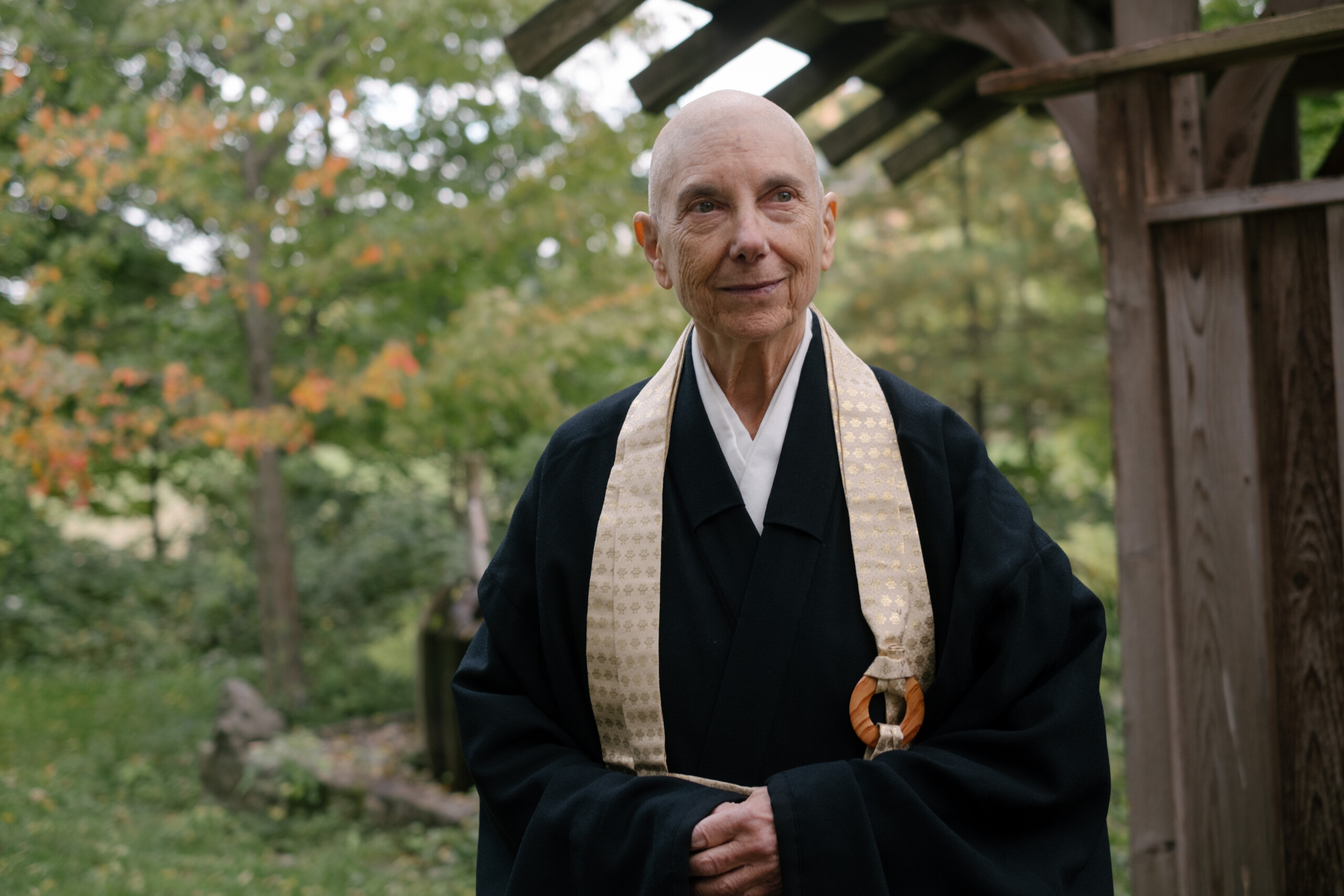
Shinge Roshi
Syracuse, NY
Roshi Shinge shares how an unexpected moment of awakening led her from the arts into a lifetime of Zen practice. In this in-depth interview, she explores the transformative power of zazen, koan practice, sesshin, and the indispensable role of teacher and sangha. Drawing from decades of training, Shinge explains why Zen is not about comfort or self-improvement, but about meeting reality directly, cultivating discipline, and integrating awareness into every aspect of daily life. Her insights offer a timeless perspective on how traditional Zen practice remains profoundly relevant in today’s distracted world.
Background
Shinge, formerly known as Shinji, shares her transformative journey at the Zen Center of Syracuse. Initially drawn to the practice intuitively, she recounts sitting under a tree, embracing the present moment, and experiencing a profound shift in her perspective. Her connection with Zen and the teachings of the Buddha resonates deeply, providing a context for her spiritual experiences. Despite being immersed in the art world as a painter and critic, Shinge yearns for a more formal engagement with practice, leading her to the Zen Studies Society in New York City and her first teacher. Emphasizing the significance of a formal connection with a teacher, she expresses the ineffable nature of the Dharma and the shared pursuit of understanding the mystery that Buddhism presents. Shinge, now Raquel Sherry, invites others to embrace the enigmatic nature of Buddhism rather than demystify it, fostering a sense of shared exploration and depth in the spiritual journey.
Learn more
Roshi Shinge’s journey into Zen began before she even had a name for what she was experiencing. Sitting beneath a tree during a difficult period in her life, something unexpectedly opened—the “bubble of misery” seemed to burst, revealing a reality much larger than the suffering she had been caught within. Years later, Zen gave her a language, a tradition, and ultimately a path for exploring that experience more deeply.
Her story offers a compelling window into what it means to discover a spiritual path through direct experience and why that initial glimpse eventually led her toward the discipline of formal Zen training. For Shinge, understanding Buddhism intellectually is never enough. Practice asks us to sit down, become still, work with the mind, and encounter reality for ourselves—a perspective that runs throughout her reflections on the role of sustained practice and what happens as that practice deepens over time.
Shinge also speaks candidly about the relationships that make this journey possible. She considers a formal relationship with a teacher essential, while describing the importance of practicing within a sangha as the discovery that we are not alone in asking these questions. Her experience opens a larger conversation about the role teachers can play along the path, not by providing easy answers, but by helping students enter more fully into the mystery of practice.
At the same time, Shinge remains deeply committed to traditional Zen while wrestling with what it means to transmit that tradition in a world shaped by social media, constant stimulation, and the desire for immediate results. Her reflections invite us to consider how Buddhism can adapt to contemporary Western life without losing the discipline and depth that have sustained it for generations.
There is much more to Shinge’s story than meditation on the cushion. Her profile explores intensive retreat practice, koans, ritual, lineage, teaching, community, and the difficult work of bringing insight into ordinary life. Ultimately, she returns again and again to a deceptively simple question: what happens when we stop trying to escape our experience and meet it completely?
Register to continue exploring Roshi Shinge’s full profile and discover how a lifetime of Zen practice has shaped her understanding of awakening, teaching, discipline, and what it means to live the Dharma beyond the cushion.
Share This Story, Choose Your Platform!
Other Portraits
Lama Thupten Rinpoche on Bringing Authentic Tibetan Buddhism to the West
David M on Vajrayana Buddhism: Finding Freedom Through Curiosity, Death, and Direct Experience
Michael: From Yoga to Tibetan Buddhism — Preserving the Depth of Practice in the West
Joann’s Journey to Zen Buddhism | Finding Wholeness Through Presence, Compassion & Practice
Genjo: Zen Practice, Lineage, and Bringing Awakening Into Everyday Life
Melissa’s Vajrayana Buddhist Journey: Art, Lineage, Motherhood, and Practice
From Science to Buddhism: Ben’s Journey to Truth Through Vajrayana Practice
David G: Recovery, Shambhala Buddhism, and the Lifelong Practice of Transforming the Mind
Karen’s Buddhist Journey: Zen, Creativity and the Art of Everyday Practice