Jeff
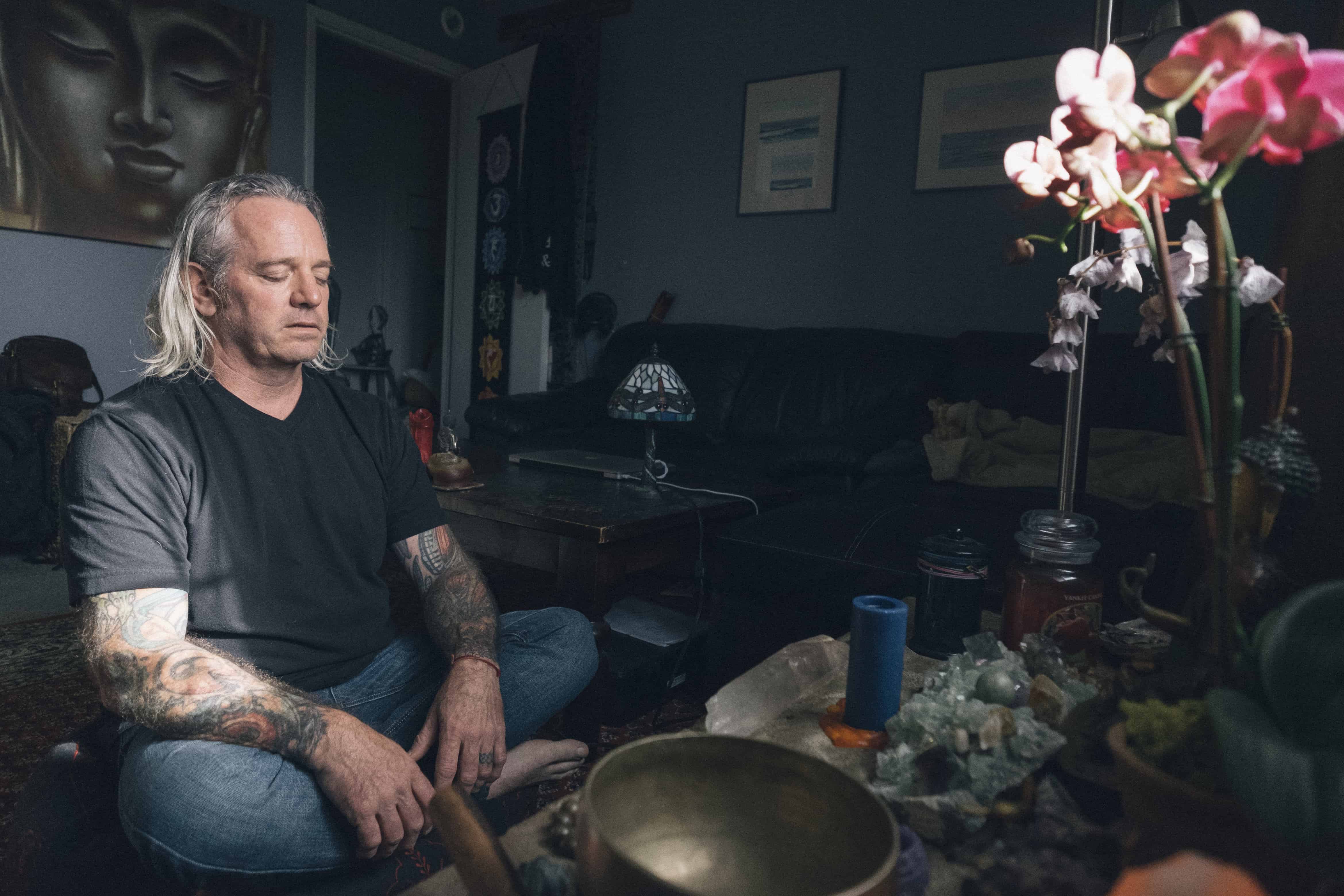
Jeff’s Buddhist journey is a story of addiction, recovery, meditation, and the gradual discovery that practice cannot remain on the cushion. After years of moving between Buddhist teachings and alcohol addiction, sobriety opened the door for the Dharma to become something lived rather than simply understood.
Through Refuge Recovery, Against the Stream, meditation, and the support of Sangha, Jeff began to recognize how Buddhist practice could transform his relationship with suffering, addiction, and the people around him. What emerged was a deeper understanding that Sangha is not simply a community surrounding Buddhist practice—it is part of the practice itself.
For Jeff, the teachings become most meaningful in ordinary human relationships: listening when it would be easier to withdraw, noticing judgment before acting on it, practicing compassion during conflict, and learning to remain present with another person. His relationship with Emily became another place where loving-kindness, compassion, and awareness could move beyond Buddhist philosophy and into everyday life.
Jeff’s story reflects one of the central questions of Beyond the Cushion: What happens when Buddhist practice leaves the meditation hall and enters the complicated reality of being human?
For Jeff, the answer is found in recovery, relationship, community, and the simple but increasingly rare experience of being fully present with another person.
Background
Jeff’s path to Buddhism unfolded gradually, alongside a much longer struggle with addiction, recovery, and trying to find a way of living that felt sustainable. His first encounters with Buddhist ideas were unconventional. As a young man immersed in the counterculture surrounding the Grateful Dead, he was introduced to chanting through a friend practicing SGI Buddhism. At the time, it was more curiosity than commitment, but it planted an early seed.
There was also a quieter influence much closer to home. Jeff’s mother had an interest in meditation and introduced him to the possibility of sitting with his own mind. She never pushed Buddhism on him, but years later she gave him Noah Levine’s Dharma Punx. The book spoke to Jeff because it presented Buddhism through the lives of people whose experiences with addiction, rebellion, and suffering felt closer to his own.
That connection eventually brought Jeff into the Dharma Punx community in San Francisco and later Against the Stream. He found a form of Buddhism that felt accessible and unpolished—a community where tattoos, addiction, recovery, and complicated lives did not seem out of place. Yet even as Jeff continued attending teachings and meditation groups, alcohol remained a powerful presence in his life. For years, Buddhism and addiction existed alongside one another. He could hear teachings about craving and suffering and still find himself drinking afterward.
Over time, the consequences became increasingly difficult to ignore. Jeff moved through addiction, divorce, bankruptcy, and periods of profound instability. At one of his lowest points, when he was struggling with suicidal thoughts, something he had absorbed through Buddhist practice became unexpectedly important: he did not have to believe every thought that appeared in his mind.
That small amount of space—the ability to recognize a thought without immediately following it—became deeply significant.
In 2014, Jeff became sober. Around the same period, Refuge Recovery offered a Buddhist framework for understanding addiction through craving, suffering, ethical conduct, meditation, and compassion. Teachings Jeff had encountered for years began to take on a different meaning. Buddhism was no longer simply something he attended or thought about. It was becoming something he could use to meet his life.
Sobriety also changed the way Jeff encountered the people around him. What had once been a largely private relationship with Buddhist practice gradually opened into something more relational and communal. The Dharma was beginning to move beyond meditation and into the everyday circumstances of being human.
That shift—from practicing largely on his own terms to discovering what the Dharma asks of him in relationship with others—is where the next part of Jeff’s story begins.
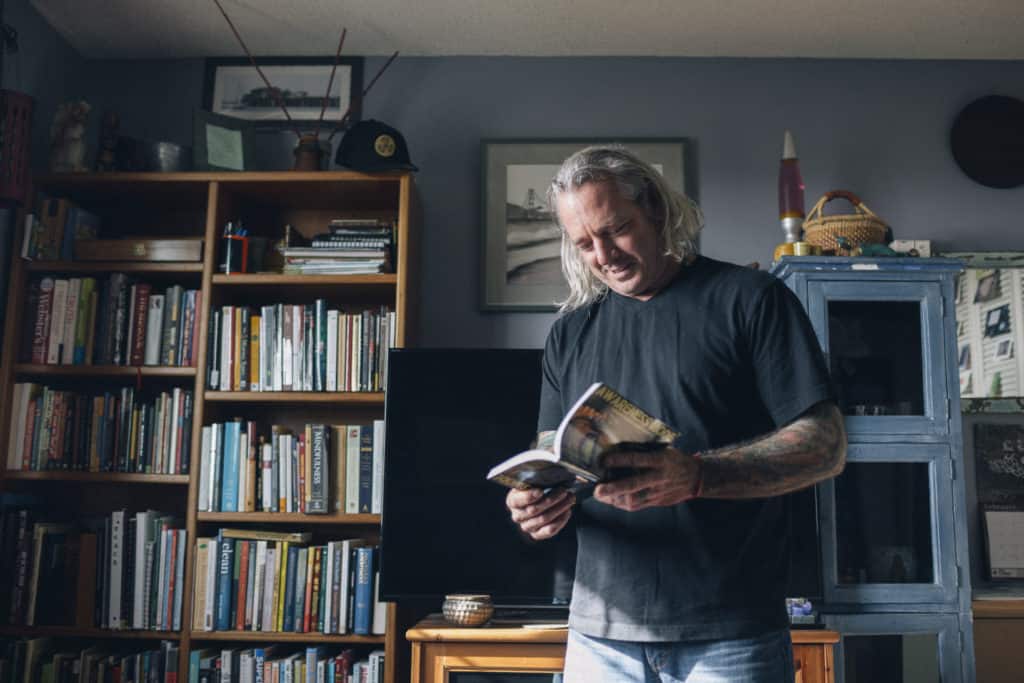
“There’s no separating Dharma from the rest of life.”
Learn more
Jeff’s story doesn’t end with recovery. In many ways, that is where the deeper practice begins.
In the rest of his conversation, Jeff explores what happens when Buddhist teachings move beyond meditation and become part of relationships, community, work, recovery, and the ordinary difficulties of being human. His experience with addiction and sobriety becomes part of a larger encounter with
suffering, recovery, and the difficult circumstances that shaped his path.
Central to Jeff’s experience is community and the importance of practicing with other people. After years of approaching Buddhism largely on his own terms, he came to understand that practice isn’t something we necessarily figure out alone. Other people become mirrors, teachers, companions—and sometimes the very people who challenge us to practice what we say we believe.
He speaks candidly about addiction and recovery, and how Buddhist teachings on craving, suffering, ethical conduct, and awareness gradually became practical tools for staying sober and meeting difficult states of mind without immediately reacting to them. In this way, the Dharma gradually became
something woven into ordinary life rather than confined to formal meditation.
Jeff also reflects on love, intimacy, conflict, gratitude, and compassion within his relationship with Emily. For him, loving-kindness isn’t an abstract meditation—it can be as simple as remembering to say thank you, listening when it’s difficult, or trying to see an argument through another person’s eyes.
Throughout the conversation, Jeff returns to the influence of teachers who made the Dharma feel accessible and relevant, along with questions about lineage, inclusion, and how Buddhism can adapt to contemporary Western life without losing its depth.
But perhaps the thread connecting everything is something simpler: being willing to show up.
In a world where more of our lives are mediated through screens, Jeff asks us not to underestimate how precious it is to sit in the same room, look another person in the face, and actually be together. For him, that human connection is also one of the clearest expressions of the fruit of practice—becoming more present, less reactive, and more available to the people around him.
Register to continue Jeff’s story and explore his reflections on recovery, Sangha, relationships, meditation, and living the Dharma beyond the cushion.
Share This Story, Choose Your Platform!
Other Portraits
Tamara: Bringing Buddhist Practice Into Family, Relationships, and Everyday Life
Alex M | From Mindfulness to Zen: Integrating Buddhist Practice into Life and Leadership
Indigo: Embodying Buddha Nature Beyond the Cushion
Sensei Michael: Making Zen Accessible for Modern Life Through Direct Experience
From Atheism to Bon Buddhism: Jackie’s Journey into Death, Enlightenment, and the Ancient Wisdom of Bon
Gina: Zen Practice, Lineage, and Service in New Orleans
Joe: How Taking Refuge and Clear Buddhist Teachings Transformed His Life
James : Finding Freedom Through Won Buddhism