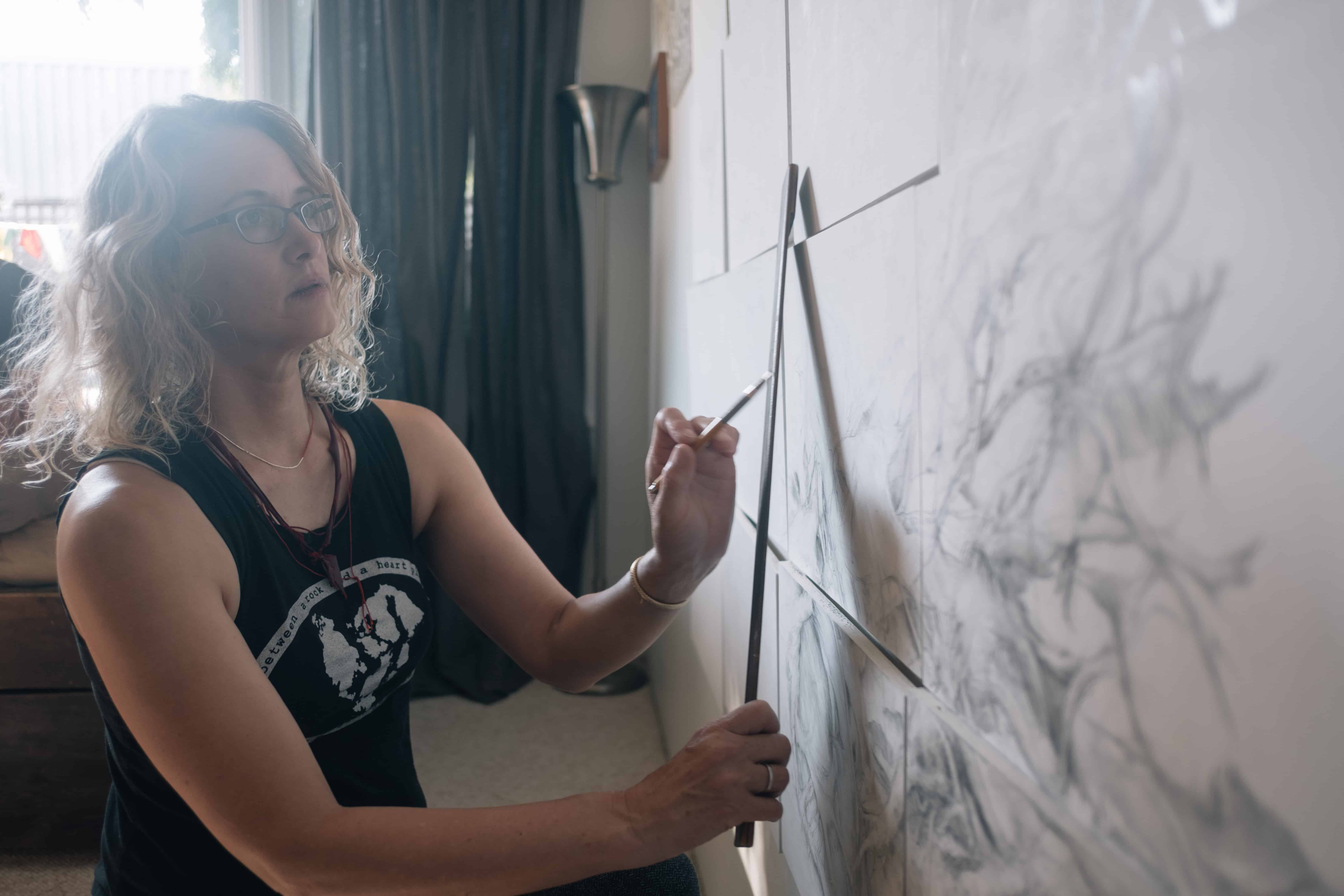
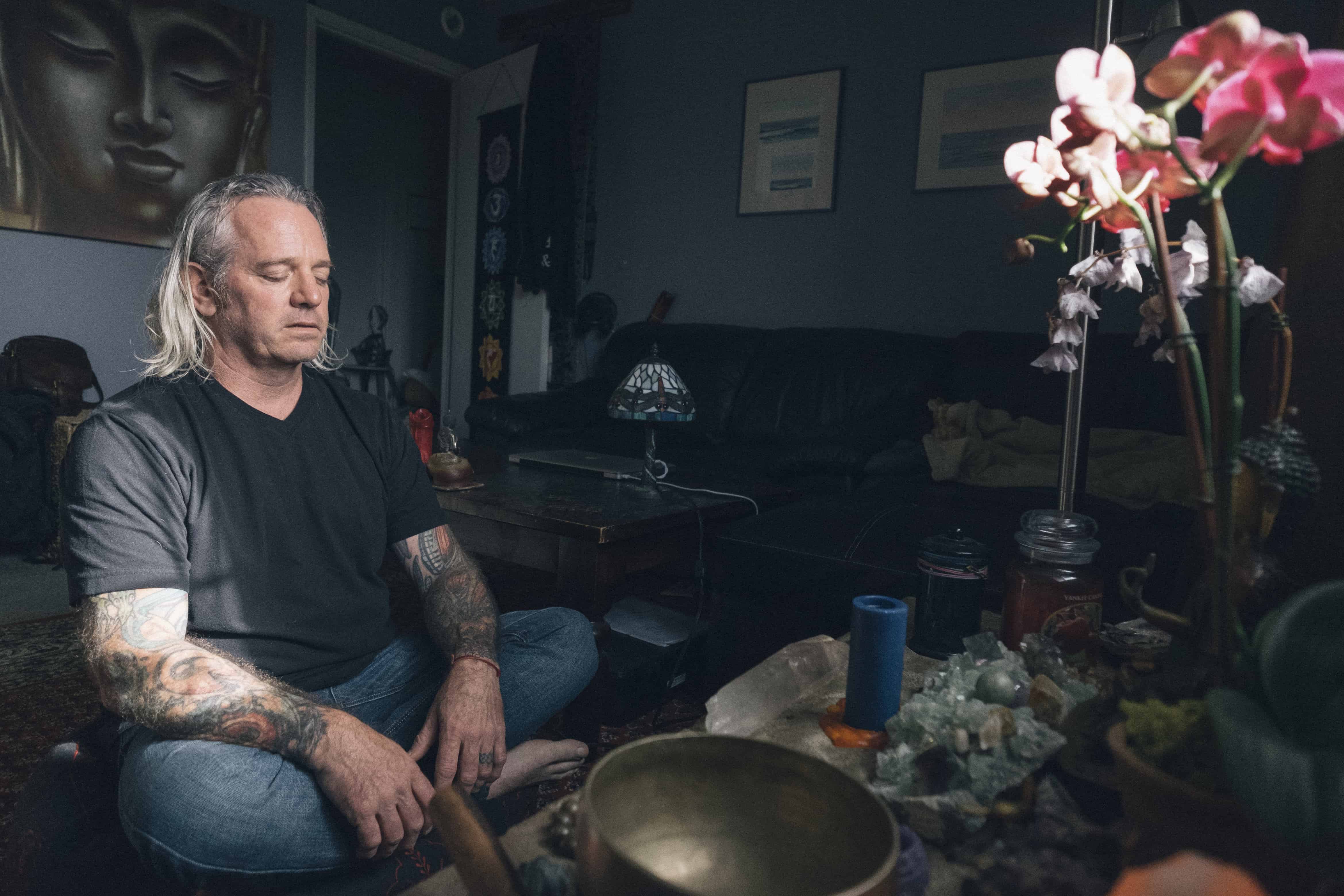
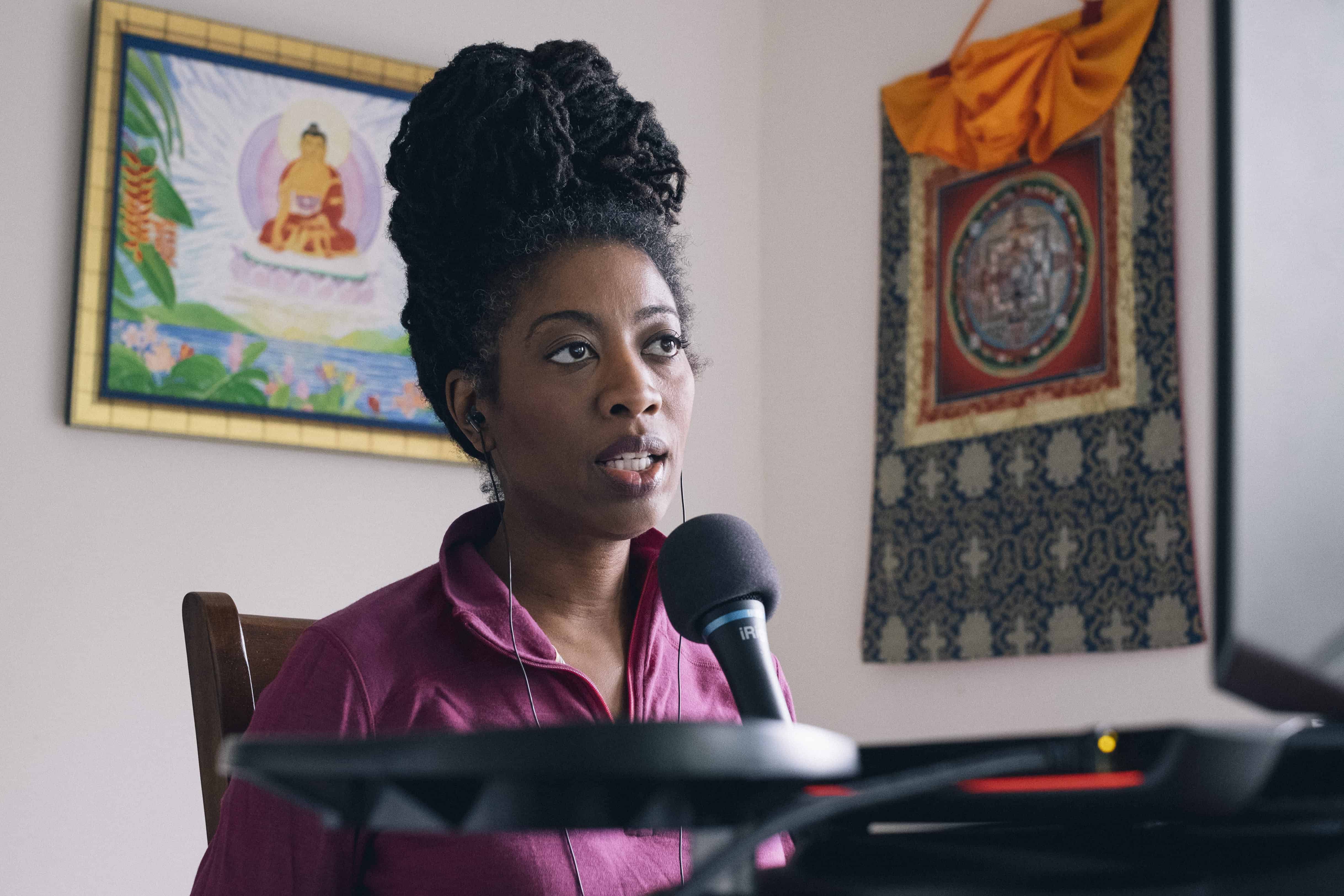
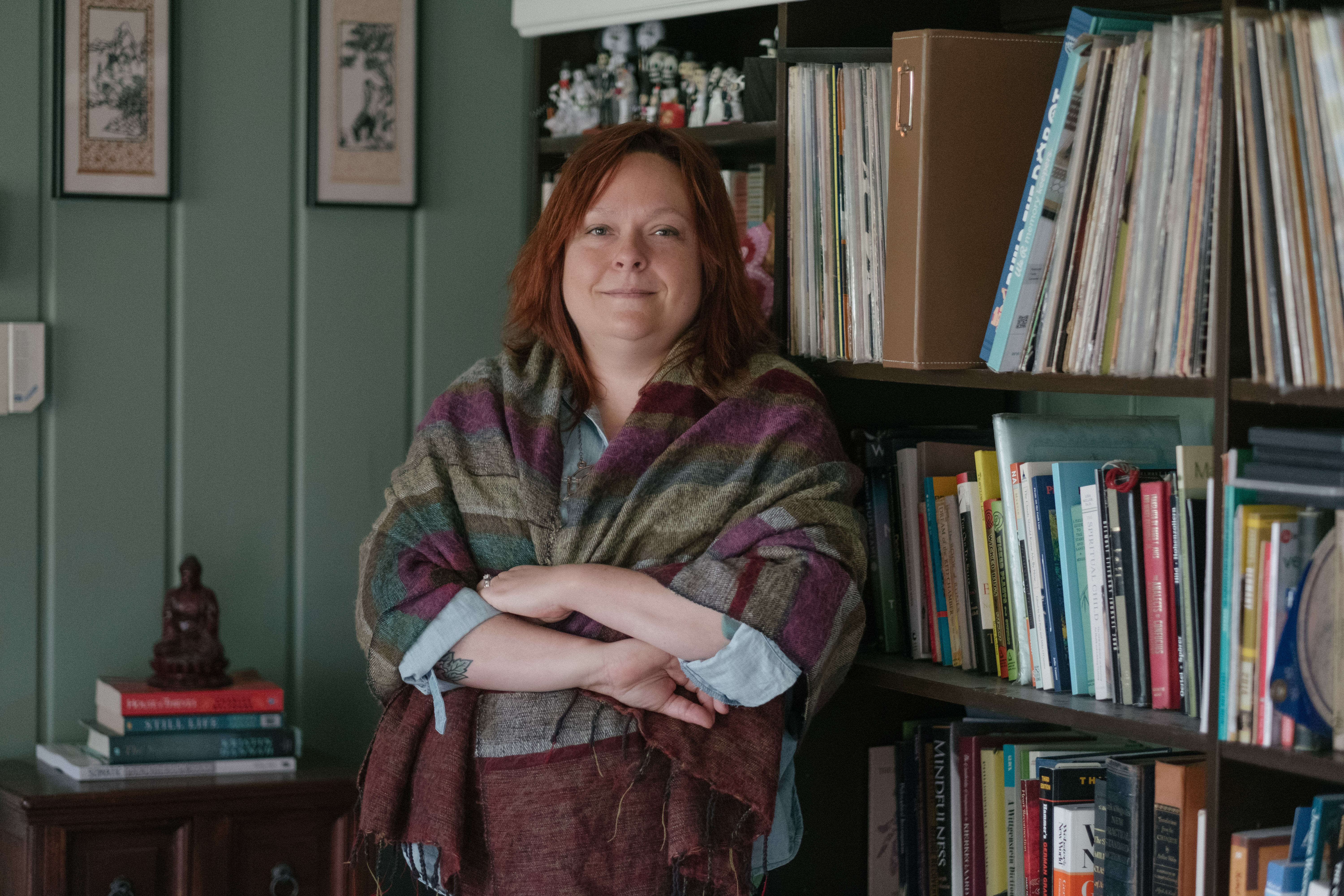
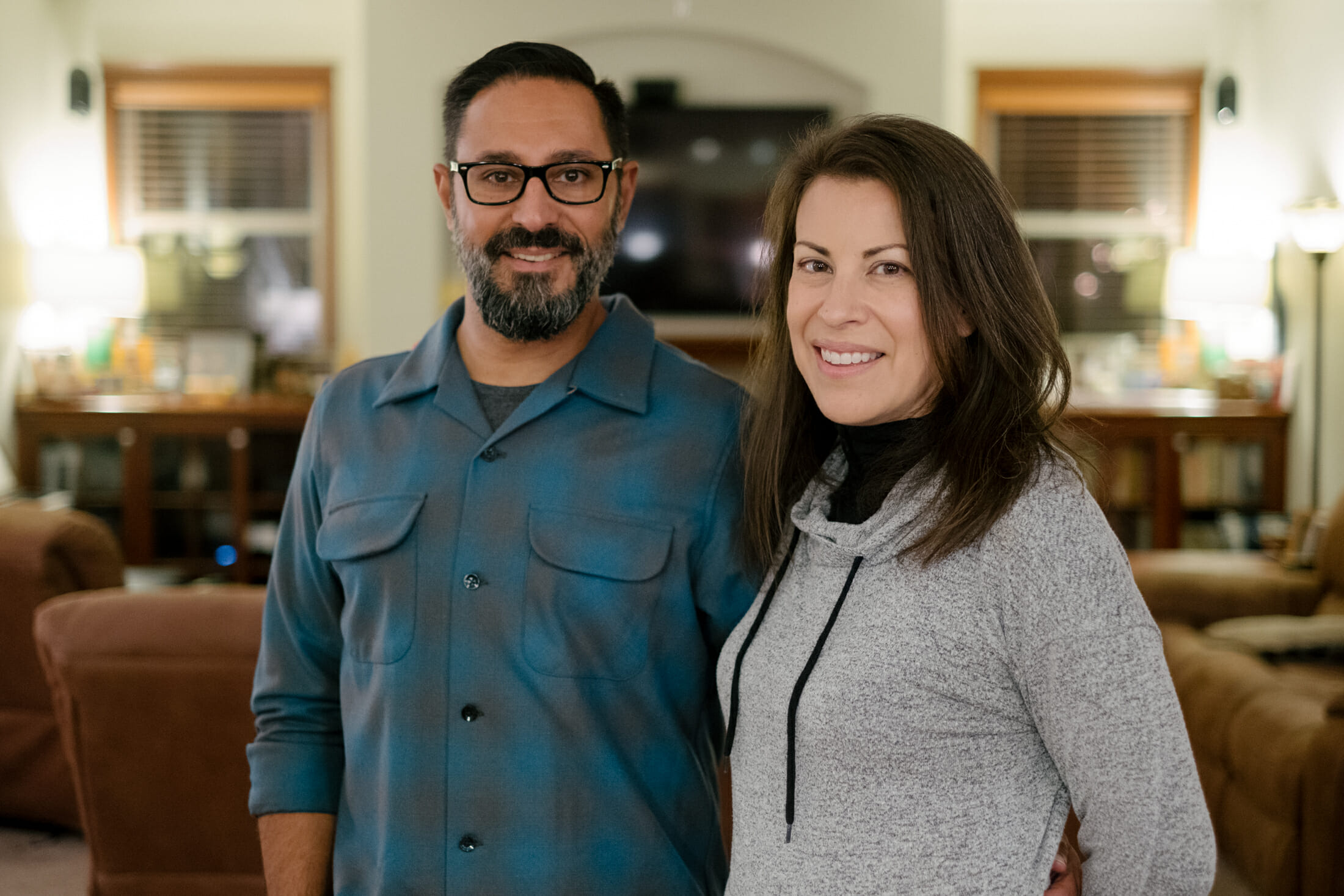
Albert’s journey into Buddhism is a deeply personal story of identity, suffering, self-acceptance, and transformation. Growing up gay within a traditional Catholic culture in Mexico, Albert struggled to find a spiritual home where he could fully embrace who he was. Meditation became an early refuge—a practice he would eventually describe as his “North Star,” something he could return to when everything else felt uncertain. Years later, Albert discovered Pure Land Buddhism at the Buddhist Temple of Chicago and began to understand spirituality in an entirely different way. Rather than waiting for something outside himself to provide redemption, Buddhist practice taught him to look directly at his own mind, suffering, and capacity for compassion. Through meditation, Sangha, and his relationship with his teacher Richard, Albert gradually learned that practice was not about becoming someone else, but about learning to fully inhabit his own life. That realization eventually moved beyond the meditation cushion. Albert brought mindfulness into corporate environments, left a successful six-figure career to pursue work with greater social purpose, and began teaching meditation in ways accessible to modern practitioners. His story reveals Buddhism not as an escape from ordinary life, but as a way of meeting identity, work, relationships, suffering, and impermanence with greater awareness. For Albert, the fruit of practice is profoundly simple: learning to respect yourself, embrace your experience, and allow compassion to grow from the places that once caused the most pain.

Ani Palmo Lodro: From Corporate Life to a Tibetan Buddhist Monastery
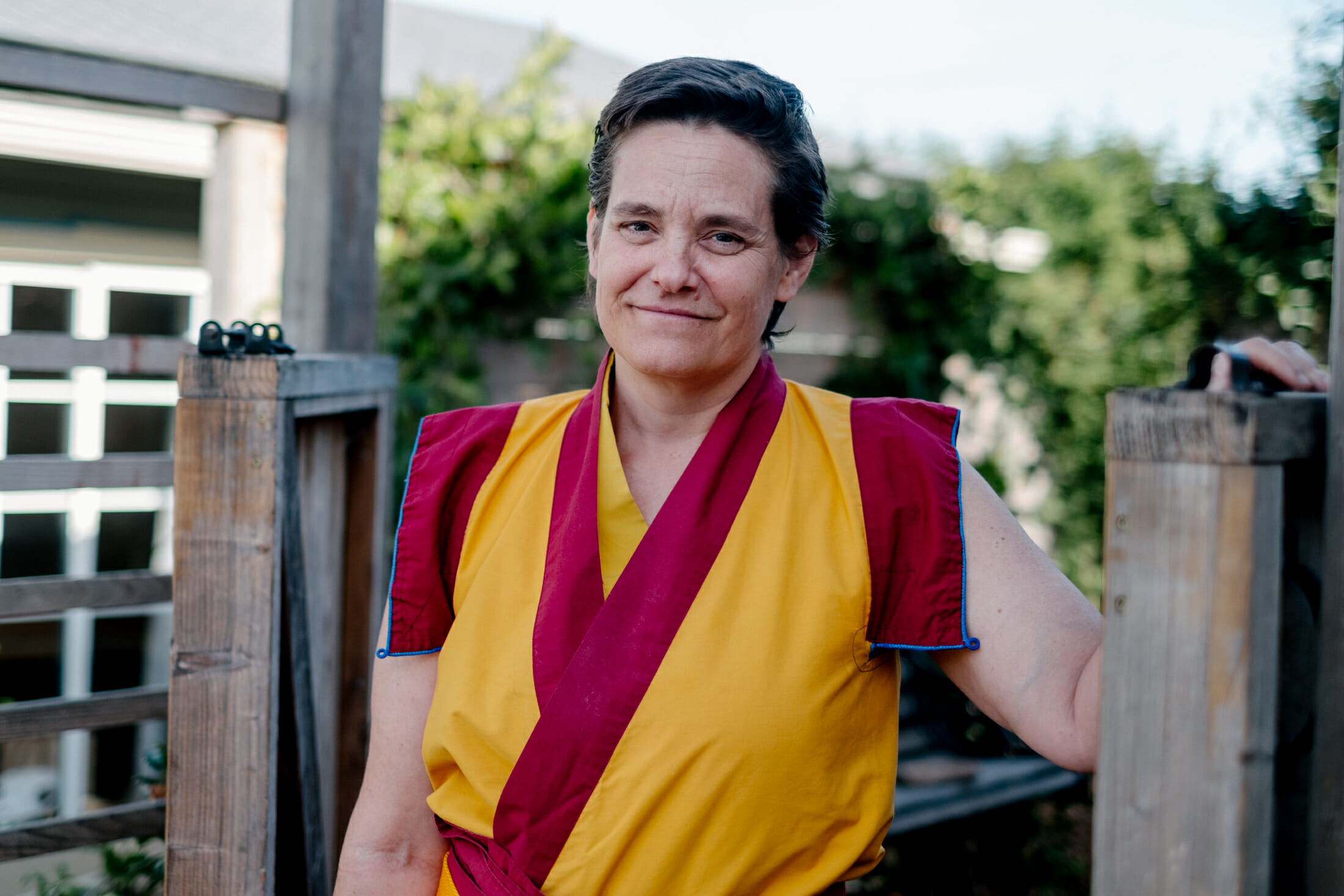
ronak2026-08-15T22:00:51+00:00Ani Palmo Lodro’s journey into Tibetan Buddhism began with a question many people eventually confront: Why, when we have everything we thought we wanted, can something still feel missing? After building a successful corporate life, Ani Lodro found herself facing a profound sense of emptiness that material success could not resolve. Her search for deeper meaning eventually led her to Tibetan Buddhism, the Kagyu lineage, and ultimately ordination as a Buddhist nun. Today, Ani Lodro lives and serves at a Tibetan Buddhist monastery and retreat center, where her understanding of practice has moved far beyond meditation alone. Monastic life taught her that awakening is found not only in silence and retreat, but in discipline, community, humility, and the ordinary acts of serving others. “I came here thinking I would spend my life in meditation. Instead, I found that true practice is in the daily, ordinary acts of service.”
Grace: Finding Healing, Grace, and Everyday Practice in Won Buddhism
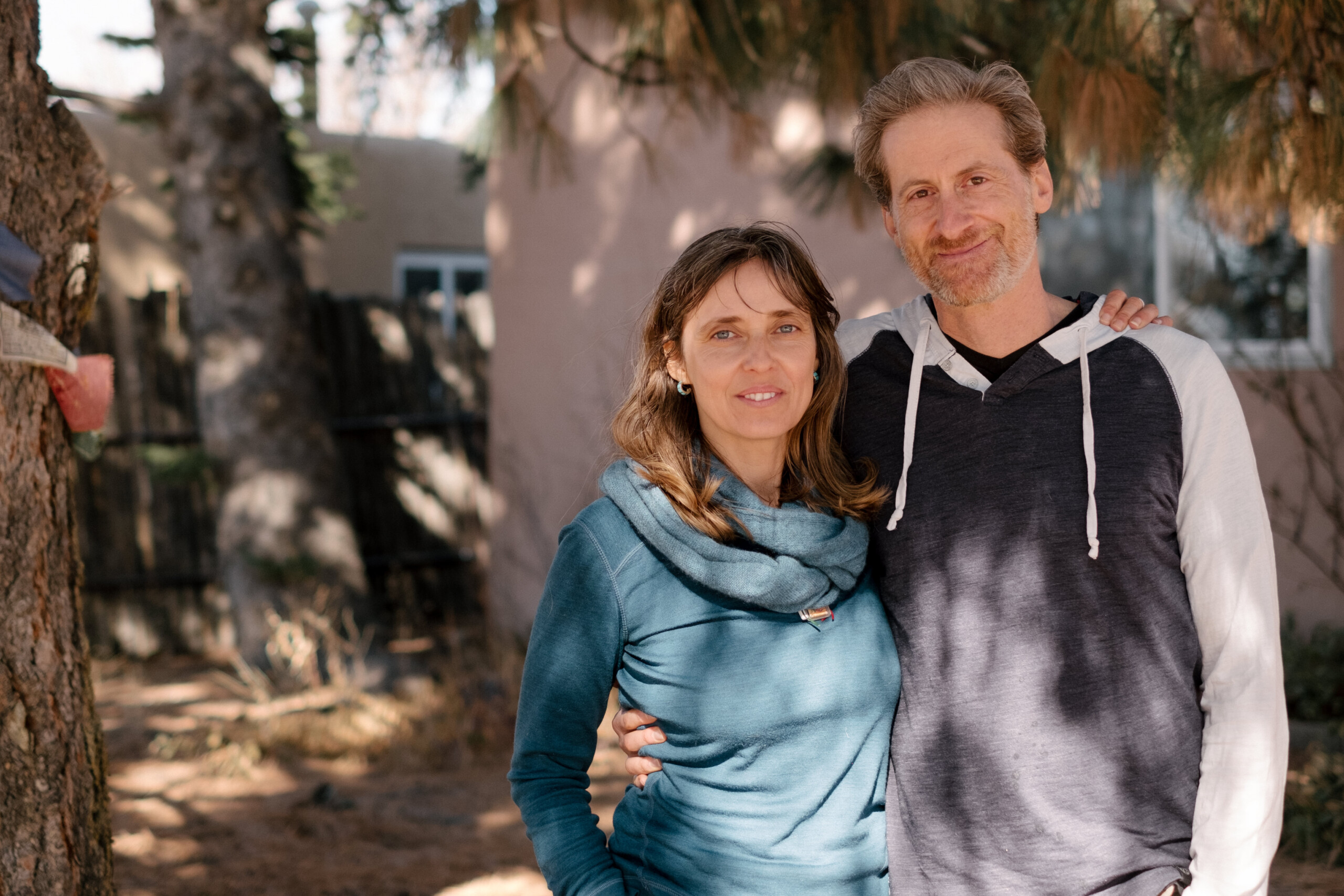
ronak2026-08-15T21:27:10+00:00For Grace , Won Buddhism is more than a spiritual tradition—it is a practice woven into the ordinary moments of life. Raised between Korean Buddhist heritage and a multicultural Western upbringing, Grace’s relationship with the Dharma deepened through the illness and death of her father, when meditation, prayer, and the 49-day ritual became sources of healing and transformation. Her journey eventually led to ordination and a commitment to making Won Buddhist teachings accessible to modern Western practitioners. Grace sees Dharma not as something confined to meditation or the temple, but as a way of meeting life itself. “Dharma isn’t limited to the cushion—it’s everywhere.” From relationships and adversity to death and rebirth, her practice centers on awareness, responsibility, compassion, and discovering the possibility of grace within even the most difficult experiences.
Alejandro: Bringing Tibetan Buddhism into Modern Life Through Science, Meditation, and Compassion
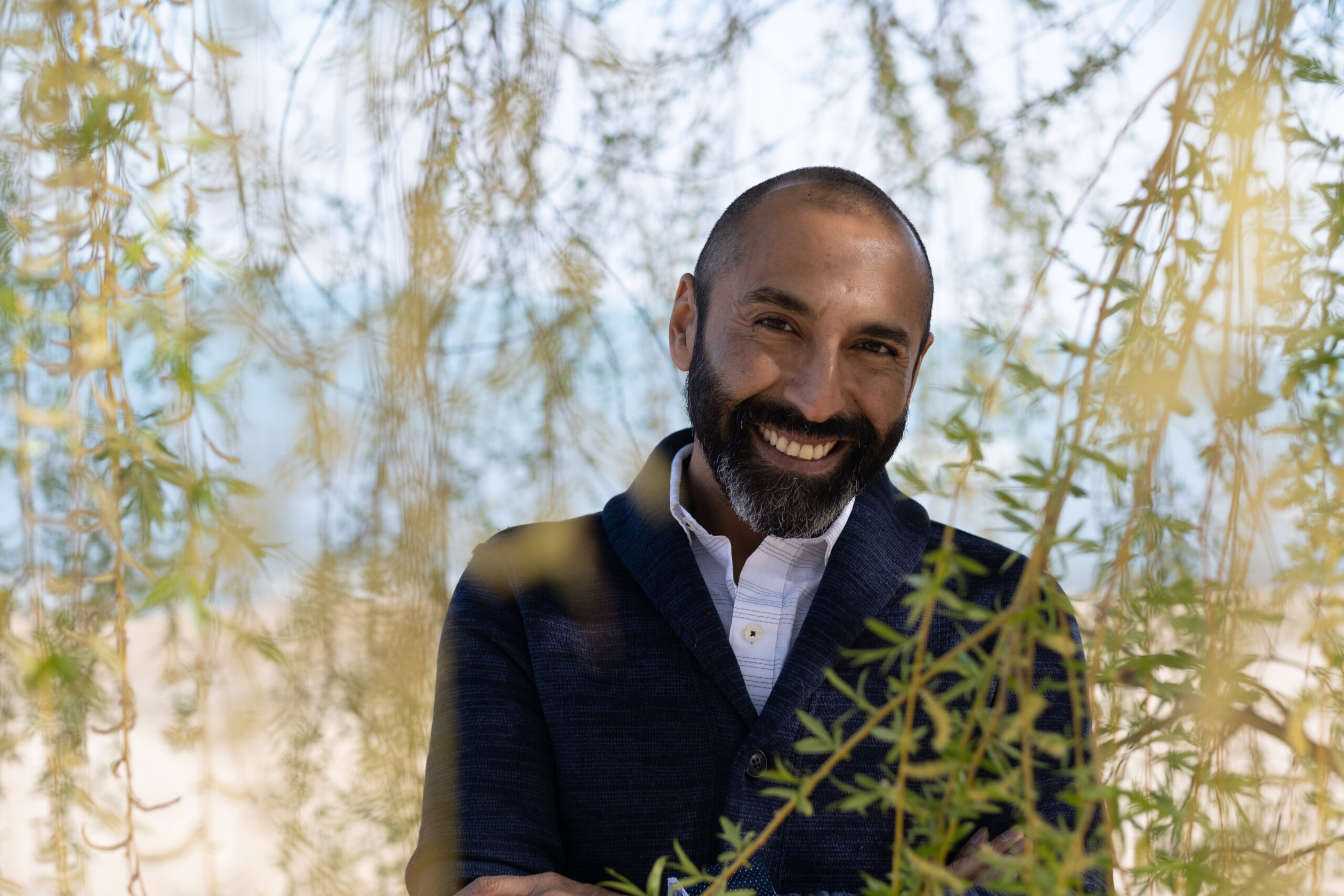
ronak2026-08-03T14:49:12+00:00Alejandro offers a compelling answer by bridging the wisdom of the Tibetan Bön tradition with contemporary life. A scholar, meditation teacher, and researcher, Alejandro has spent decades demonstrating how practices developed centuries ago can support modern challenges such as stress, illness, emotional resilience, and the search for meaning. Rather than presenting Buddhism as a religion to adopt, Alejandro teaches meditation as a universal method for understanding the mind. Whether leading traditional Dharma retreats, conducting research at MD Anderson Cancer Center, or teaching through The Three Doors, he adapts his language and methods to meet students where they are while remaining faithful to the integrity of his lineage. His approach reflects a deep respect for individual spiritual paths, emphasizing direct experience over belief and transformation over philosophy. Through his work, Alejandro demonstrates that authentic Buddhist practice can thrive in hospitals, universities, and everyday life without losing its depth. His teaching shows that timeless wisdom is most powerful when it is made accessible, practical, and deeply human.
Geshe Denma: Preserving the Ancient Bön Lineage for the Modern World
ronak2026-08-05T21:30:06+00:00Born in Nepal and trained for decades within the ancient Bön tradition, Geshe Denma has dedicated his life to preserving one of Tibet's oldest spiritual lineages while making its wisdom accessible to modern practitioners. From his years as a monastery abbot to his role as resident lama at Ligmincha Texas, he teaches timeless practices through a contemporary lens—simplifying teachings for busy lives, embracing online learning, and guiding students with compassion while remaining deeply rooted in authentic lineage. His insights into Dzogchen, healing practices, and the teacher-student relationship reveal how an 18,000-year-old tradition continues to transform lives in the twenty-first century.
Mark on Buddhist Lineage: Why Authentic Teachers Matter in Vajrayana Practice
ronak2026-08-03T14:46:22+00:00What makes Buddhist teachings authentic? In this interview, Mark explains why lineage is the foundation of Vajrayana Buddhism. Drawing on his own journey as a Tibetan Buddhist teacher, Mark explores the importance of receiving direct transmission from qualified teachers, preserving an unbroken lineage, and maintaining the integrity of the Dharma in the modern world. He shares why books and online teachings can never replace the guidance of a realized teacher, how lineage safeguards the transformative power of Buddhist practice, and why preserving these ancient teachings is essential for future generations. This conversation offers valuable insights for anyone seeking an authentic path in Tibetan Buddhism and a deeper understanding of the teacher-student relationship.
Joe: How Taking Refuge and Clear Buddhist Teachings Transformed His Life
ronak2026-07-29T22:45:51+00:00Joe is a violinist with the Utah Symphony, Buddhist teacher, and longtime practitioner in the Dzogchen Buddha Path lineage. Guided by Dzogchen Khenpo Choga Rinpoche, Joe shares how taking refuge became the turning point that transformed his relationships, mindset, and daily life. From understanding the Four Noble Truths as a practical roadmap to freedom to emphasizing the importance of translating Buddhist teachings into clear, modern English, Joe demonstrates how authentic Dharma can be preserved while remaining accessible to contemporary practitioners. His story reveals that Buddhism is not simply a philosophy to study, but a path to embody through compassion, positive thinking, and mindful awareness in every moment.
Guo Yuan Fashi: Finding Clarity Through Chan Buddhism and the Quiet Power of Everyday Practice
ronak2026-07-21T11:54:41+00:00Born in Vietnam to a Chinese Buddhist family, Guo Yuan Fashi never imagined he would one day become a Chan Buddhist monk and internationally respected meditation teacher. Although his mother introduced him to temples as a child, it wasn't until years later—after relocating to Canada following the Vietnam War—that he began searching for something deeper than material success. That search ultimately led him to Chan meditation, ordination under the renowned Chan Master Sheng Yen, and a lifetime devoted to preserving and sharing the Dharma. In this intimate conversation, Guo Yuan Fashi explains that genuine Buddhist practice is found not only on the meditation cushion but in the smallest moments of everyday life. Whether sweeping the meditation hall, eating a meal, or quietly observing the mind, each activity becomes an opportunity to cultivate awareness, compassion, and wisdom. His teacher's greatest lessons were rarely delivered through lectures, but through ordinary actions that revealed the profound nature of mindfulness. Guo also reflects on the challenges of transmitting authentic Chan Buddhism in the modern world. As people increasingly seek meditation for stress relief, he gently encourages practitioners to look beyond temporary calm toward genuine transformation. He discusses the importance of lineage, the indispensable role of the Sangha, and the need to make ancient teachings accessible without compromising their depth. Despite cultural shifts and modern distractions, he remains optimistic that the Dharma continues to offer timeless guidance for anyone willing to slow down, look inward, and practice wholeheartedly. His story is a reminder that awakening is not found in extraordinary experiences, but in learning to meet each ordinary moment with complete presence.
Steven: Finding Compassion in Everyday Life Through the Plum Village Tradition
ronak2026-07-20T12:21:02+00:00Raised in a socially engaged Christian community but searching for a more experiential spiritual path, Steven found his home in the Plum Village tradition of Zen Buddhism founded by Thich Nhat Hanh. What drew him to Buddhism was its emphasis on practice over belief. Rather than asking for faith in abstract ideas, the Dharma invited him to cultivate mindfulness, compassion, and ethical living in the ordinary moments of daily life. Over the years, Steven's practice has expanded far beyond formal meditation. Walking meditation, mindful work, deep listening, and noble silence have become ways of relating more fully to himself, his family, and the world around him. As a member of the Order of Interbeing and a Sangha leader, he has embraced engaged Buddhism—not as activism fueled by anger, but as compassionate action grounded in presence and understanding. For Steven, the Sangha is the heart of practice. Inspired by Thich Nhat Hanh's teaching that "the next Buddha may not be an individual, but a Sangha," he sees community as the place where mindfulness becomes real—where people learn to listen deeply, navigate conflict with compassion, and support one another through life's challenges. His story demonstrates that Buddhism is not about escaping the world but about engaging it with greater awareness, kindness, and responsibility. Through the simple yet profound practices of the Plum Village tradition, Steven continues to discover that lasting transformation begins with the way we breathe, speak, listen, and show up for one another.
Ani Palmo: From Catholicism to Tibetan Buddhism | A Journey of Wisdom, Compassion & Practical Dharma
ronak2026-07-19T00:14:56+00:00Raised in a Catholic family, Ani Palmo spent years searching for a spiritual path that was grounded in reason, personal experience, and genuine transformation. Her journey through Zen, Vipassana, and eventually Tibetan Buddhism revealed a practice that didn't ask for blind faith, but invited inquiry, compassion, and direct experience. Today, as the director and resident teacher of Songtsen Gampo Buddhist Center, she shares how meditation, emptiness, bodhichitta, and the Vajrayana path have transformed her understanding of suffering, relationships, death, and the purpose of human life. Through decades of practice, Ani Palmo demonstrates that Buddhism is not about escaping the world, but learning to meet it with wisdom, patience, and an open heart.