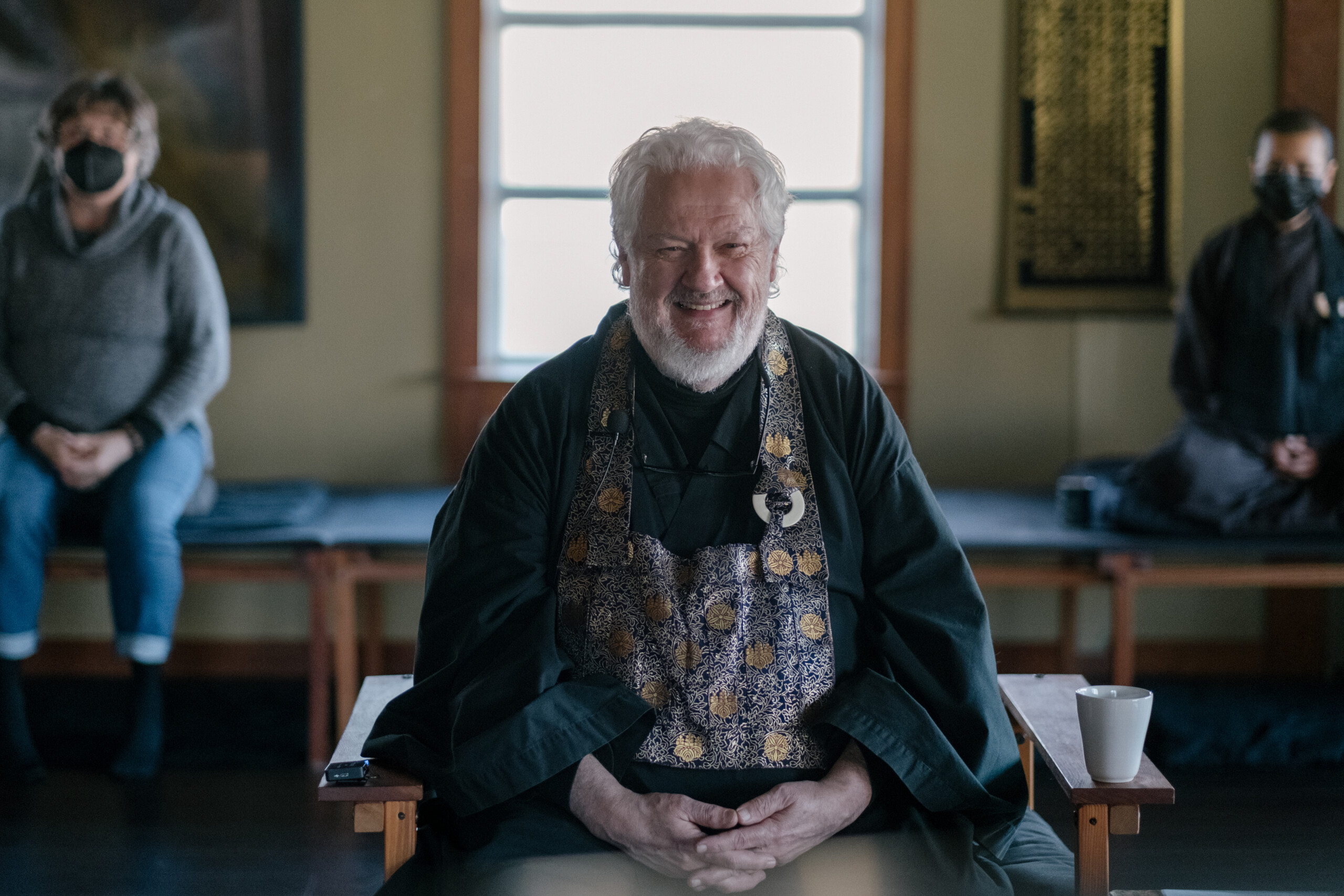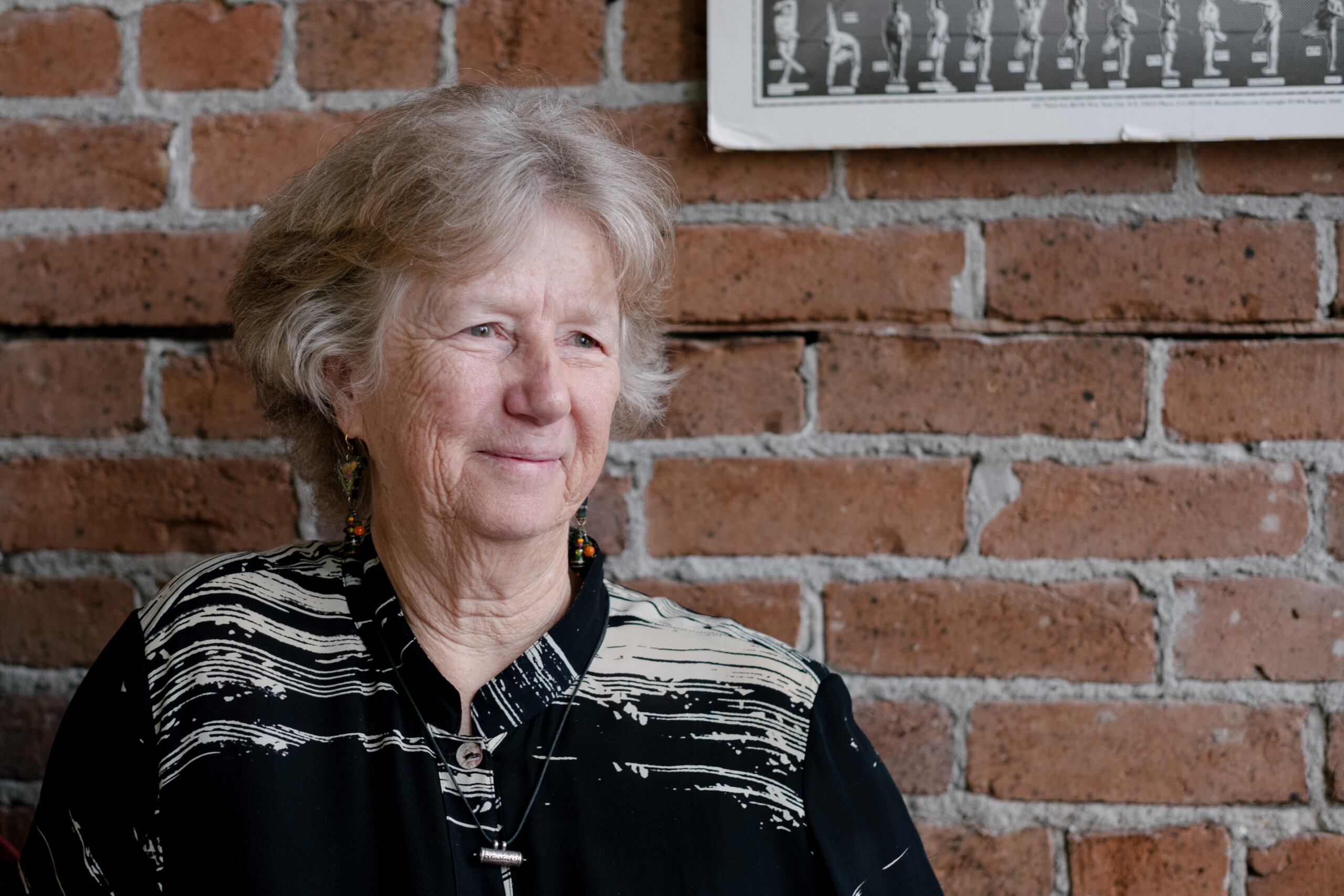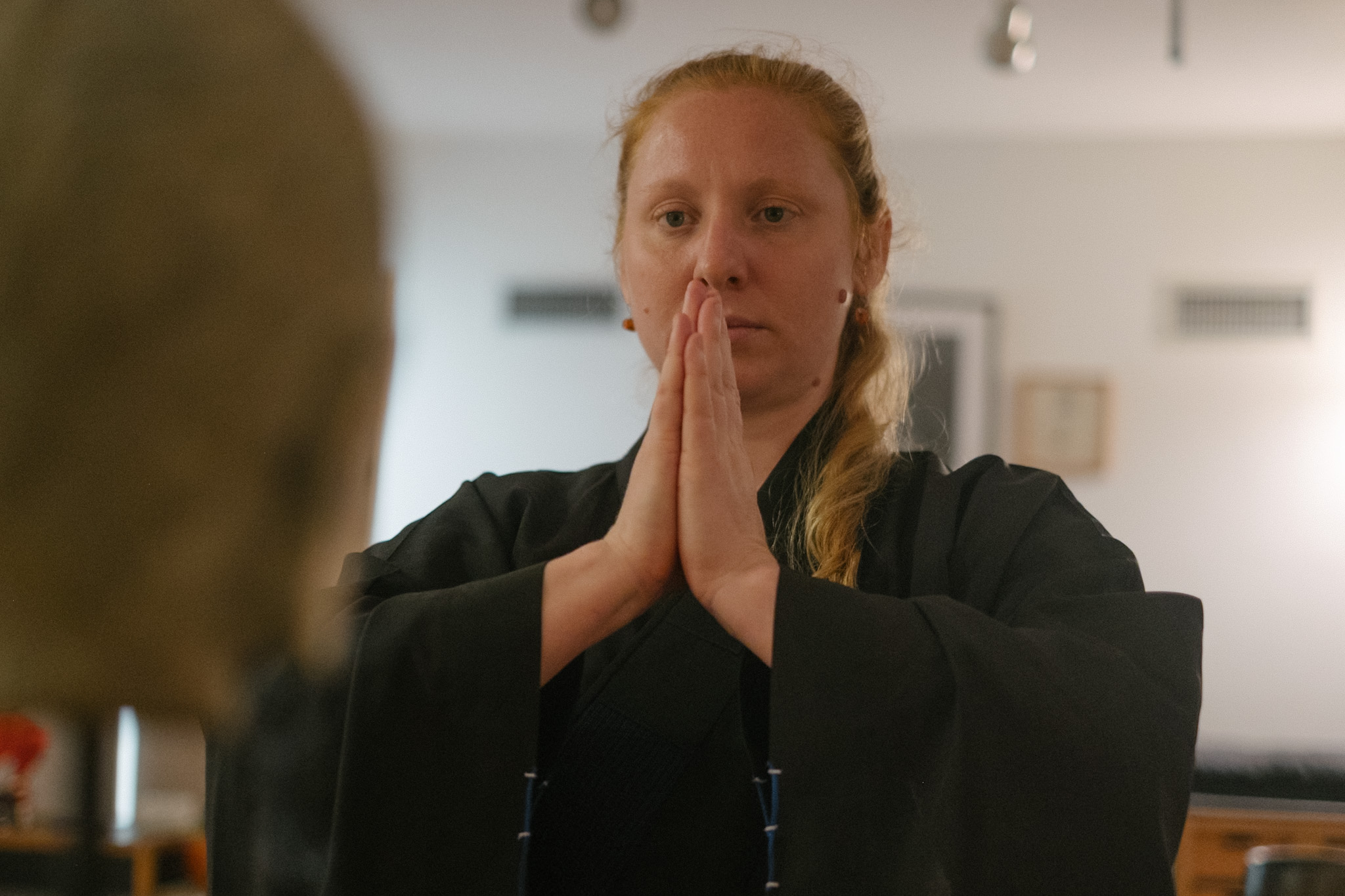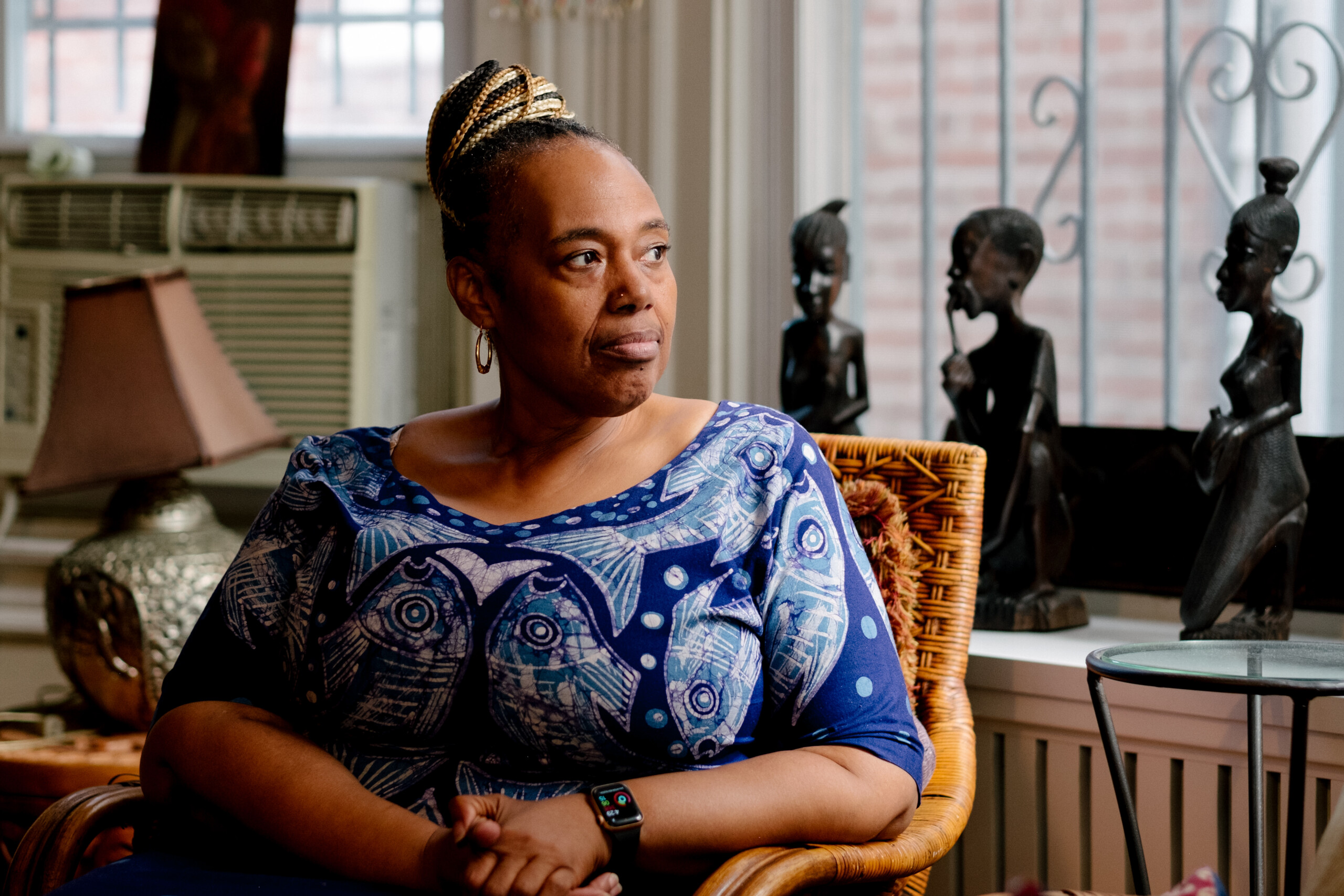
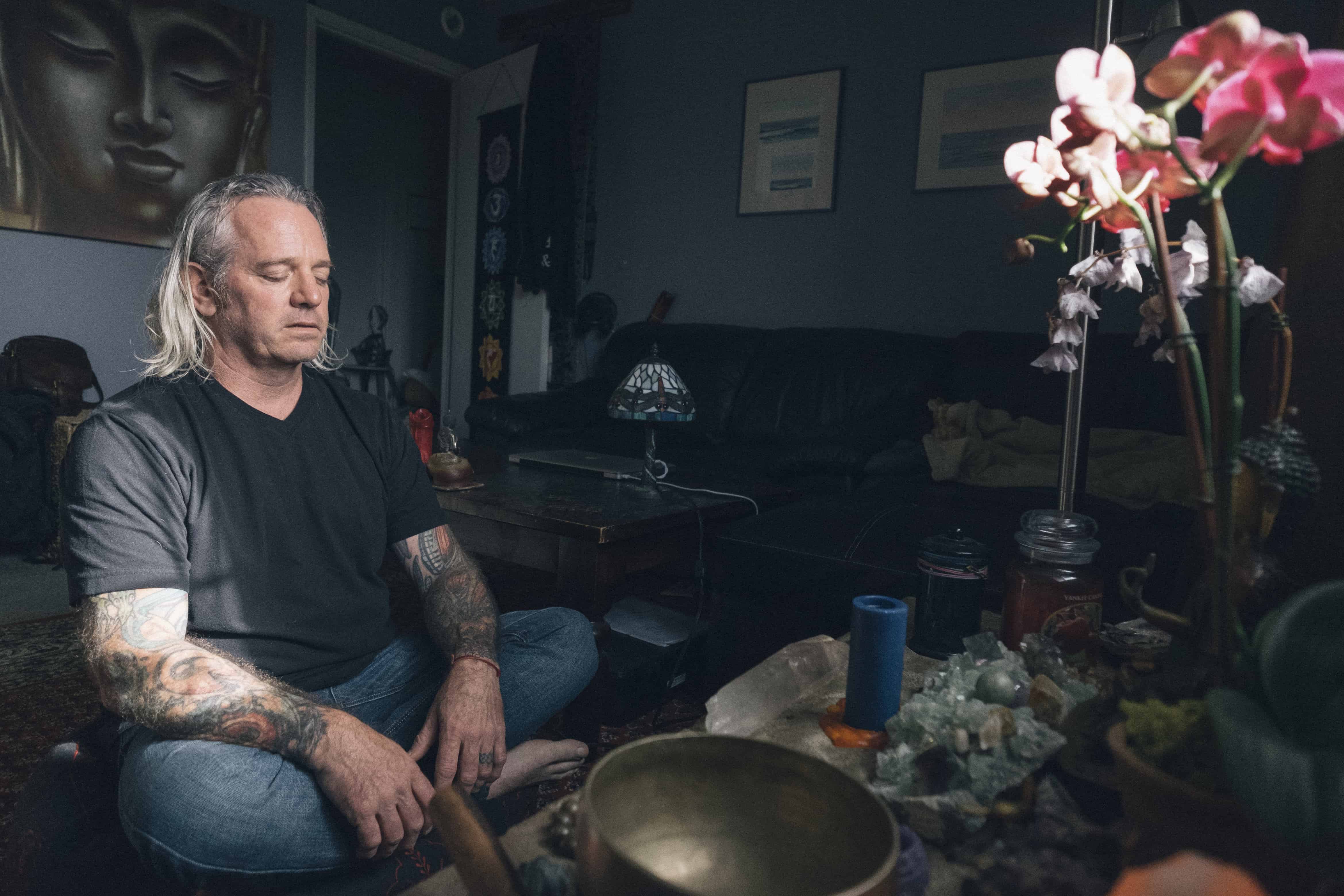
Discovery: Finding Buddhism in an Unlikely Way
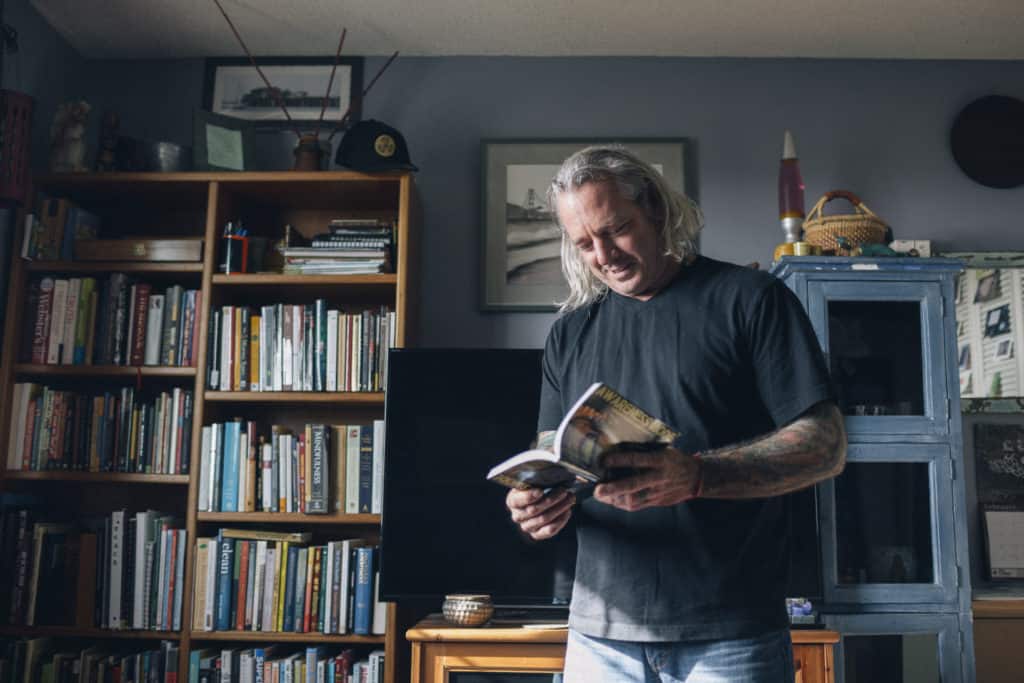
Jeff’s introduction to Buddhism was anything but conventional. As a young man immersed in the counterculture surrounding the Grateful Dead, his first encounter came through a friend practicing SGI Buddhism. What began almost jokingly—with chanting associated more with getting marijuana than enlightenment—nonetheless planted an early seed.
There was another, quieter influence already present. Jeff’s mother had introduced him to meditation and the possibility of settling the mind. She never pushed Buddhism on him; instead, she modeled something that would become increasingly meaningful to Jeff later: spiritual practice did not necessarily need to be announced. It could simply become part of how someone lived.
Years later, she introduced him to Noah Levine’s Dharma Punx, which eventually led Jeff to the early Dharma Punx community in San Francisco. There he encountered a Buddhism that felt culturally accessible—tattoos, recovering addicts, ordinary people, and teachers willing to speak about suffering without hiding behind religious language.
Suffering as the Doorway
Jeff’s relationship with Buddhism deepened alongside a long struggle with addiction. For years he moved back and forth between Dharma practice and drinking. He could sit through a Buddhist teaching about craving and suffering and then stop at a liquor store on the way home.
Over roughly a decade, addiction was accompanied by divorce, bankruptcy and periods of profound instability. Eventually, in 2014, he became sober. Looking back, Jeff sees the teachings he had absorbed during those earlier years as seeds that were waiting for the conditions to grow.
At one of his lowest points, when he was suicidal, one teaching became especially important: he did not have to believe or obey every thought that appeared in his mind. Buddhism gave him enough distance to recognize that pain was occurring without allowing that pain to dictate his actions.
That insight became deeply practical. Thoughts were thoughts. Fear could be experienced as fear. Anger could be recognized as anger. Instead of immediately reacting, Jeff discovered that he could create a little space around what was happening.
For him, this is one of Buddhism’s great gifts: life does not become painless, but suffering becomes less frightening when it is understood as part of being human.
Recovery and the Dharma
Jeff does not reduce Buddhism to a recovery program, but his experience allows him to see powerful parallels between Buddhism and the 12 Steps. Both begin by acknowledging suffering honestly rather than pretending it is not there. Both ask a person to examine craving, behavior, responsibility and the consequences of habitual patterns.
The publication of Refuge Recovery coincided closely with Jeff becoming sober, bringing these two streams of his life together. Recovery cleared enough space for the Dharma teachings he had encountered for years to finally become embodied.
In particular, the Buddhist precept around intoxicants became much more than an abstract ethical guideline. Sobriety made the other aspects of his life possible. Without intoxication clouding his judgment, Jeff found himself increasingly capable of practicing honesty, kindness, responsibility and awareness.
Recovery became part of his Dharma, and Dharma became part of his recovery.
Sangha: From Observer to Participant
One of the most important transformations in Jeff’s journey concerns Sangha.
During his earlier years at Dharma Punx and Against the Stream, he often attended meetings while remaining emotionally outside them. He describes himself almost as a secret practitioner—pulling up his hood, sitting quietly, judging people and taking whatever he could from the teachings. At the same time, he sometimes felt bitter that he was not fully accepted.
Eventually, he recognized the contradiction: he wanted community without allowing himself to participate in community.
Sobriety changed that. Once his mind cleared, Jeff began to understand something he had missed for years—the Sangha was not incidental to Buddhism. Relationships themselves were the practice.
The teachings became visible in how people listened, disagreed, supported one another, forgave one another and simply showed up. Jeff came to understand Sangha not as a room full of Buddhists but as the place where the Dharma is tested against actual human beings.
That realization fundamentally changed his relationship with practice. Instead of merely consuming teachings, he began participating, facilitating Refuge Recovery groups and taking responsibility within his community.
Human Connection as Practice
Human connection may be the strongest theme running through Jeff’s story.
For him, Buddhism ultimately comes down to what happens between people. Meditation matters, teachings matter, and philosophy matters—but their meaning becomes visible in relationship.
Sangha asks practitioners to move beyond ideas about compassion and actually practice compassion with difficult, imperfect human beings. It requires vulnerability: listening when someone speaks, being willing to be seen, and recognizing that another person may reveal something about oneself that solitary practice cannot.
This is why Jeff worries about a culture increasingly mediated through screens. He sees something irreplaceable in simply sitting across from another person, sharing space and allowing an unscripted conversation to unfold.
“You can read all the books, listen to all the teachings, but nothing replaces the experience of sitting together, breathing together, and sharing what’s real.”
For Jeff, preserving that human dimension may be one of the most important challenges Buddhism faces in the modern world.
Relationship with Emily: Love as a Daily Practice
Jeff’s relationship with Emily offers one of the clearest examples of Buddhism moving beyond the cushion.
Both entered recovery around the same period, and Jeff invited Emily to a Refuge Recovery meeting. Over time, Buddhism became something they shared rather than simply something Jeff practiced. They attended Against the Stream together, facilitated recovery groups and developed their individual meditation practices alongside their life as a couple.
Jeff does not describe a “Buddhist relationship” as something idealized or permanently harmonious. Instead, the relationship creates constant opportunities to practice.
The Five Precepts provide an ethical foundation, but he finds the Brahmavihāras—loving-kindness, compassion, sympathetic joy and equanimity—especially relevant to intimate relationships. Compassion becomes particularly important when two people are angry or disagreeing.
One teaching stayed with him: imagine looking through the other person’s eyes back at yourself.
That small shift interrupts the certainty that one person is right and the other wrong.
Just as importantly, practice appears in ordinary gestures. Jeff emphasizes saying please and thank you, telling someone they are appreciated, expressing love, and remembering to extend the same kindness toward the people closest to us that we instinctively offer strangers.
For Jeff, love therefore becomes less about having Buddhist ideals and more about repeatedly putting them into action.
Practice Beyond Formal Meditation
Jeff values sitting meditation, but he does not confine practice to formal sessions.
He tries to maintain a regular sitting practice while also emphasizing brief moments of awareness throughout the day—what might be called informal mindfulness. While working alone or completing an ordinary task, he can simply notice the senses, the body, the breath and what is happening.
The simplicity is important.
Rather than waiting for ideal conditions, awareness can happen in very small increments: a few breaths, a moment of noticing irritation, recognizing nervousness, or becoming completely engaged in an ordinary activity.
He and Emily even introduce this approach to children, knowing they are unlikely to sit silently for long periods. Instead, they invite them to notice a few breaths.
Short periods of awareness, repeated many times, become a way of weaving practice into life.
Teachers and Making the Dharma Accessible
Vinny Ferraro played an important role in Jeff’s development because he made Buddhism feel reachable.
Jeff remembers encountering teachings that seemed intellectually enormous and sometimes far beyond him. Vinny brought them back down to earth. Rather than beginning with abstract philosophy, he could begin with something immediately recognizable: Is everything in life going exactly the way you want?
Of course not.
From there, teachings about suffering, craving, aversion and acceptance became understandable because they were rooted in ordinary experience.
That accessibility mattered deeply to Jeff. He was not looking for a religious identity as much as a way of understanding his life. Teachers who could translate ancient teachings into the language of addiction, relationships, disappointment and everyday struggle allowed him to see Buddhism as something he could actually practice.
The teacher’s role, in Jeff’s experience, is therefore less about presenting oneself as spiritually elevated and more about making the Dharma usable.
Buddhism Adapted to Western Life
Jeff is drawn to forms of Buddhism willing to adapt without abandoning the heart of the teachings. Against the Stream particularly appealed to him because it created space for people who might not recognize themselves within traditional Buddhist environments.
He values its efforts toward inclusion—including communities for LGBTQ practitioners and people of color—and its willingness to use contemporary culture and technology to make practice accessible.
For Jeff, this adaptability does not necessarily weaken Buddhism. It can demonstrate its strength.
The Dharma has moved through cultures for centuries, taking on different forms while preserving essential insights about suffering, awareness, ethics and liberation. In a diverse Western culture, Jeff sees value in allowing Buddhism to continue evolving rather than insisting that everyone conform to one cultural expression of the path.
The Fruit of Practice: Creating Less Suffering
Jeff’s transformation is not measured by how Buddhist he appears.
The deeper measure is whether he creates less suffering.
Sobriety allows him to see more clearly. Meditation allows him to recognize thoughts without automatically obeying them. Sangha teaches him to participate rather than withdraw. His relationship with Emily gives him a daily laboratory for patience, kindness and compassion. Informal mindfulness brings practice into work, parenting and ordinary moments.
What began as something Jeff occasionally attended gradually became something he lives.
There is an important humility in that journey. For many years, he had access to Buddhist teachings without fully opening himself to them. The transformation came when the teachings moved from his head into his relationships.
That may be the most compelling part of Jeff’s story for Beyond the Cushion: the Dharma becomes real when another human being is standing in front of him.
The cushion teaches him to pay attention. Recovery teaches him to stay present. Sangha teaches him that he cannot do it alone. And relationship gives him somewhere to practice all of it.
In Jeff’s life, Buddhism ultimately becomes less about becoming a Buddhist and more about becoming available—to himself, to the people he loves, and to the complicated human beings around him.
When were you first exposed to dharma?
I learned about meditation as a youngster, but it wasn’t until around 2004 that I started going to the Dharma Punx group on Friday nights in SF (the Back of the Bus) and hearing the dharma talks there in a language I could understand and with people that looked like me that I really felt exposed. It became my path when I learned to walk again as a sober man in 2014. In early sobriety I held on to the dharma like a life raft. I literally took refuge in the Buddha, Dharma and Sangha. Thankfully, enough of the teachings seeped in from earlier, they were kind of lying in wait for my heart and mind to detox enough to truly absorb. Saved my ass – for real. Not that the philosophy is some sort of recovery program but it certainly offers a road map to a path of least resistance.
How has the path manifest in your daily experience? Does it reflect in your work and relationships?
I’ve learned how to see what’s coming at me from the outside through seeing what’s coming at me from the inside. So I pay a lot more attention to how my thoughts and feelings try to pull me around. Even the way bodily pain can effect my behavior. If I find myself getting a little too far out there, I can pull back and understand I can only create and respond to the past or future in this moment. Just like what we learn in Vipassana meditation. This and taking the 5 precepts to heart has really given me a solid foundation. Sati and Sila.
I do my best to apply this to work, relationships, my practice, whatever, and when I fall short, I just check out where I’m at in that too and keep going. It’s worked out pretty well. I seem to be doing more of what I enjoy and less of what I don’t. I started training to teach a while back and that’s coming to fruition these days. I wrote and published a book. The construction thing is still paying the bills and I’m even getting married to my sweetie this year.
[layerslider id=”133″ /]
Who is your teacher(s)?
Vinny Ferraro is my guy. Following his lineage and teachers back has opened me up to tons of other brilliant teachers, too. Through Against the Stream and Spirit Rock I feel very fortunate to have access to so many quality teachers. Bob Stahl is my teacher and mentor in MBSR teacher training. Megan Cowan and Chris McKenna too from Mindful Schools for their program of training.
How long/often do you mediate?
Everyday now to some degree. I can almost always get a half hour or more in somewhere and twice when I can. Morning, evenings or both. In groups a couple times a week usually. I seem to have a ‘retreat season’ where I can schedule and attend a couple or more 5 day or week-longs. In between, I remember to take mindful breaths often as I can or do a certain task with concentration.
Which sangha do you normally attend?
Against the Stream Buddhist Meditation Society (San Francisco)
What is your primarily profession?
I’m primarily a General Construction Contractor – 25 years locally in the residential biz.
Was there an experience in your life where you realize the profound power of the practice?
Yeah, definitely. Like I said, not only did it help pull me into “real” recovery but opened me up to a whole new universe of freedom from my own self-inflicted suffering. It got pretty dark before then too, as I write about in my book “Awareness MODE; A Buddhist Antihero’s Journey Within”, the idea that I do not have to obey every thought like a prisoner and changing my perspective, literally saved me from disaster and depression.
Sangha
In discussing the unintentional and diverse nature of those seeking support, Jeff emphasizes the indiscriminate impact of drug addiction and alcoholism. Drawing parallels to conditions like cancer, he underscores that anyone, regardless of class, color, sexual orientation, or age, can be affected. Jeff, referencing the recovery model, advocates for inclusivity and understanding, expressing that discomfort is acceptable, and individuals are free to navigate their own paths. He encourages everyone, regardless of their background, to feel welcome, sharing examples of the varied professions represented in the space, such as artists, architects, mechanics, schoolteachers, counselors, and builders. Economic status and sexual orientation, Jeff notes, are irrelevant in the supportive environment he aims to foster.
Container
Reflecting on the past year, Jeff shares his approach to leading their group with an attitude of authenticity and inclusivity. He encourages members not to conform to any rules and to feel at home, even if they come in with the scent of work or a proud attitude. Jeff creates a welcoming atmosphere by playing various music genres, fostering a sense of camaraderie among attendees.
Approaching meditation and teachings with a down-to-earth attitude, Jeff aims to demystify the process and emphasizes the integration of dharma into everyday life. Rejecting a rigid separation, he welcomes diverse expressions, such as street fights and tambourine serenades, into their practice. As a leader, Jeff acknowledges the delicate balance between providing structure and avoiding authoritarianism, prioritizing a sense of connection and authentic storytelling.
In his teaching style, Jeff draws inspiration from the Buddhist model, sharing personal experiences and allowing individuals to find their own paths. He values the intimate and personal nature of dharma, fostering a supportive environment where participants can voice their struggles and excitement. Jeff allocates a significant portion of time for group members to share their thoughts, recognizing the importance of their voices in the peer-led setting. Lastly, he underscores the commitment to making the group experience worthwhile for everyone, acknowledging the parallels with a recovery room setting and emphasizing the importance of preparedness and meaningful engagement.
Fallout
Amidst the challenges faced by Against the Stream, Jeff notes a significant split, addressing the unspoken issue surrounding the organization’s founder. He acknowledges that accusations and allegations against the founder led to the dissolution of Against the Stream and the unraveling of other associated organizations. In contrast to some who chose to vilify the founder, Jeff takes a more nuanced stance. While he refrains from publicly condemning the teacher, he also doesn’t advocate for complete abandonment. Jeff recognizes that his popularity may have suffered due to his position, standing apart from those who opted for a more polarized view of the situation.
Human Connection
Jeff expresses a deep concern about the erosion of human connection in the age of social media and instant communication. He emphasizes the profound value of face-to-face conversations, lamenting the disappearance of this virtue. Jeff acknowledges the prevalence of social media and the impact of online interactions on the current state of the world. Despite recognizing the benefits of online resources, he highlights the unique wisdom that emerges from genuine, in-person connections.
Jeff reflects on the difficulty, especially among younger individuals, in engaging in real, face-to-face conversations. He finds immense value in these interactions, contrasting them with the limitations of online communication. Jeff underscores the irreplaceable nature of authentic connections, suggesting that reading or watching online content cannot substitute for the depth of wisdom gained through personal, in-the-moment exchanges. Ultimately, he urges people not to take the privilege of being physically present with others for granted, emphasizing the richness and nourishment derived from true, face-to-face connections.