
Background
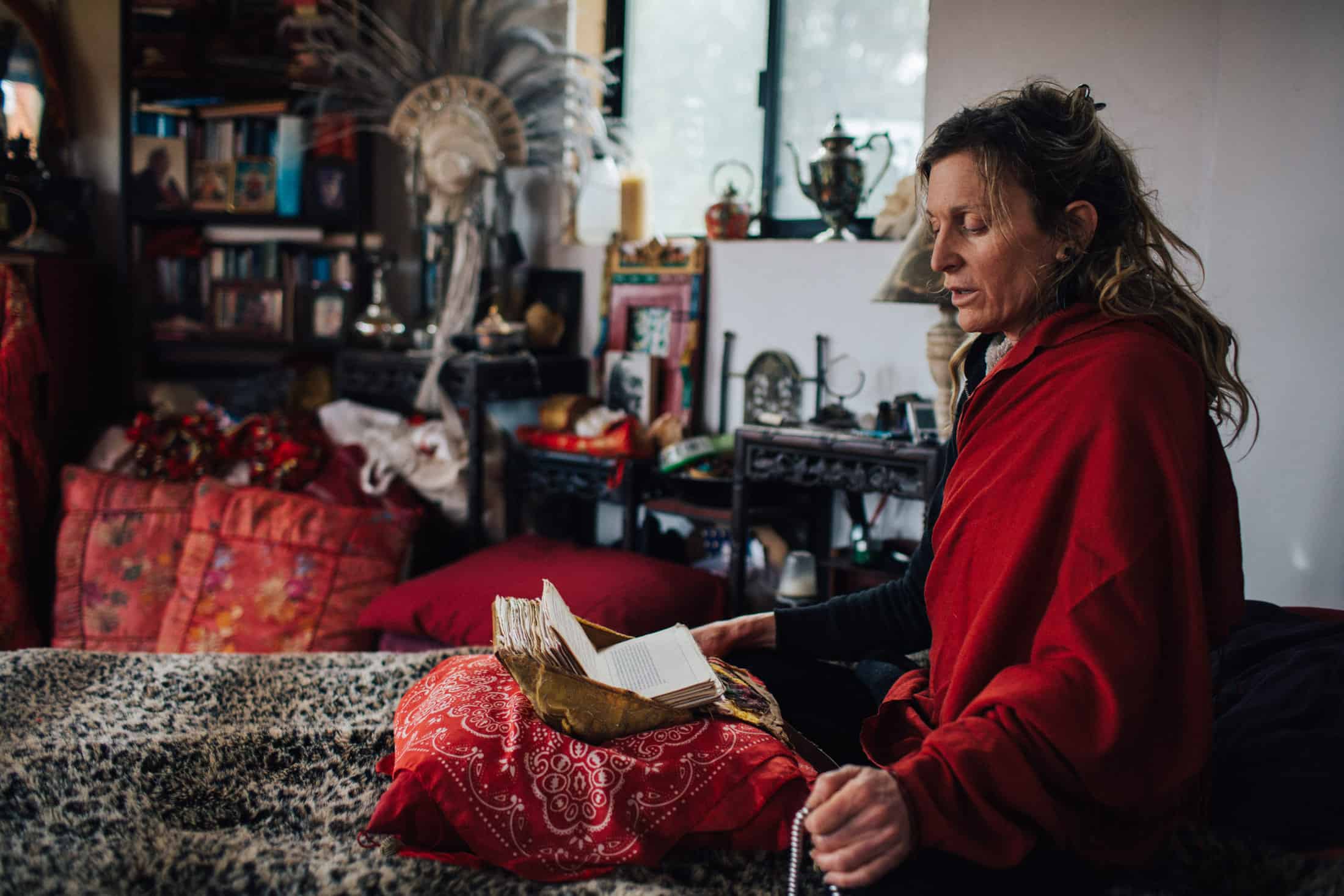
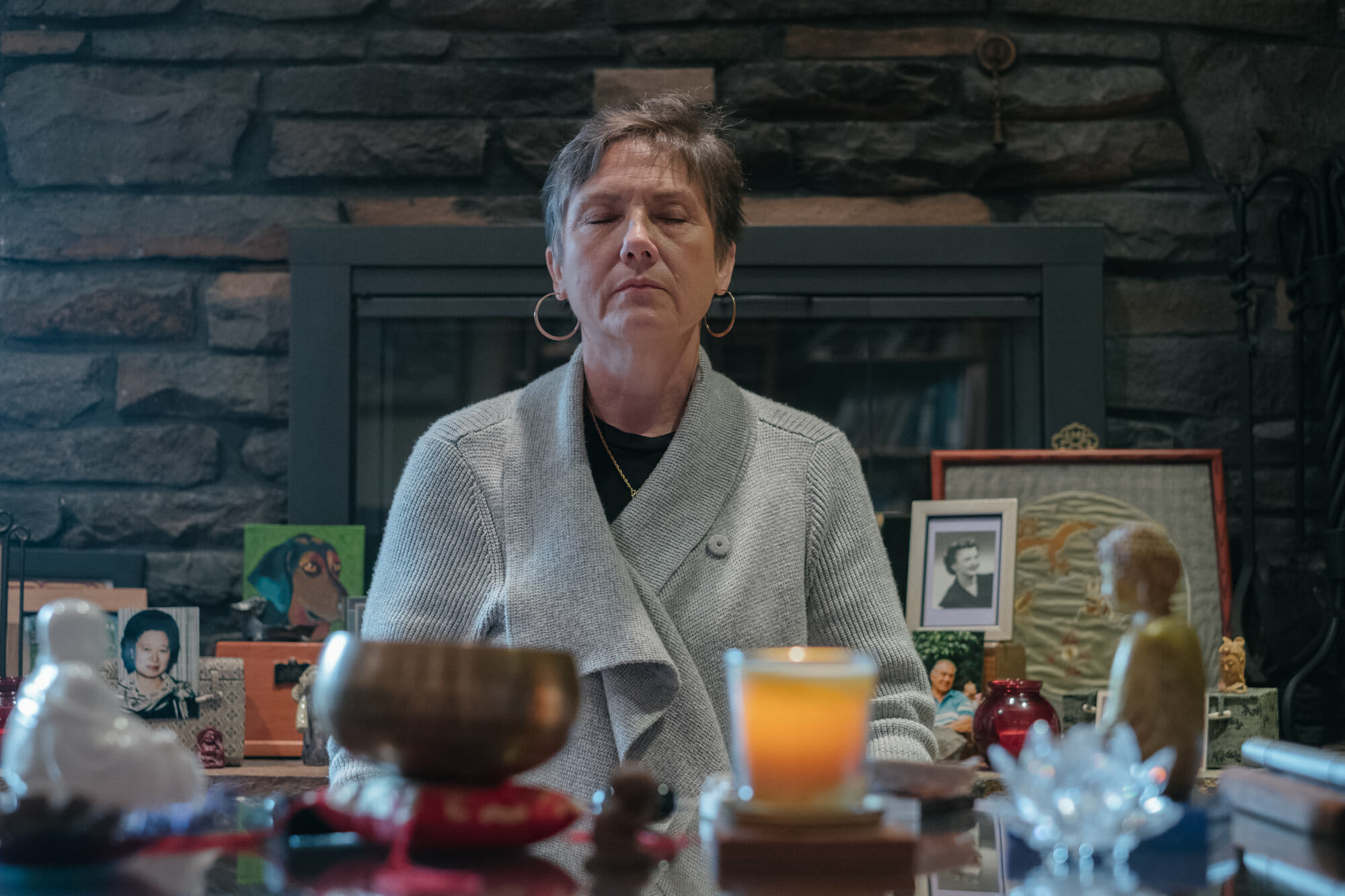
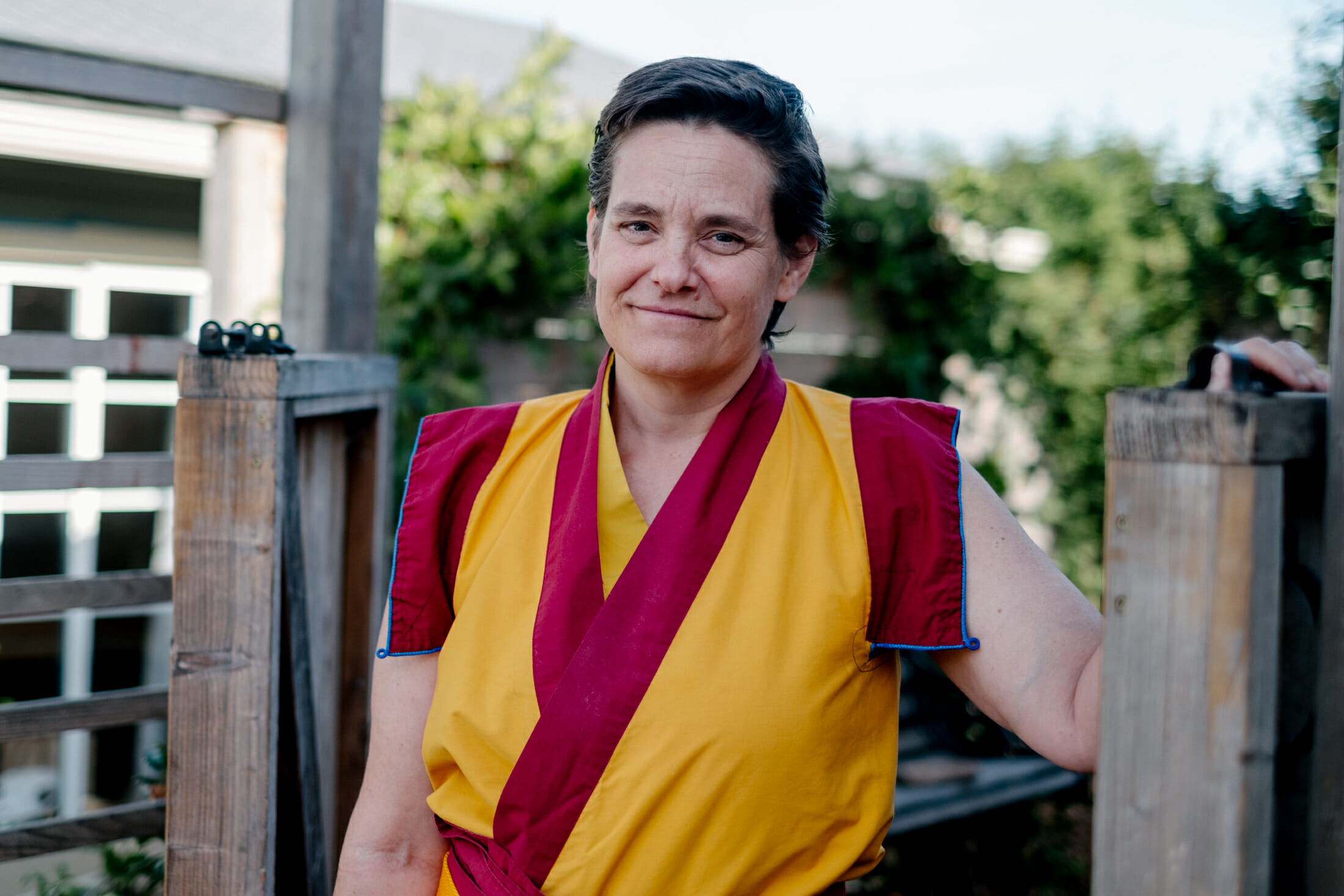
Gina, 36, is a Georgia native who has lived in New Orleans since 2015. Her roots trace back to Greenville, Georgia, where her father was raised on a dairy farm. Growing up as a farmer’s daughter, Gina was instilled with a strong sense of responsibility and grit. Her childhood was filled with hard work and family projects, like painting their house or replacing siding, teaching her the value of determination and personal accountability.
Her grandfather often shared wisdom that echoed Buddhist teachings, reminding the family that their farm wasn’t truly theirs but part of a greater universe they were entrusted to care for. This perspective of humility and interconnectedness profoundly influenced Gina and continues to resonate in her Zen practice.
Gina spent her childhood primarily in Florida, with stints in Memphis, Brooklyn, and Northern New Jersey, before ultimately settling in New Orleans. It was there in 2016 that she discovered the temple and found a spiritual home in the sangha.
Her journey toward Zen was also shaped by her practice of Bikram yoga, which she began at 18. The physically demanding and structured nature of Bikram taught her to find composure in uncomfortable situations, building a mindfulness practice she carried into adulthood.
Gina sees a deep connection between the values instilled by her family and the principles of Zen. While her parents may not identify as Buddhist, their emphasis on humility and responsibility mirrors the teachings of the Dharma. Together, her upbringing and yoga practice created a natural path toward Zen, which she now embraces fully as part of her life in New Orleans.
Discovery
As a high school freshman, Gina was introduced to the Bhagavad Gita by a friend. Though its concepts were entirely foreign to her at the time, it ignited a curiosity about non-Western cultures that stayed with her. This interest deepened when, at 18, a yoga studio opened near her high school. She decided to take a class, an experience she vividly remembers.
During that first yoga session, Gina experienced complete mental silence—an hour and a half without a single thought crossing her mind. It wasn’t exactly relief but a profound sense of pure existence that felt intoxicating. Practicing Bikram yoga, with its physically demanding and intense nature, was like a cathartic exorcism for her—a release of something undefined. By the end of the session, the intensity of the practice left her worn down, forcing her to surrender and let go.
While difficult to articulate, the clarity and transformation she felt afterward made one thing clear: yoga was something she needed to continue. In that moment, Gina realized she had found a lifelong practice, one that has remained a central part of her path ever since.
Exploration
Gina reflects on how, as a young adult, she began to feel a void in her life, a yearning for something more. Raised in the Methodist tradition, she found a sense of belonging and community in her childhood church, with its youth groups and supportive relationships. However, as a teenager, she experienced a familiar restlessness, questioning if there was more to life beyond what she had known. This longing, she believes, is a natural part of growing up—a motivation to seek new experiences, perspectives, and meaning.
During her teenage years and into her 20s, this urge to seek was particularly strong. Yet over time, Gina recognized that constant seeking can become another form of attachment. While the drive to explore and discover is valuable, it can also lead to persistent dissatisfaction if one is never content with what they find. She observes this cycle of seeking and questioning in others who come to the temple, searching for answers or something definitive.
For Gina, the act of seeking has ebbed and flowed throughout her life. She acknowledges that seeking often leads to more questions rather than concrete answers, but she embraces this as an integral part of the journey.
Lineage
Gina reflects on the prevalence of cultural appropriation and authenticity in the Western adoption of Eastern spiritual practices, particularly in North America. She often addresses these issues when students from local universities interview her for papers on Eastern religions. One recurring question she encounters is about the cultural appropriation of traditions by those outside their original heritage. While she appreciates that more people are practicing and finding value in these traditions, she believes the topic warrants deeper exploration.
Gina critiques the inauthenticity of many self-proclaimed “gurus” and the commercialization of practices like yoga, which has become a billion-dollar industry. While the personal benefits of yoga are undeniable, she highlights the exploitation that often occurs when traditions are monetized without honoring their roots. She draws a distinction between adopting a tradition with respect and appreciation and exploiting it for profit.
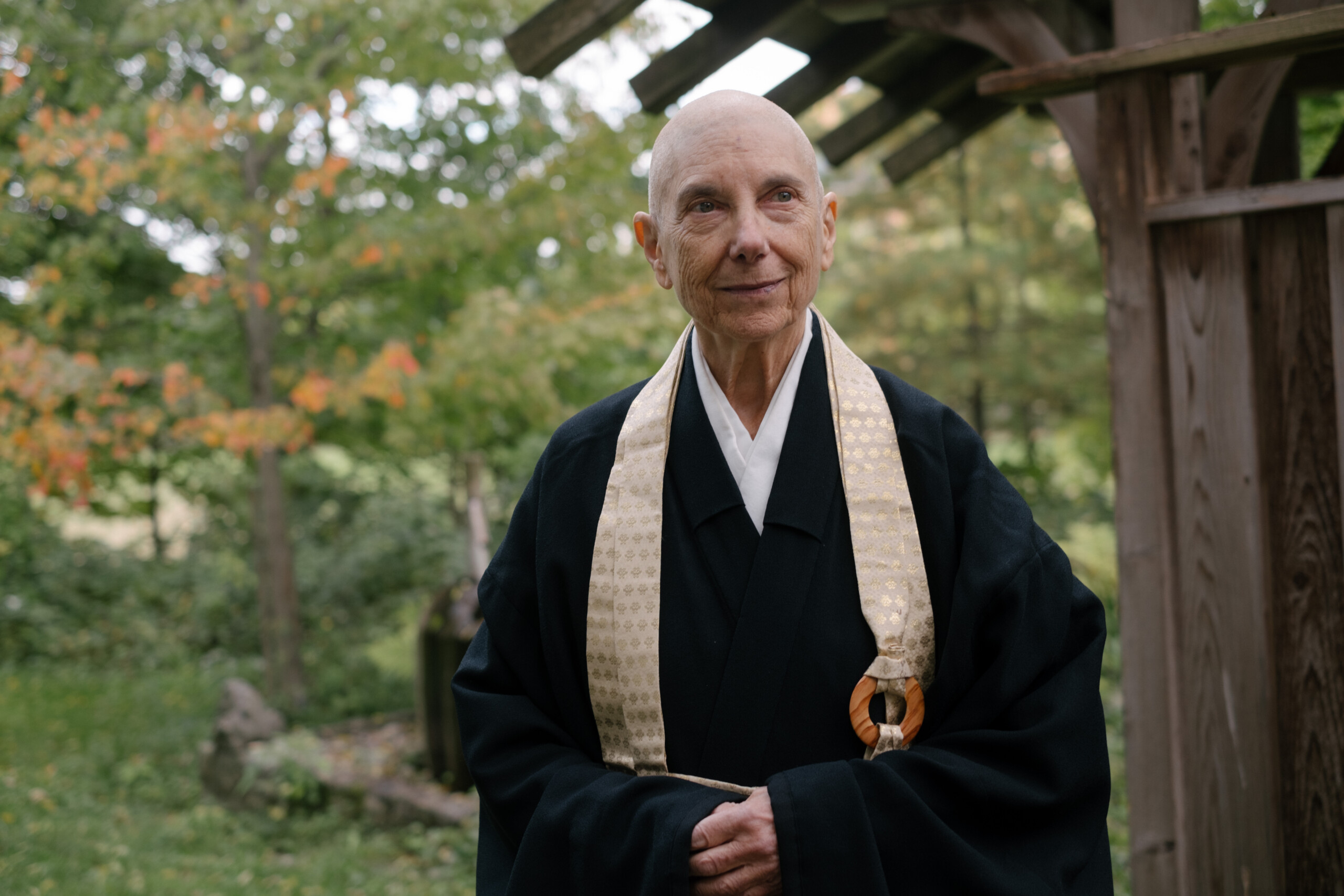
As a white woman practicing Zen in a Japanese tradition, Gina acknowledges how her role might appear to others. However, she emphasizes that her path is about service, not profit. She doesn’t monetize her practice or position as a monk, viewing Zazen as a practice for others, not herself.
To explain her perspective on cultural blending, Gina draws a parallel to music, which evolves by incorporating elements from different cultures to create something new. Just as no one owns the basic building blocks of music, Zen in America can grow into something unique through cultural integration. She sees this evolution as a way to create something meaningful, akin to making beautiful music.
For Gina, engaging thoughtfully in discussions about cultural appropriation is essential. She encourages an evolving conversation that balances appreciation with respect for the origins of these traditions.
Freedom
Gina reflects on the concept of freedom, noting how it is often misunderstood as recklessness or the absence of consequences, particularly in North America and the South. She contrasts this view with the Zen perspective, where freedom is not about acting without care but about embracing non-attachment with awareness and responsibility. She acknowledges that non-attachment can be misinterpreted as “nothing matters,” leading to nihilism or reckless behavior. However, true freedom in Zen lies in understanding that mistakes and consequences are inevitable but do not render someone irredeemable.
This freedom allows practitioners to accept their imperfections, learn from their actions, and trust in the enduring nature of the practice. Gina highlights the kechimyaku, a lineage chart received during ordination, as a symbol of the ancient continuity of the Zen tradition, reminding practitioners of the countless individuals who have walked the path before them.
She also cautions against the urge to redefine or modernize Zen, emphasizing that its value lies in consistency. While Zazen, the core of Zen practice, may feel monotonous or unchanging, it is this very steadiness that provides the foundation for growth and freedom. Gina compares this to the natural rhythms that sustain life, such as a steady heartbeat or the rising and setting of the sun, which create the stability needed to thrive.
Ultimately, Gina believes that the reliability of Zen practice and its traditions cultivates a deeper, more authentic freedom—one rooted in consistency, accountability, and the wisdom of an enduring lineage.
Ordination
Gina reflects on her motivations for ordination, acknowledging that she initially saw it as an accomplishment to strive for. When sewing her rakusu for lay ordination, she chose fabric from her grandparents’ bedsheets, giving the garment deep personal meaning. At the time, her drive to achieve was coupled with a genuine calling to deepen her understanding of the Dharma and serve her community.
This sense of purpose grew stronger as the temple faced challenges, particularly after the pandemic, when many practitioners left, and the Sangha began to dwindle. Gina felt a responsibility to step up and foster camaraderie, knowing the temple’s survival depended on collective effort. In some ways, she felt pushed toward monk ordination—not by individuals, but by the circumstances and her commitment to the community.
As a monk, Gina’s relationship with practice has shifted. While lay ordination allowed her to enjoy the practice within a strong and supportive Sangha, her role as a monk comes with significant responsibility. Though she sometimes finds this burden challenging, she recognizes that creating a space where others can enjoy practice without feeling weighed down is worth the effort. She also acknowledges that perceiving this responsibility as a burden is a choice she makes—and one she could choose to approach differently.
Practice
Gina reflects on her early years of inconsistent Zen practice, initially attending Sunday sittings but rarely participating in morning or evening sessions. Over time, she came to appreciate the communal aspect of post-Zazen interactions with the Sangha, where moments of camaraderie and connection enriched the experience.
She realized Zazen’s sensory deprivation—sitting silently facing a wall without visual or auditory distractions—heightened her perception upon re-entering the world. Ordinary sensations became sweeter: food tasted better, and everything felt clearer. This clarity mirrored an analogy she once heard about scooping a glass of water from a river. Initially clouded with sediment, the water eventually settles, revealing a clear view—a metaphor for seeing life plainly and practically, without distortion.
As a young adult, Gina found this clarity essential for understanding and accepting life as it is. While acceptance comes more easily to some than others, it remains a core part of the practice. For her, Zen has been a coping mechanism, helping her face life’s challenges with resilience and clarity. Even if one cannot change their fate, she believes they can rise to meet it.
Sangha
Gina reflects on her early years of inconsistent Zen practice, initially attending Sunday sittings but rarely participating in morning or evening sessions. Over time, she came to appreciate the communal aspect of post-Zazen interactions with the Sangha, where moments of camaraderie and connection enriched the experience.
She realized Zazen’s sensory deprivation—sitting silently facing a wall without visual or auditory distractions—heightened her perception upon re-entering the world. Ordinary sensations became sweeter: food tasted better, and everything felt clearer. This clarity mirrored an analogy she once heard about scooping a glass of water from a river. Initially clouded with sediment, the water eventually settles, revealing a clear view—a metaphor for seeing life plainly and practically, without distortion.
As a young adult, Gina found this clarity essential for understanding and accepting life as it is. While acceptance comes more easily to some than others, it remains a core part of the practice. For her, Zen has been a coping mechanism, helping her face life’s challenges with resilience and clarity. Even if one cannot change their fate, she believes they can rise to meet it.
The South
Gina reflects on how Southern sayings she heard growing up have taken on deeper meaning over time, especially as they resonate with her Zen practice and leadership role. One saying, “A man’s reputation is built by many acts and lost by only one,” underscores the importance of integrity and the weight of responsibility in leadership. Another, “Everybody in this world is just a turtle on a fence post,” reminds her of the interconnectedness of life and the support we receive from others in shaping our paths.
She also uses the wisdom of Southern colloquialisms to teach Zen principles. Sayings like “You can’t make a silk purse out of a sow’s ear” serve as reminders to embrace life as it is, rather than forcing it into preconceived notions. She shares this insight with new practitioners, encouraging them to approach Zen with an open mind, like an empty bowl ready to be filled. For Gina, Zen is about continually emptying the bowl, staying receptive to the unexpected, and finding meaning in both challenges and triumphs.
Teacher
Gina reflects on the challenges of maintaining a deep connection with her Zen teacher, Richard, now that he is geographically distant. She emphasizes that the Dharma is often transmitted through everyday interactions, not just formal teachings, and that the absence of in-person guidance has created a void in her practice.
She recalls Richard’s occasional kusen during zazen at the Napoleon dojo, which provided mental engagement and sparked curiosity without overwhelming beginners. His advice to offer newcomers a taste of the Dharma, focusing on the core practice of zazen, resonates with her as she navigates this phase of her Sangha’s development, currently characterized by the absence of kusen.
A poignant memory is Richard’s support during her lay ordination. Gina was anxious about her devout Protestant father’s reaction, fearing he would see it as a rejection of her Christian upbringing. Richard’s reassurance to her father—that zazen is inclusive and not a renunciation of other faiths—was instrumental in easing familial tensions. Over time, her father became supportive, allowing Gina to share her Zen insights with her parents, who proved more open-minded than she had anticipated.
Gina also reflects on her family’s resilience during her sister-in-law’s health crisis, which required full-time care and reshaped their lives. Zen practice has been a coping mechanism for Gina, helping her accept and navigate these challenges. She acknowledges that her parents’ deep Christian faith has been tested, yet they have shown remarkable strength and tolerance. Through Zen, Gina has come to appreciate her family’s capacity to adapt and support one another, recognizing qualities in her parents that she had previously underestimated.
Zen
Gina reflects on how Zen practice, especially in the South, feels foreign and uncomfortable for many. Sitting silently with others can be awkward, evoking tension and self-doubt, particularly among newcomers worried about doing something “wrong.” This anxiety resonates with millennials, who face immense pressure to avoid mistakes due to the high stakes of modern life—student debt, career choices, and limited recovery from financial missteps.
Today’s information overload worsens this indecision, creating “paralysis by analysis.” Gina compares it to fixating on choosing the ripest fig, only to find them all rotted by indecision. For both millennials and Gen Z, Zen offers an antidote. Sitting in silence teaches radical acceptance: facing oneself, letting go of overthinking, and making peace with uncertainty.
Early in her practice, Gina also struggled with fear—hesitant to ask questions or share insights out of concern for looking foolish. Over time, she learned that growth requires patience, consistency, and letting go of perfectionism. For her, Zen is about showing up, embracing the present, and learning to trust the process.