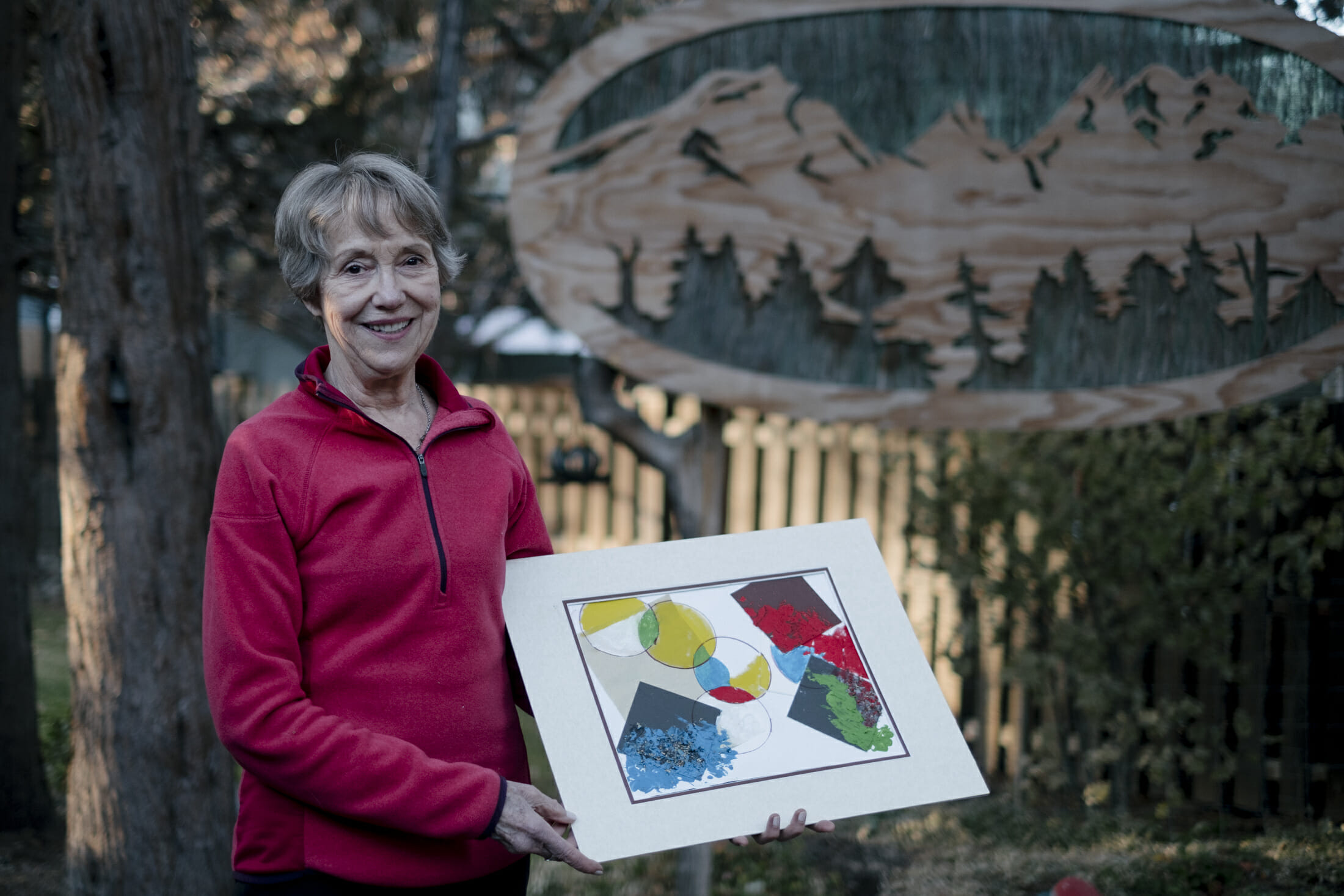
Dottie
Bend, OR
Dottie’s Buddhist journey began later in life, after decades shaped by an Episcopalian upbringing, marriage, personal struggle, and an ongoing search for a spiritual path that could be lived rather than simply believed. After discovering Buddhist teachings and eventually finding a Tibetan Buddhist Dharma center, she encountered a tradition that spoke directly to questions she had carried for years.
Through meditation, Dharma practice, and teachings on impermanence, Dottie began to reconsider her relationship with attachment, death, and what it means to live a meaningful life. Buddhism’s willingness to confront mortality openly helped transform death from something to fear into a natural part of existence. Her understanding of reincarnation evolved more slowly, but over time rebirth became connected to something deeply practical: how she chooses to live now. Taking the bodhisattva vow further transformed this perspective, turning the possibility of returning for the benefit of others into an expression of compassion and purpose.
Rather than rejecting her Christian past, Dottie sees her Buddhist journey as an evolution—another way of approaching the enduring questions of who we are, why we suffer, how we live, and what may continue beyond death.
Background
Dottie was raised in a traditional Episcopal family, where attending church was an automatic part of life. However, during high school and college, she drifted away from her religious roots. It wasn’t until a challenging period in her marriage that she returned to the Episcopal Church for support. In her community, she found value in discussions about ethical teachings, which she believed were essential for being a good person.
Later on, she delved into a transformative experience at a retreat center that blended biblical themes with yoga and psychology. This exposed her to the metaphorical and symbolic aspects of the Bible, leading her to explore various spiritual paths. A traumatic experience prompted her to seek solace, eventually leading her to a Dharma Center in Bend.
Initially unfamiliar with the symbols and practices, Dottie felt a profound connection to Buddhism. She recognized something in the teachings that resonated with her, providing a sense of clarity and understanding. Over the years, she navigated the challenges of integrating her Episcopal background with her newfound Buddhist practices, realizing that beneath the surface, both traditions aimed to explain the human experience.
For Dottie, the Buddhist perspective brought peace, describing a sense of openness, spaciousness, and emptiness that resonated with her understanding of a divine presence. In Buddhism, she found a spiritual home that transcended her previous search, offering a deep sense of peace and fulfillment.
Learn more
Registration is required to view the complete profile and support the project.
Share This Story, Choose Your Platform!
Other Portraits
Terry: Bringing the Dharma Behind Prison Walls | Buddhism, Compassion & Prison Chaplaincy
David M on Vajrayana Buddhism: Finding Freedom Through Curiosity, Death, and Direct Experience
Willy & Kim: Buddhism, Art, Relationship, and the Transformative Power of Practice
Steven: Finding Compassion in Everyday Life Through the Plum Village Tradition
Nancy’s Journey into Tibetan Buddhism: Compassion, Devotion, and Transformation Through Practice
Melissa’s Vajrayana Buddhist Journey: Art, Lineage, Motherhood, and Practice
Lisa Ernst on Insight Meditation, Trauma, and Building a Compassionate Buddhist Community
Alex G: Bringing Buddhist Practice Into Work, Relationships, and Everyday Life
Michael: From Yoga to Tibetan Buddhism — Preserving the Depth of Practice in the West