Melissa
Sausalito, CA
Melissa’s Buddhist path weaves together Vajrayana practice, artistic expression, motherhood, pilgrimage, and decades of connection with Tibetan Buddhist teachers. Drawn especially to the Nyingma and Sakya traditions, she reflects on the importance of lineage, devotion, somatic awareness, shamatha meditation, and the Longchen Nyingtik preliminaries. Her story explores how Buddhist practice moves beyond the meditation cushion and into the realities of family life, creative work, teaching, and everyday challenges. Through trust in her teachers, direct experience, and an evolving relationship with the body, Melissa offers a deeply personal perspective on what it means to sustain an ancient spiritual tradition within contemporary life.
Background
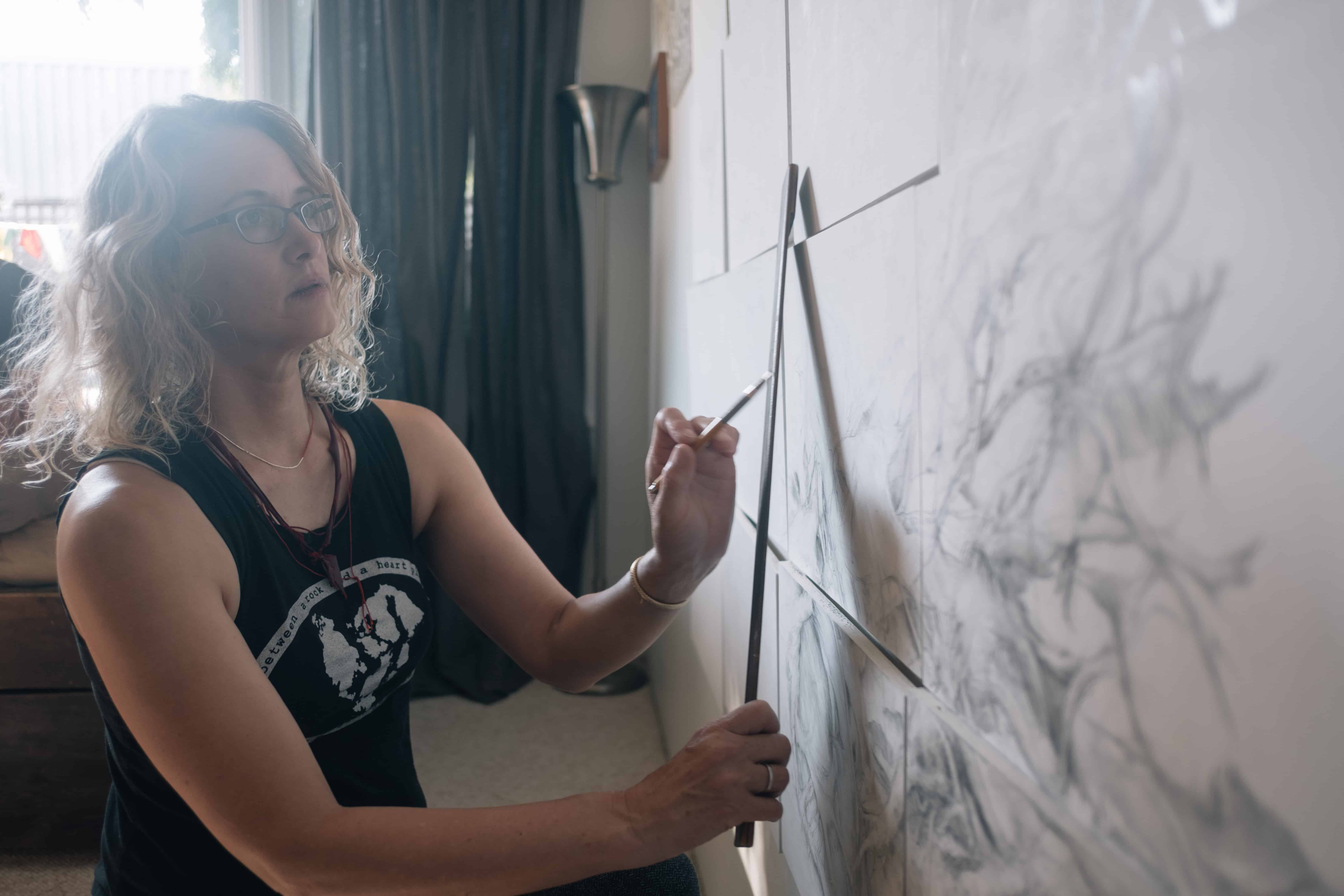
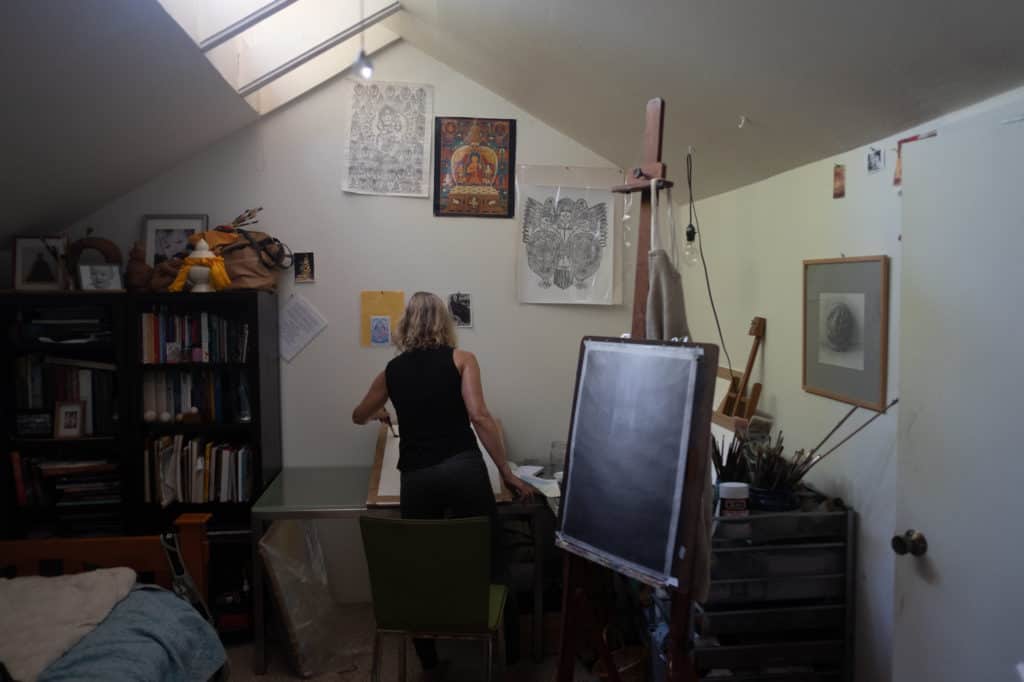
Melissa’s path into Buddhism began through art, travel, and a deep curiosity about how we learn to see. As a teenager, she went to France to study painting with a master artist whose approach emphasized direct observation and one-pointed attention. Rather than painting what she thought an object should look like, she was taught to see what was actually there. That early training became an unexpected bridge into Buddhist practice.
While traveling in Europe, Melissa encountered her first Buddhist teacher in Buda, on the western side of Budapest, and was introduced to the Kagyu tradition. Later, while studying in France, she encountered both Kagyu and Nyingma teachings. During an early retreat, while reciting the Vajrasattva prayer, she experienced a powerful sense of recognition, as though she were reconnecting with something deeply familiar.
Her interest in Buddhism had also been shaped by a near-death experience at nineteen. Critically ill, Melissa remembers being told by doctors that she was at a dangerous point, yet instead of fear she felt a profound sense of peace, love, and safety. That experience awakened a lasting interest in death, consciousness, and practices that prepare the mind for dying. It eventually led her to receive teachings on phowa, the Tibetan Buddhist practice of transference of consciousness at death.
After returning to the United States, Melissa moved to Manhattan, where her artistic life continued to intersect with the Dharma. While drawing Buddhist sculpture in the Asian galleries at the Metropolitan Museum of Art, she met teachers from the Sakya tradition and began receiving teachings. From there, one connection led to another. Over the years she studied with teachers from all four major Tibetan Buddhist traditions, including prominent masters from the Sakya, Kagyu, and Nyingma lineages.
Pilgrimage and direct contact with teachers became central to her development. She traveled to India, Nepal, and Tibet, receiving teachings, visiting monasteries, and forming relationships with lamas whose influence would continue for decades. Her encounter with the epic of King Gesar of Ling also became an important creative and spiritual thread, eventually inspiring a long-term artistic interest in how the story of the enlightened hero might be shared through visual storytelling and animation.
As her life changed, so did the form of her practice. Motherhood reduced the amount of time she could devote to extended retreats, but it did not diminish her commitment. Instead, raising three boys became part of the path itself. Meditation, art-making, teaching, yoga, somatic practice, and even studio work became ways of returning to awareness.
Today, Melissa’s practice is especially rooted in the Nyingma and Sakya traditions, with a strong commitment to the Longchen Nyingtik preliminaries. She continues to study with teachers such as Anam Thubten Rinpoche and Orgyen Chowang Rinpoche, while drawing on decades of relationships with Buddhist communities and masters.
What holds the path together for her is not a single technique, but trust: trust in the lineage, trust in her teachers, and increasingly, trust in her own body and direct experience. For Melissa, Buddhism is not separate from life. It is the way she works, creates, parents, struggles, begins again, and learns to meet the world as it is.
“This life is precious and fleeting.”
Learn more
Melissa’s profile opens into a deeper exploration of what it means to sustain a serious Buddhist practice within the demands of ordinary life. Her experience speaks to the ongoing tension between devotion and responsibility, structure and intuition, retreat and family life. Rather than treating practice as something confined to the cushion, she continually looks for ways to integrate the Dharma into everyday experience—through parenting, teaching, artistic work, movement, and her relationship with the natural world.
Central to her journey is the question of how teachings move from intellectual understanding into lived experience. Melissa describes the importance of deepening practice through shamatha, preliminary practices, mantra, somatic awareness, and working directly with the body. For her, embodiment has become essential: the teachings have to be felt, not simply understood.
She also reflects on the enduring importance of spiritual teachers and the trust required to enter a living lineage. Her decades of contact with Tibetan Buddhist masters have shaped an understanding of practice grounded not only in instruction, but in relationship, transmission, and continuity.
Perhaps most relatable is Melissa’s honesty about the unevenness of the path. Practice does not remove distraction, exhaustion, frustration, or the pressures of raising a family. Instead, it offers a way of returning. Again and again, she comes back to the body, to stillness, to creativity, and to the intention to begin once more.
Register to explore Melissa’s full profile, including her reflections on the practice itself, devotion, motherhood, sustaining motivation, the role of sangha, preparing for death, and how an ancient Vajrayana path continues to unfold within a contemporary life.
Share This Story, Choose Your Platform!
Other Portraits
David M on Vajrayana Buddhism: Finding Freedom Through Curiosity, Death, and Direct Experience
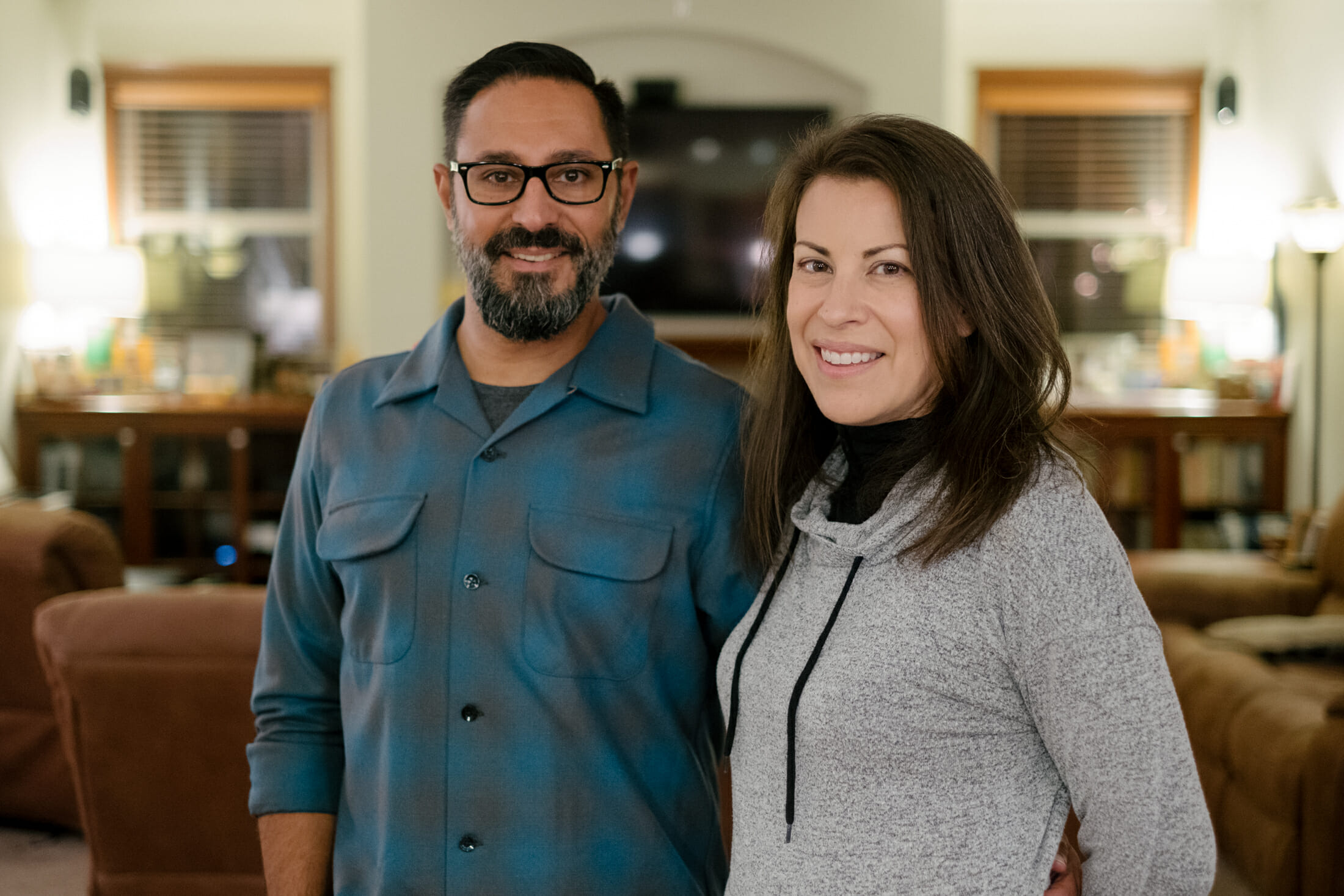
Jude & Emma: Buddhism, Marriage and the Practice of Interdependence
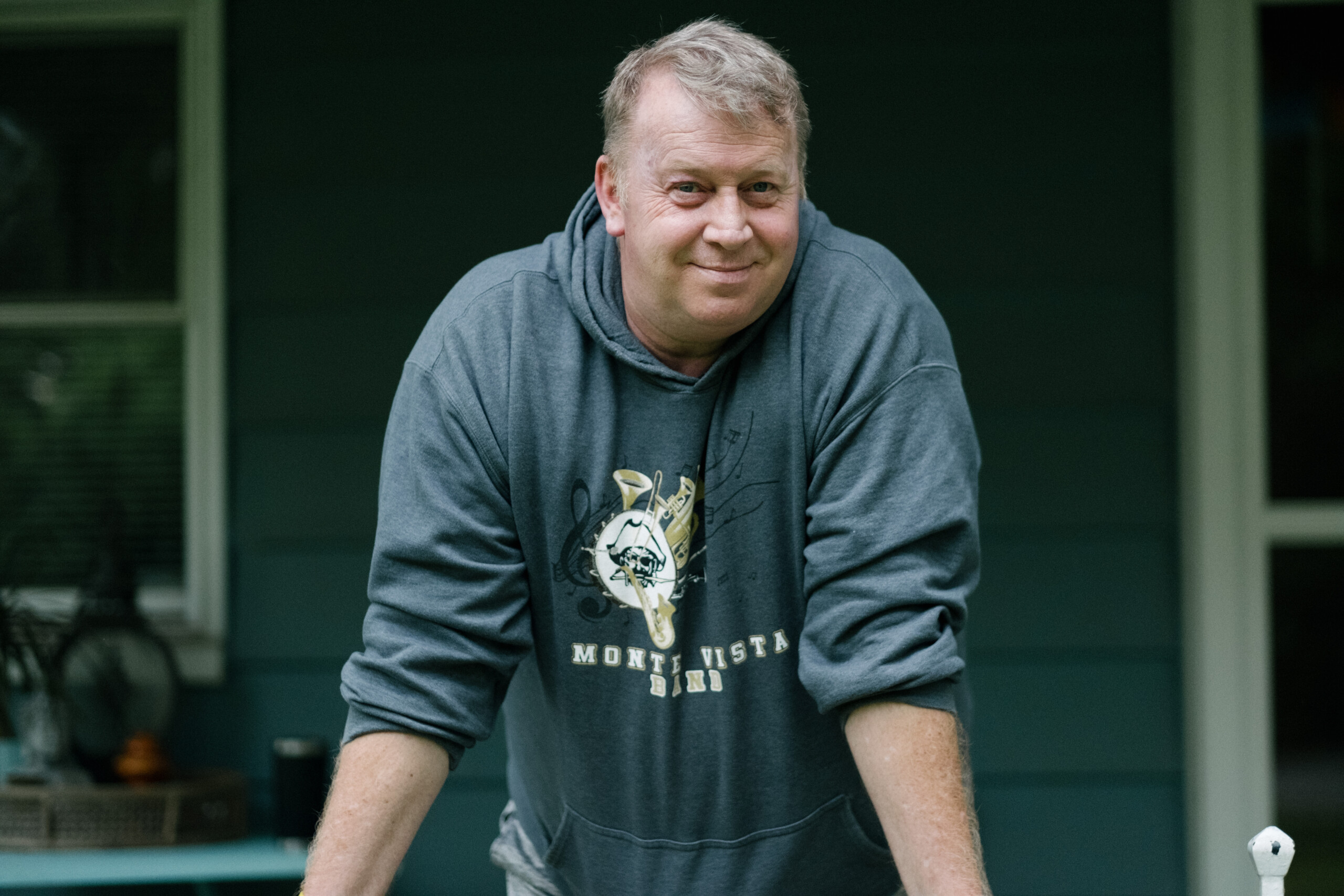
Marc: From Marching Band to Buddhist Practice Through Logic, Lineage, and Compassion
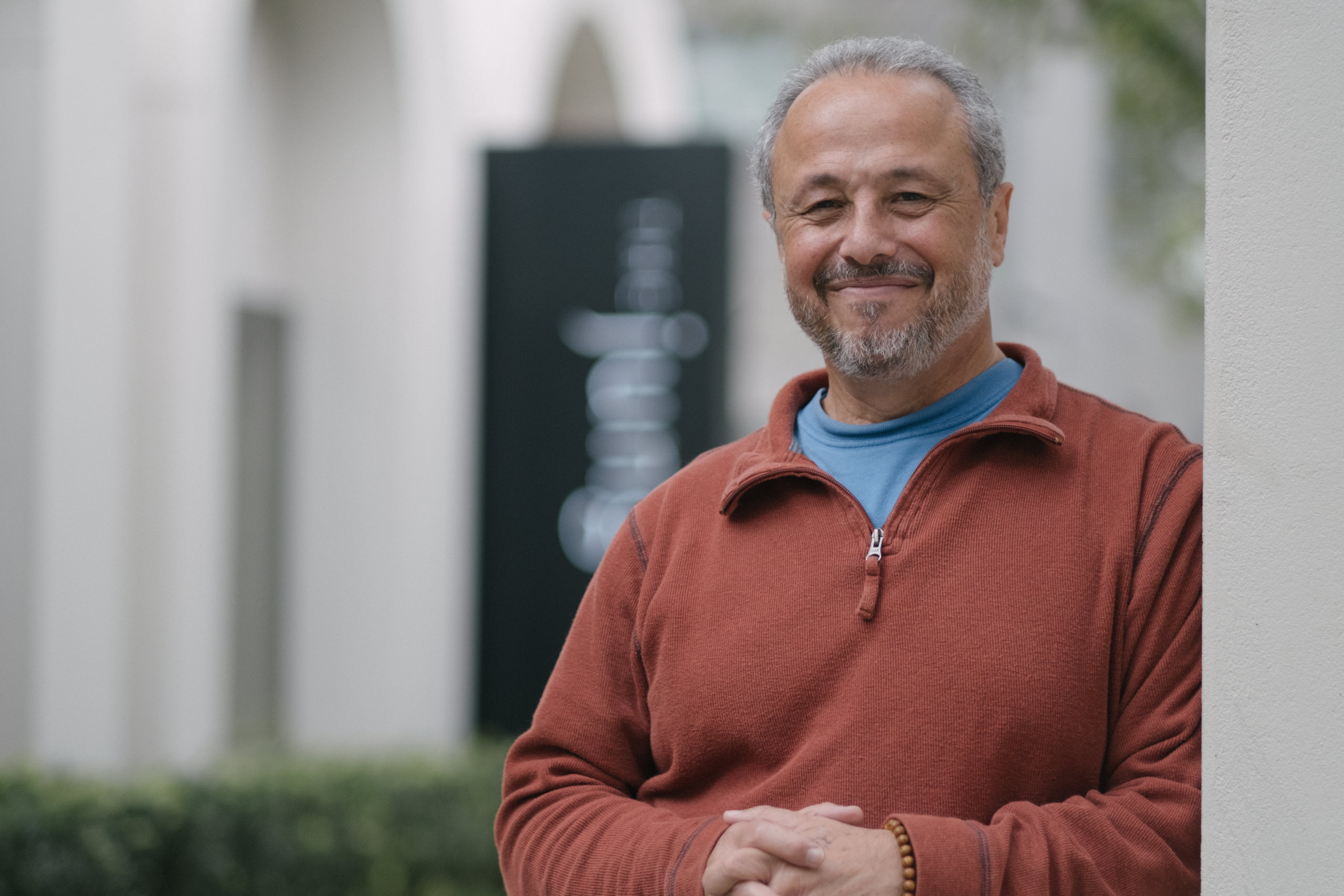
Alejandro: Bringing Tibetan Buddhism into Modern Life Through Science, Meditation, and Compassion
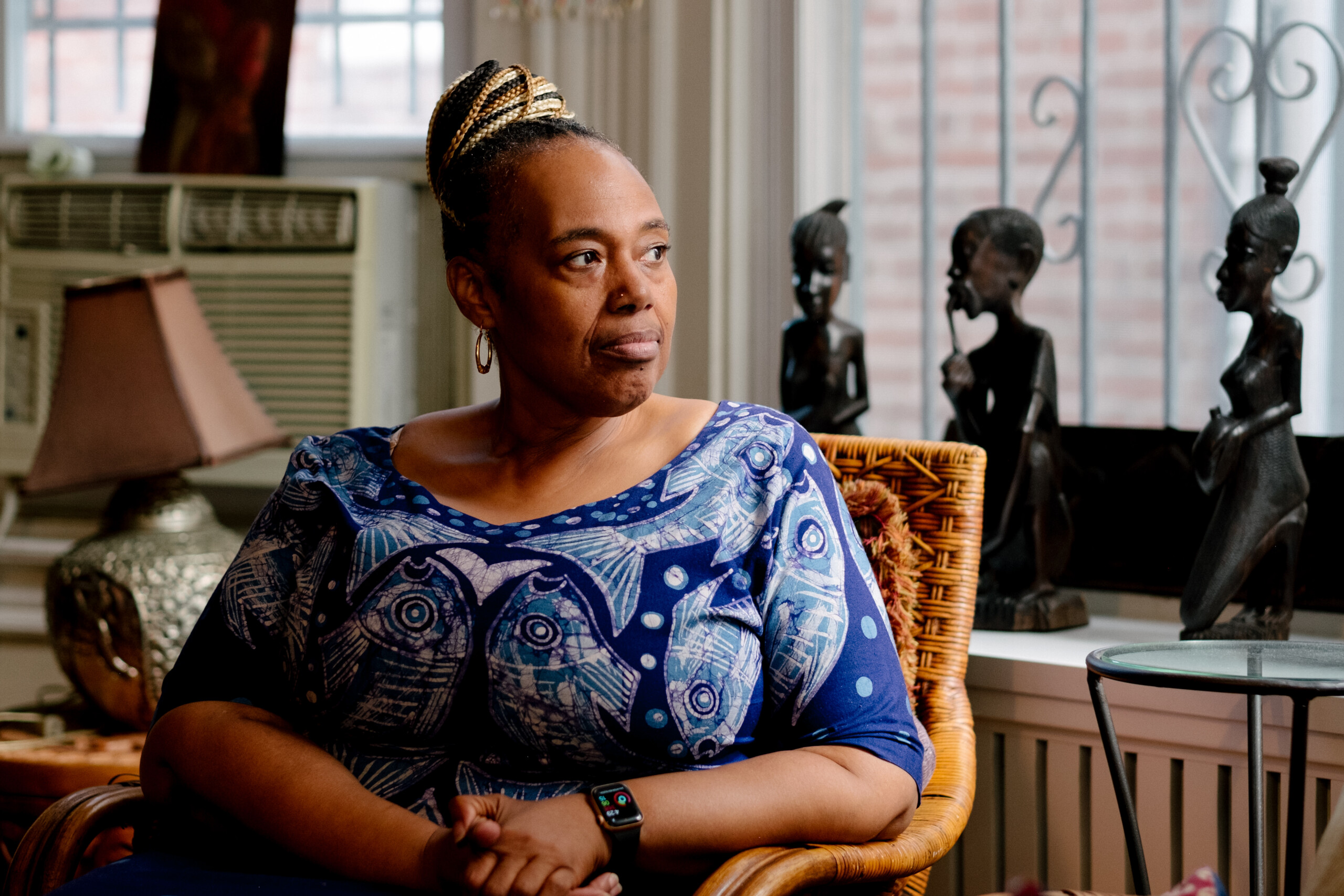
Lennell on Won Buddhism, Psychology, and the Path to Self-Transformation
Kim’s Buddhist Journey: Mindfulness, Resilience, and Finding Peace Through Vipassana Practice
Grace: Finding Healing, Grace, and Everyday Practice in Won Buddhism
Ani Palmo: From Catholicism to Tibetan Buddhism | A Journey of Wisdom, Compassion & Practical Dharma
Steven: Finding Compassion in Everyday Life Through the Plum Village Tradition