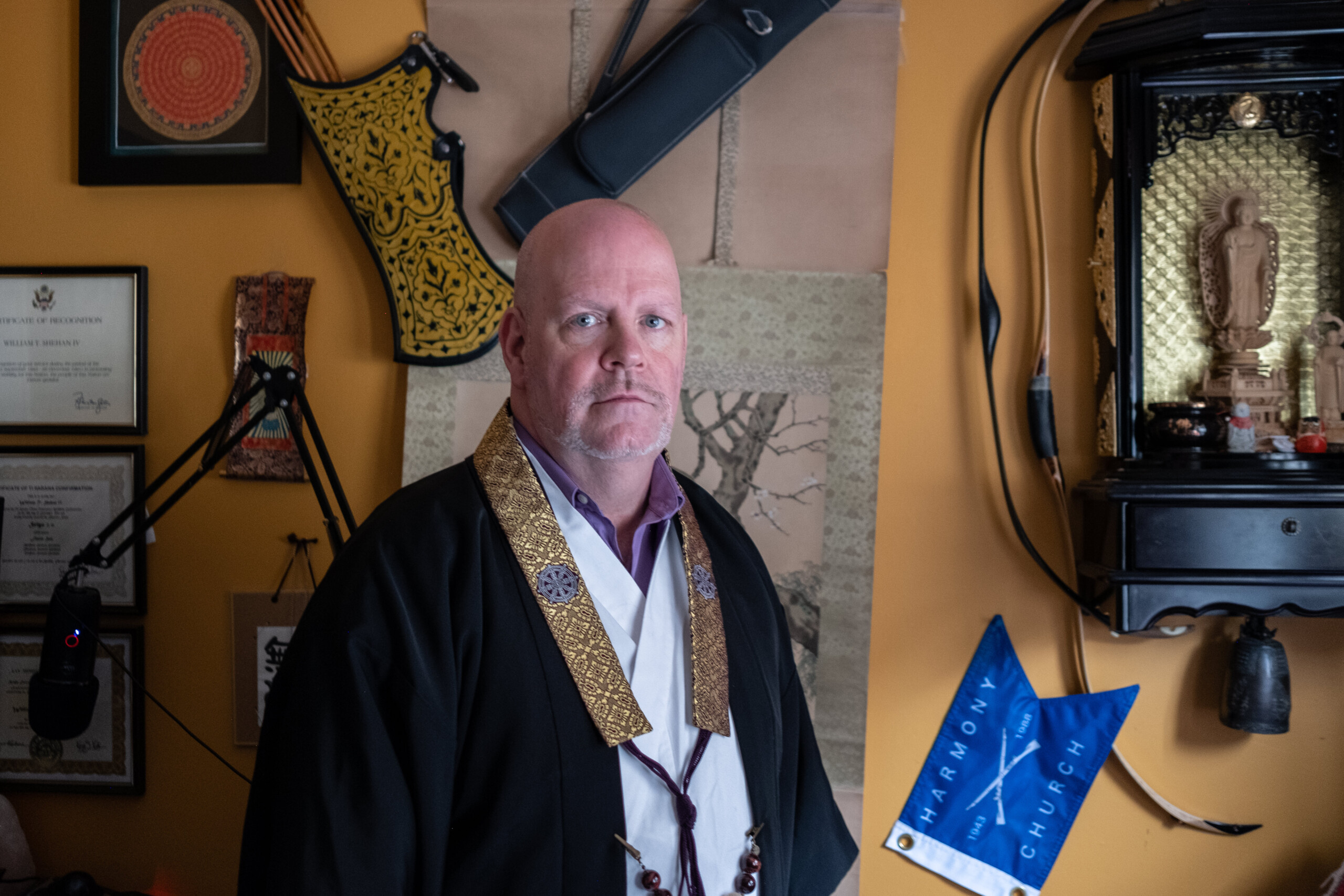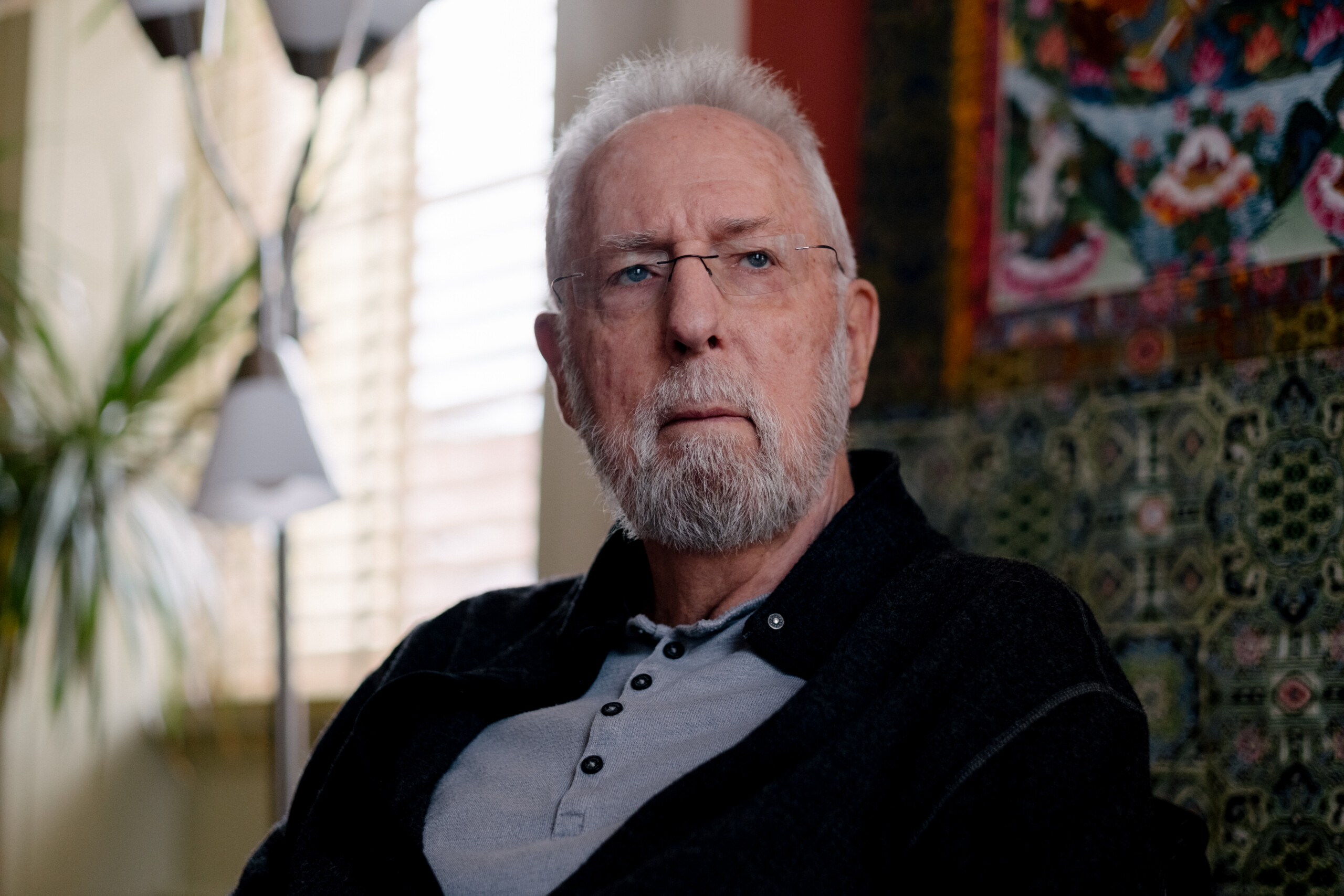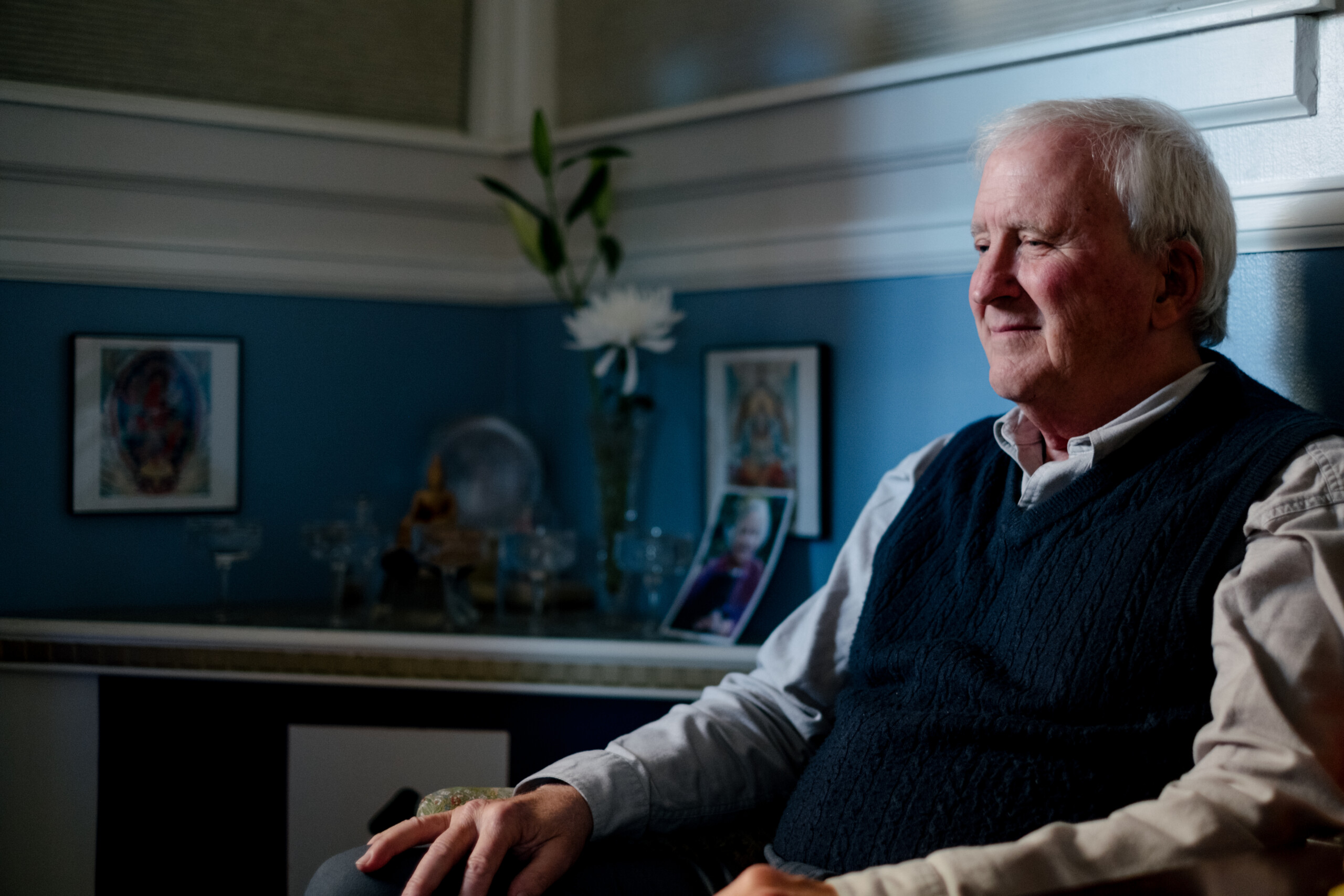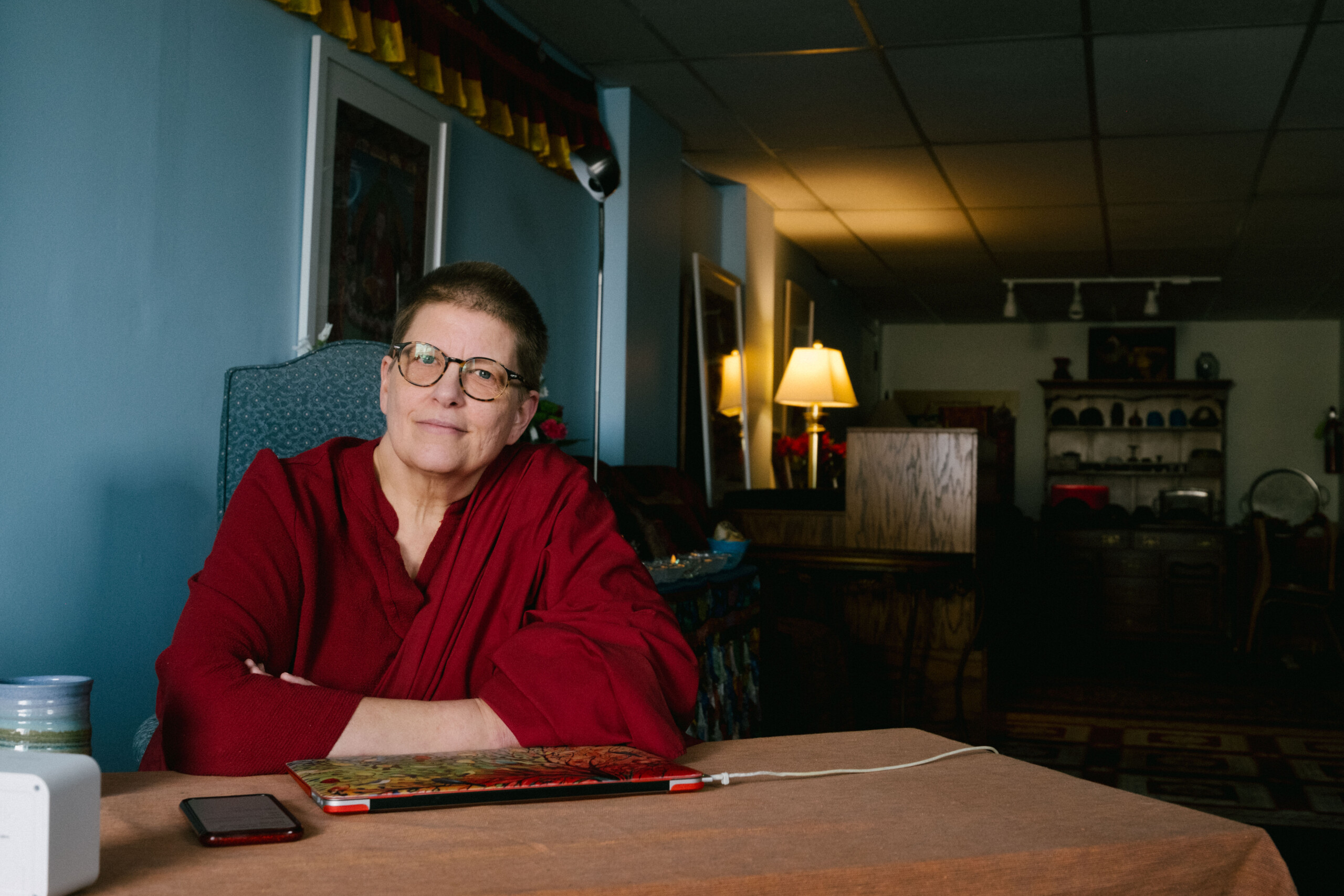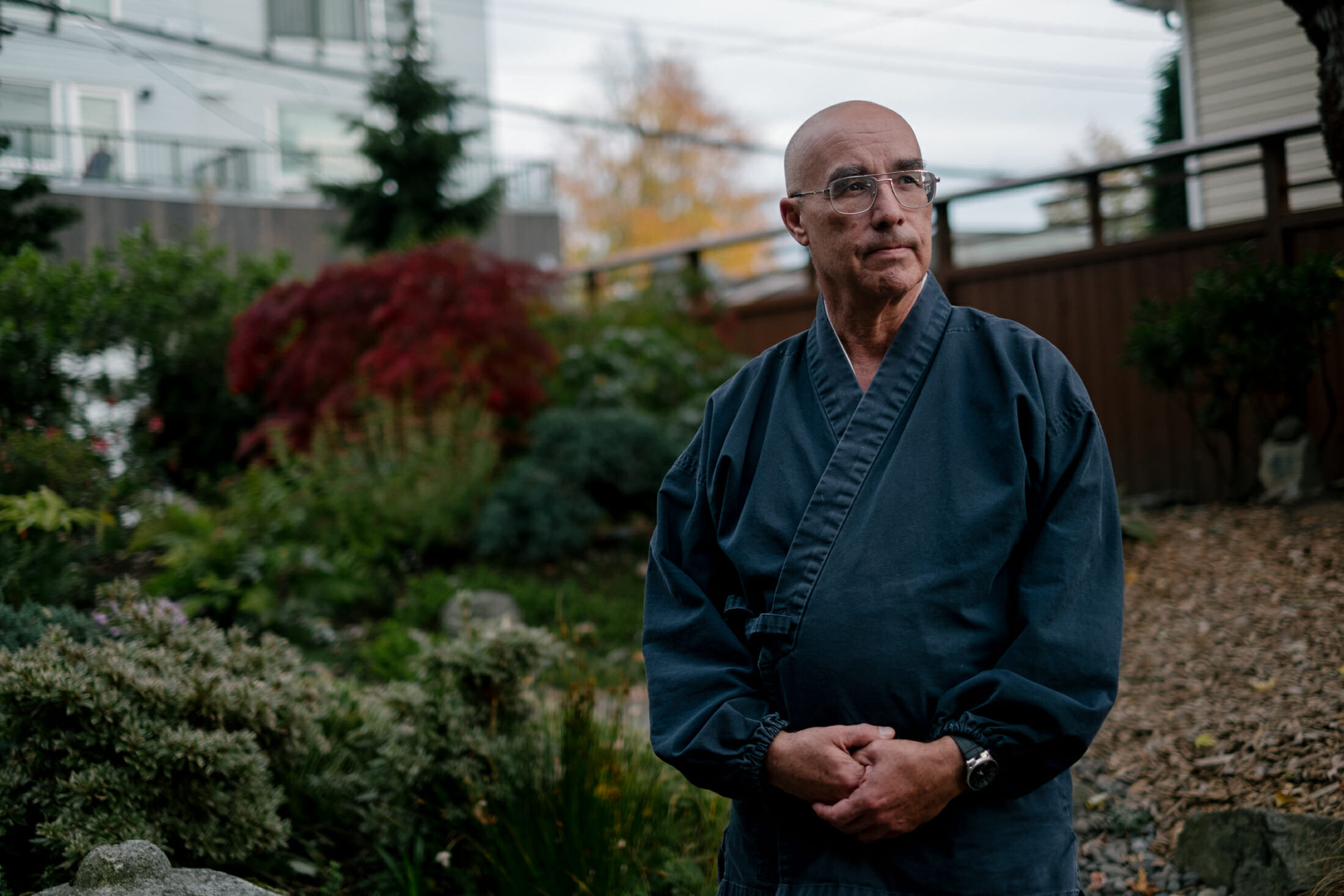
When were you first exposed to dharma?
I was born into a Christian tradition but had more or less lost interest in that as a source for the truth by my teenage years. I was always drawn to science and studied engineering at university, and part of what directed my studies was a belief that I could find some level of explanation of the world through that. You could say I was fascinated by the idea of the ‘Universal Theory of Everything.’ But at some point in my final year of undergraduate school and into my first years of grad school that I started to question whether I was on the right path. Perhaps I just wasn’t very good at quantum physics, but when taking those classes I kept coming back to the notion that the truth should be simple, not something that required pages of probability equations to approximate. At that point I decided to look again at what religion might have to offer. After a few failed attempts at reading the Bible and some other religious philosophies, I came across Buddhism. You could say I found what I was looking for in the first text I read – the logic was clear and simple and fit my experience. I met my teacher a couple years after that and never looked back.
How has the path manifest in your daily experience?
I have been practicing Buddhist methods now for close to two decades, so it is a challenge to look now at how my daily experience is influenced by the path. Without a doubt, my practice greatly influences how I view and interact with the world in personal and professional relationships as well as with strangers. What comes to the front of my mind now in thinking about this now are really two things: compassion and joy. For example, I am not exactly living out the career dreams I had as an idealistic young man. Like many, I had hopes that my career would be something of great benefit to the world while also being immensely satisfying. It was sometime after meeting the dharma that I realized that those ideas were not important. There is joy to be found in every moment, and even a mundane job can be used to bring benefit to others. I certainly have not perfected that practice, but I can truly say I continue to try to hold that view to this day.
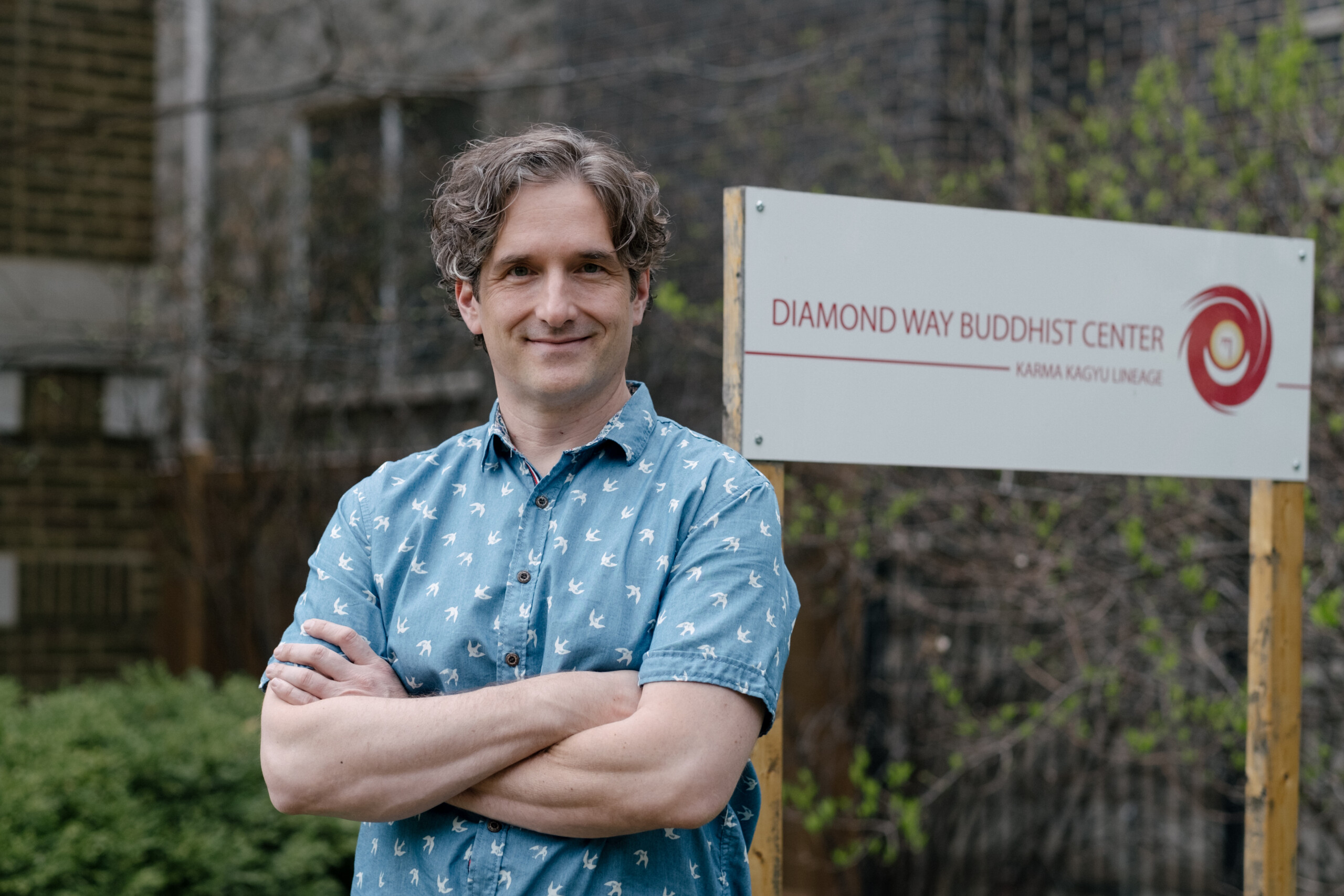
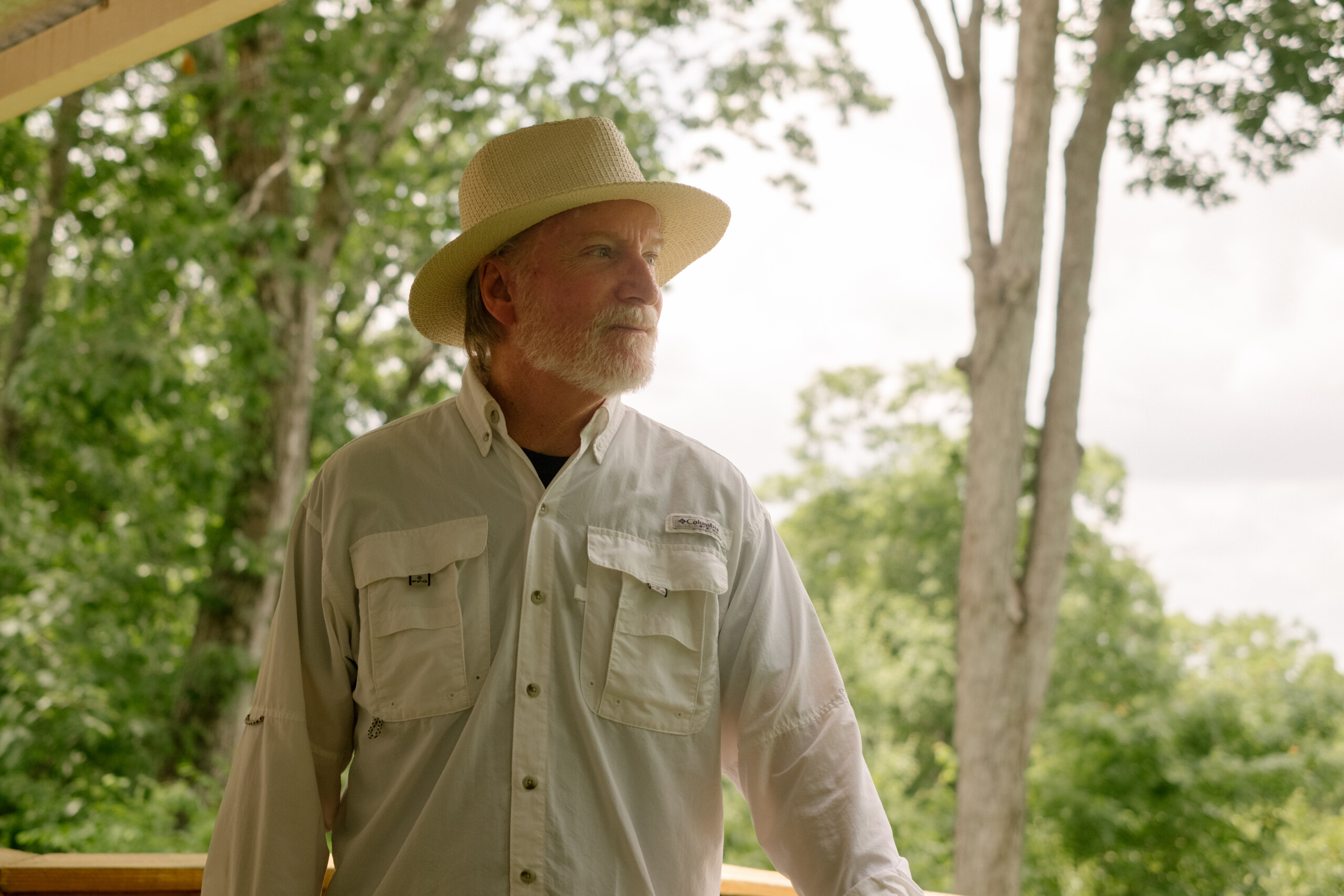
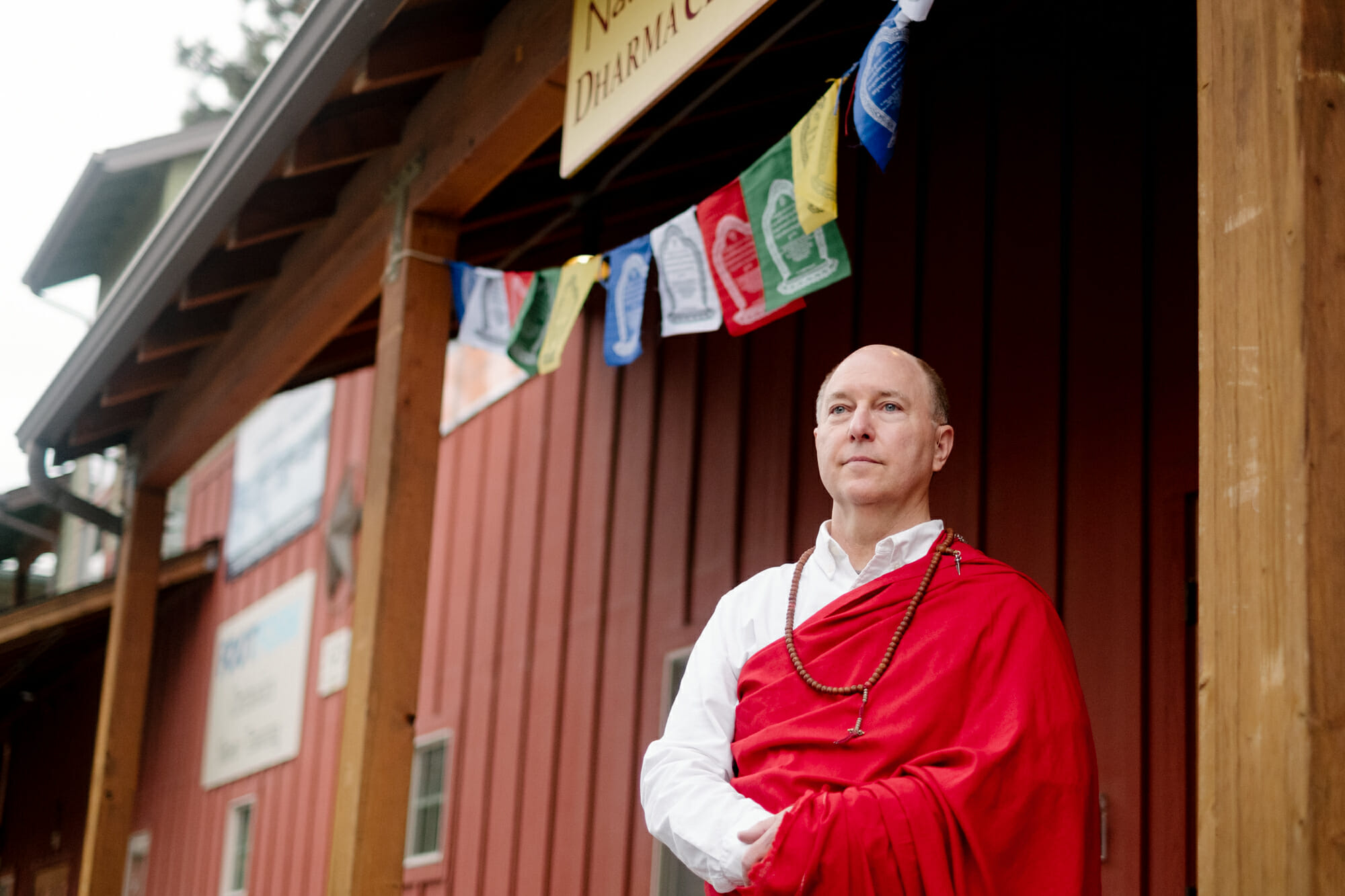
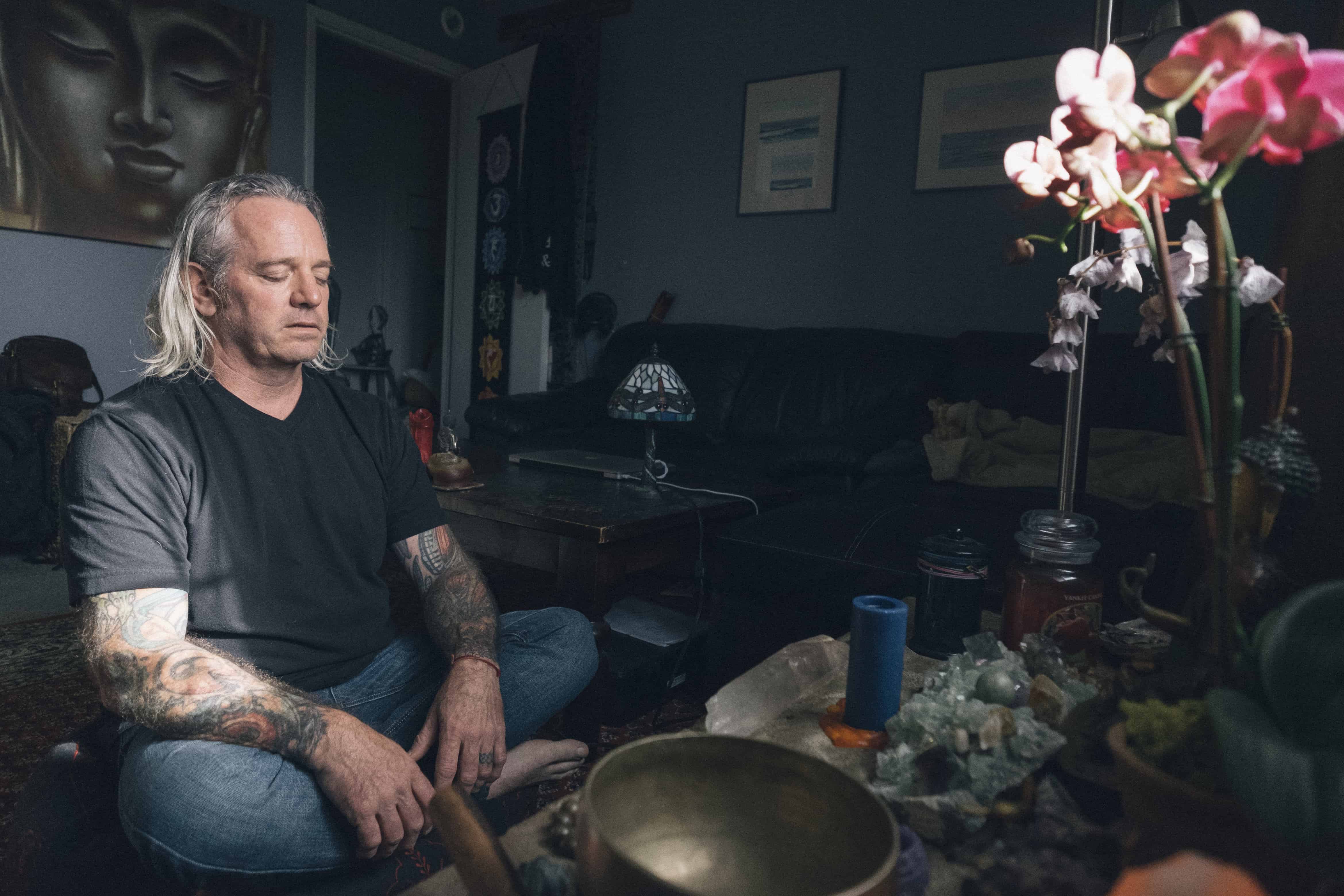
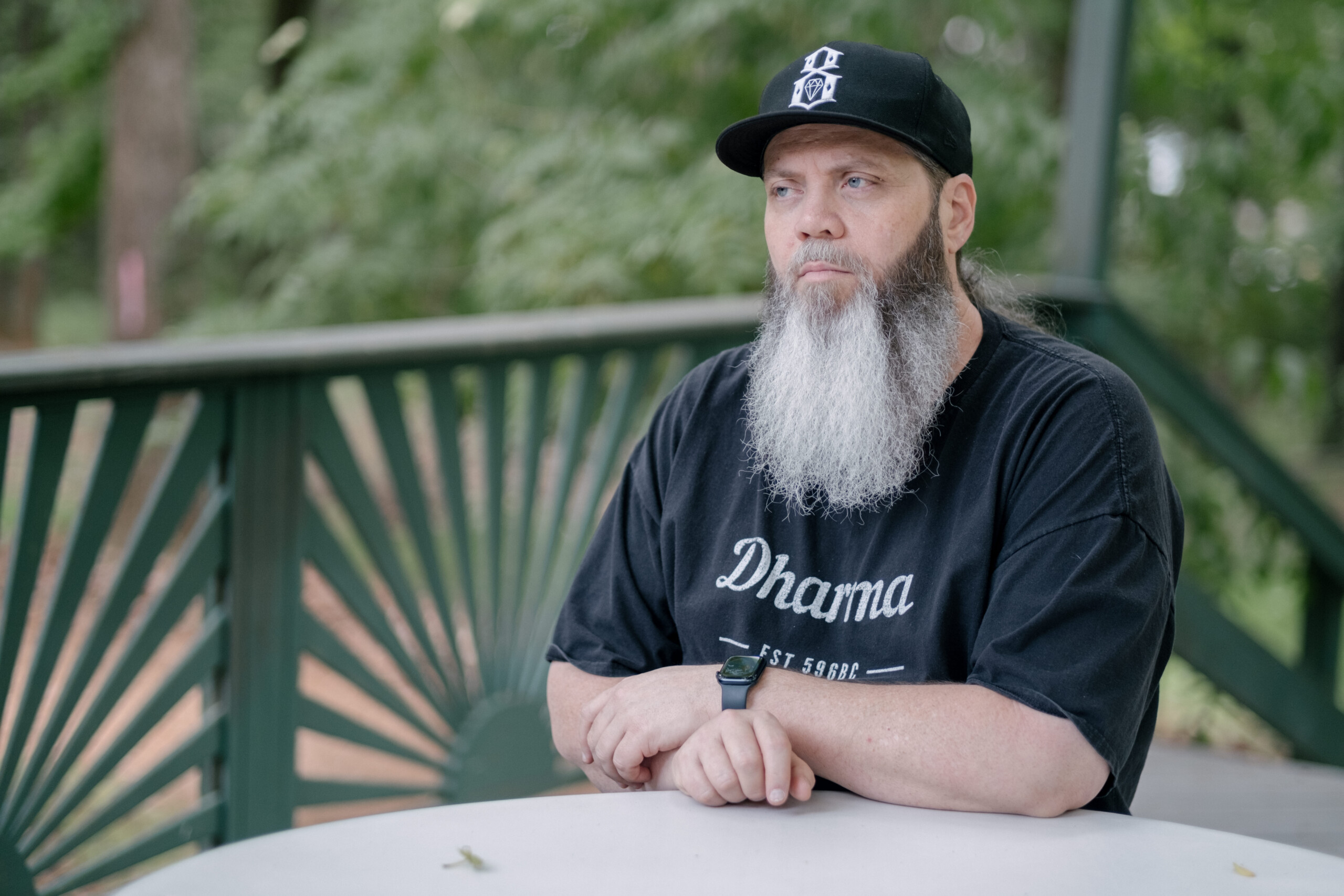
Ben resides and leads
the center in Chicago
for a number of years.
If you explore other lineages within buddhism, how did you come to decide on which lineage was right for you?
I practice Diamond Way Buddhism under the guidance of Lama Ole Nydahl, which is in the Karma Kagyu school of Tibetan Buddhism. Prior to meeting Lama Ole and Diamond Way, I did not practice with any other teachers or spend any significant amount of time using any Buddhist methods from other schools.
Lama Ole has a profound influence on my practice. He is my root lama. Prior to her death, Lamini Hannah Nydahl was also my teacher. All the methods I use come from Ole and Hannah. Lama Ole has had hundreds of students since the time I met him, and while I have seen him many times over the years and even traveled with him, I have never had daily personal interaction with my teacher. This actually has challenged me to develop confidence both in myself and in teachings and methods, and for this opportunity I am extremely grateful.
What are some of your practices/rituals that you do to support your spiritual development (meditation/prayers and etc)
My main meditation practice is a Guru Yoga meditation on the 8th Karmapa. I was given this practice after completing my Ngondro (the foundational practices for Vajrayana Buddhism). In addition to this, I regularly practice a Guru Yoga meditation on the 16th Karmapa. For the past 9 years, I have lived at the local Diamond Way Buddhist Center in Chicago. Living at a meditation center and supporting the local program is a tremendous tool for development.
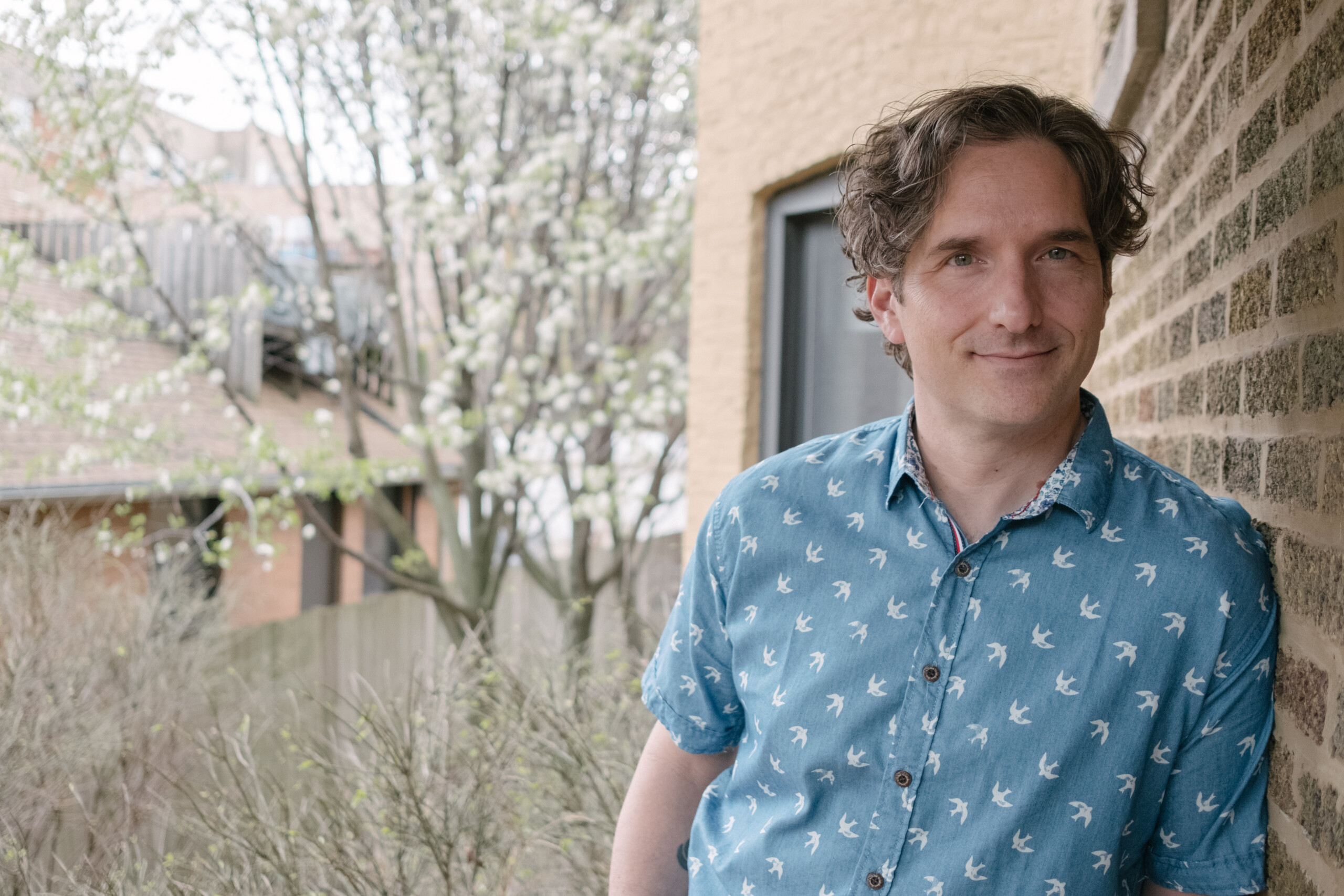
“Highest truth is highest joy is
highest level of functioning."
What is your primarily profession?
I work as a metallurgical engineer in the steel industry. My degree is actually called Materials Science and Engineering. So that way, you could say I am a professional materialist, and there are some practical challenges to applying the teachings on emptiness to my work 🙂 But what I do instead is apply the teachings on compassion to try to build up my colleagues, and try not to take things too seriously and instead see the richness in things, to have fun and create a joyful workplace.
What teachings/practices have had the greatest impact on your life?
Lama Ole is fond of saying “Highest truth is highest joy is highest level of functioning.” You might call this his mantra. To me this is the most pith teaching I’ve received. Everything you need is there.
Background
In his reflections, Ben traces his journey of self-discovery and spiritual exploration. Raised in a Christian family, he found himself questioning traditional beliefs during his teenage years, particularly during confirmation. Drawn to the promise of a universal truth, Ben pursued science, studying material science and delving into quantum theory in graduate school. However, the complexity and lack of simplicity in scientific explanations left him unsatisfied.
Amidst his intellectual quest, Ben encountered Buddhist philosophy, initially exploring connections between Buddhism and environmental science. A friend suggested he read Buddhist books, leading him to a profound connection with the teachings of the Buddha, especially through texts like “The Night on the Old Pathway.” At around 23 or 24 years old, Ben officially identified as a Buddhist.
Embracing the idea that truth must be personally sought, Ben immersed himself in reading, attending lectures, and exploring various perspectives. In 2002, he attended a lecture by Lama Thubten Yeshe, a Tibetan Buddhist master, not expecting to commit to Tibetan Buddhism. However, a subsequent course on conscious dying offered by Lama Thubten Yeshe changed his perspective. The experience of five intense days of meditation revealed to Ben that there was more to the teachings than intellectual understanding.
Witnessing Lama Thubten Yeshe’s compassion in action, his tireless commitment to answering questions, and his joy in sharing knowledge left a lasting impression on Ben. This encounter solidified his commitment to Tibetan Buddhism, recognizing Lama Thubten Yeshe as an authentic guide on his spiritual path. From that point forward, Ben embraced the teachings with the understanding that he had found a living example of what he aspired to become—an individual embodying fearlessness, joy, and compassion on the path to enlightenment.
Refuge
In reflecting on his initial experiences with the practice of refuge and the bodhisattva vow, Ben recalls a moment during a course where he made these commitments without fully understanding their significance. Motivated by the inspiring environment and a desire to align with noble ideals, he embraced refuge and took the bodhisattva vow with minimal meditation experience and an academic understanding of Buddhism.
Over nearly two decades, Ben has come to recognize the profound importance of these commitments. Refuge, he asserts, is the cornerstone of Buddhism, emphasizing the understanding that lasting happiness comes from one’s own mind. Delving into the ancillary elements of Dharma and Sangha, Ben highlights the Vajrayana perspective of Buddha as the quality of one’s own mind, emphasizing the enduring stability of the mind amidst life’s fluctuations.
As Ben delved into meditation practices, he encountered the rigorous nature of working with the mind and the challenges that arise when confronting deep-seated impressions. He emphasizes the demanding nature of meditation, especially in the Vajrayana tradition, where the difficulty lies in confronting one’s own mental obstacles.
The bodhisattva vow, particularly the commitment to work diligently for the benefit of all beings, became a driving force for Ben in his practice. He acknowledges the arduous nature of the path and the temptation to prioritize personal well-being over the demanding work of meditation. However, Ben found motivation in the altruistic nature of the bodhisattva vow, recognizing that practicing solely for personal gain would lack the sustaining power needed to navigate the challenges of the spiritual journey.
Ultimately, Ben finds strength in his initial commitment made in 2002, regularly renewing his dedication to refuge and the bodhisattva vow. He emphasizes the transformative impact these commitments have had on the past two decades of his life, shaping his perspective and providing a guiding force in his daily practice.
Professional Impact
In contemplating active bodhichitta, Ben expresses that being actively beneficial takes various forms, extending beyond conventional acts like running a Buddhist center. He highlights the importance of embodying this altruistic mindset in every interaction, both within and outside the spiritual community. Ben reflects on his role as an engineering manager in the steel industry, emphasizing the intention to foster human development within his team rather than merely focusing on financial objectives.
Viewing his job as a means to support his broader aspirations, Ben aims to infuse his work with Buddhist principles, prioritizing the growth and development of his team members. He stresses the significance of approaching every situation as an opportunity to be useful, aligning with the Buddha’s example of working selflessly for the benefit of others. For Ben, the essence of being a Buddha lies in consistent usefulness in all aspects of life.
Ben encourages integrating Diamond Way teachings into daily work, seizing opportunities to assist others and fostering a supportive environment. He believes that genuine engagement with the world, rather than seclusion in a Buddhist center, is essential for embodying the principles of Buddhism. Ben aligns his understanding with the teachings of Diamond Way, emphasizing the importance of action as a core element of the spiritual path.
Ngondro
In the world and not just keeping it to yourself, but actively working and offering it to others. Ben reflects on his journey through various Buddhist practices, highlighting the importance of active engagement in the world. He emphasizes the significance of refuge in his practice, not as a formalized ceremony, but as a continuous commitment to being useful and beneficial. Ben discusses his experiences with different meditation practices, such as the short refuge meditation, frustrations meditation, mandala practice, and Guru Yoga meditation.
He acknowledges the physical and mental challenges of these practices, describing how they purify the mind, cultivate bodhichitta, and build positive impressions. Ben emphasizes the transformative power of these practices, noting how they inspire a sense of cleanliness, beauty, and richness in one’s surroundings. The challenges encountered in the Guru Yoga meditation prompt Ben to confront feelings of unworthiness and self-doubt, ultimately leading him to a deeper understanding of his role in the lineage.
Throughout his journey, Ben recognizes the need for consistency and dedication, emphasizing the importance of embodying the teachings in daily life. The practices, for him, are not just about personal transformation but also about contributing to the well-being of others and being an active participant in the lineage.
Mahamudra
Ben reflects on the key aspects of his teacher Paul’s teachings, spanning nearly 50 years of instruction. Paul, once a main proponent of a specific practice called “the phowa,” has shifted his emphasis towards Mahāmudrā, a profound teaching that stems from a Nygma transmission. The transition occurred after Ole’s teachers encouraged him to prioritize Mahāmudrā over the phowa. While the phowa remains significant, Mahāmudrā is considered the pinnacle of the Kamakaya school.
Ben describes the Ngondro practice, a foundational aspect of Mahāmudrā teachings, designed to lead practitioners to the ultimate goal of experiencing Iraq. Despite some semblance of a curriculum, Ben emphasizes the individualized nature of instruction, with Paul tailoring teachings based on what he deems beneficial for each student. Ngondro, as an essential practice, prepares individuals for Mamuju, aligning with Paul’s belief in its paramount importance.
Upon completing Ngondro, students traditionally seek guidance from their teacher for a life practice. Paul follows this tradition, offering methods derived from the teachings he received from the 16th Karmapa. While a general curriculum involves Ngondro and the Mahāmudrā-related practices, Ben underscores the variability in individual experiences. Although many embark on similar paths, exceptions exist, with Paul occasionally prescribing different practices based on unique needs.
The discourse extends to the freedom within the disciplined Ngondro practices, revealing a gradual shift from a structured approach to a more open, personalized journey. With Mahāmudrā as the core, practitioners navigate the challenge of sustaining a single practice throughout their lives. Ben suggests that this phase involves self-guidance, utilizing the teachings, meditation, and seeking advice from Paul.
The discussion touches on the role of the Sangha, acting as a supportive community that mirrors individual progress. The Sangha inadvertently serves as a reflection of one’s journey, providing feedback and guidance. Ben emphasizes the importance of the Sangha’s presence in maintaining a practitioner’s awareness and preventing isolation.
Ultimately, Ben reflects on the dual nature of freedom – it can be overwhelming or an opportunity for personal growth. The narrative emphasizes the balance between self-guidance and the supportive role of the Sangha in navigating the intricacies of Mahāmudrā practice.
Authentic Lineage
Ben discusses challenges in modern society, emphasizing the abundance of choices and the lack of patience. He reflects on the impact of technology, short attention spans, and constant distractions. In contrast, Ben highlights the unique value of Buddhism, particularly the Nyingma tradition, as a proven solution with a 2600-year history. He underscores the importance of patience, not just for others but for oneself, in cultivating a transformative mental space. Ben observes that while many express interest in working on their minds, only a few commit to the profound and focused practice offered by the Nine Ways Buddha Center, noting the prevalent culture of seeking quick solutions and spreading attention across various activities. Despite the small regular group, Ben finds inspiration in observing people’s diverse motivations and challenges, reinforcing his dedication to the practice and the teachings.
Fruit of Practice
Ben emphasizes the importance of positive interactions in everyday settings and his efforts to be a calm and happy example. He and his wife frequent restaurants and bars, forming strong relationships with staff, spreading happiness, and inspiring others. In professional settings, Ben initially kept his Buddhist practice private but gradually allowed his calm demeanor and problem-solving approach to speak for his practice. While not overt about his beliefs, he aims to let the teachings manifest through his actions. Ben has received positive feedback at work, earning a reputation as the calm voice of reason in a demanding environment. Additionally, he shares how his stability has been a positive example during family challenges and the passing of loved ones, garnering appreciation for his ability to handle difficult situations.
Diamond Way Legacy
Ben reflects on the unique challenges faced by the Kamakura lineage in transplanting Tibetan Buddhism to Western culture, highlighting the absence of a clear precedent for the lineage’s future. Considering the passing of Karmapa in 2007 and the ongoing uncertainty about the future, Ben ponders the organization’s fate. While acknowledging that he cannot provide a definitive answer, he explores the lineage’s history, emphasizing the absence of a designated successor and the importance of individual practitioners reaching the same level as their teachers. Ben shares that the primary goal is for all students to achieve the same level of practice, allowing the organization to continue without heavy reliance on a single leader. He echoes the notion that the transmission of the lineage is not solely contingent on a single individual but on the practitioners’ commitment to the teachings. Despite questions about the future and the practical aspects of property management, Ben underscores the importance of focusing on personal practice and meditation. He emphasizes the guidance from their teacher, encouraging practitioners to be their own teacher by contemplating what would be most beneficial for all beings. Ultimately, Ben expresses confidence that the transmission of the lineage will endure through the practitioners, even if the organizational structure may change.